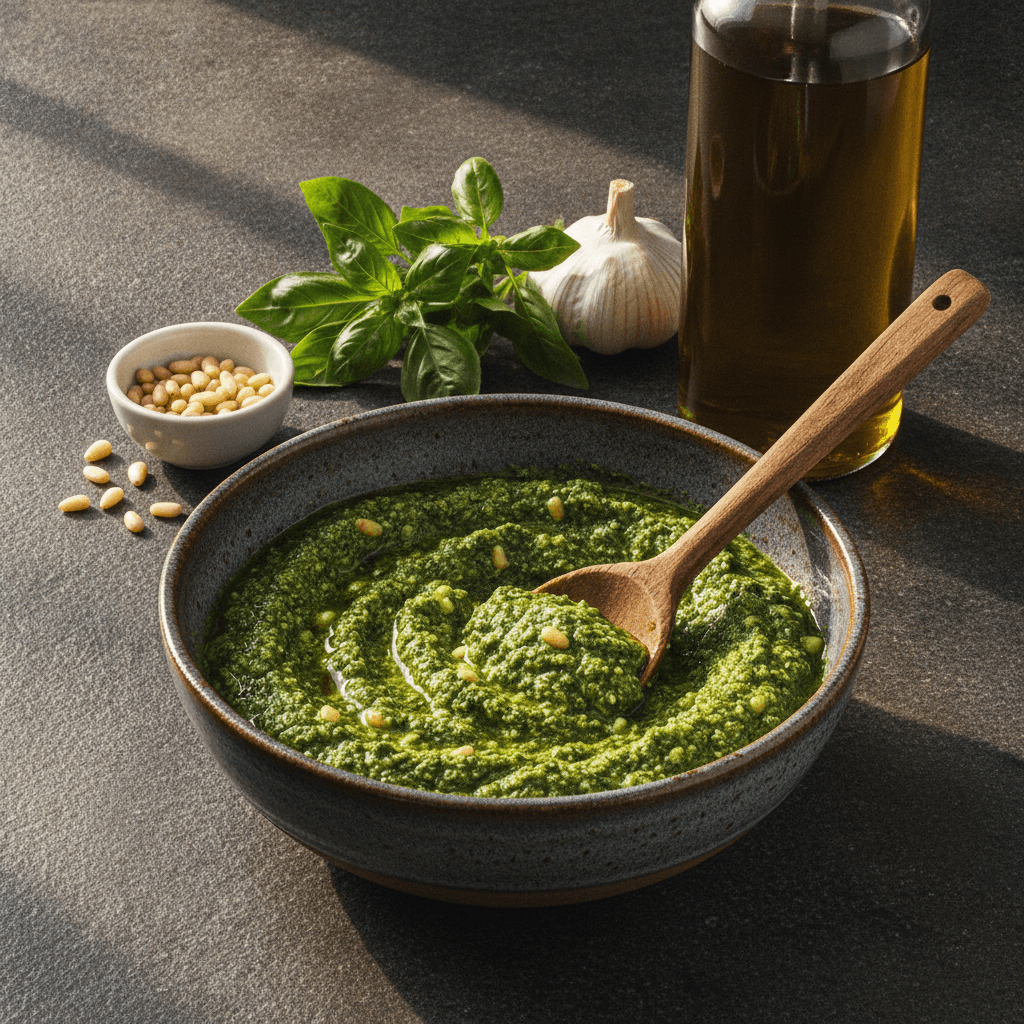
The Best Homemade Pesto Recipe (Authentic & Easy)
Discover how to make the most vibrant homemade pesto! This authentic, Levantine-inspired recipe is packed with fresh basil, nuts, and olive oil.
cookwithyara.com/recipes/homemade-pesto-recipe
There's a special kind of magic that happens when you bring fresh, simple ingredients together to create something truly extraordinary. So often, we reach for a jarred sauce out of convenience, only to be met with a flavor that’s a little dull, a little flat, and a far cry from what it promises. We tell ourselves that healthy eating or quick meals mean we have to compromise on taste. I’m here to tell you, with all the warmth in my heart, that this is simply not true. This homemade pesto recipe is the most delicious proof I can offer. It’s a vibrant, fragrant, and deeply satisfying sauce that comes together in minutes, yet tastes like it’s been crafted with hours of love.
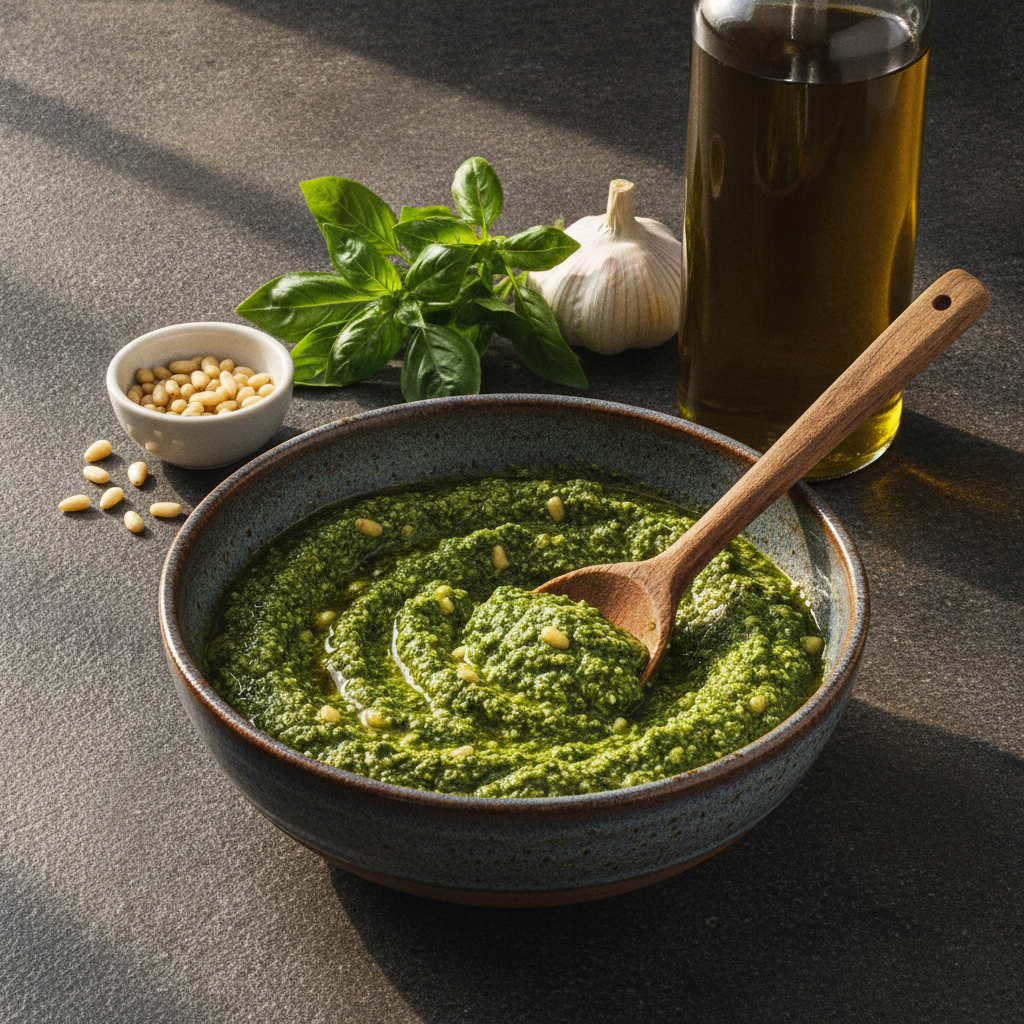
The real star of this recipe is the incredible texture and aroma. It’s the bright, almost peppery scent of freshly picked basil, the rich and buttery depth of toasted nuts, and the smooth, fruity embrace of high-quality extra virgin olive oil. When you make this homemade pesto recipe, your kitchen will fill with the quintessential scent of a Mediterranean garden. This isn’t just a recipe; it’s an experience. It's the promise of a meal that is as nourishing for the body as it is delightful for the soul—a sauce that can elevate a simple bowl of pasta, a piece of grilled chicken, or a slice of warm bread into a true culinary event.
Why This Recipe Works for Your Kitchen
In a world of complicated recipes and processed foods, this homemade pesto recipe stands out for its beautiful simplicity and profound benefits. When you make something from scratch, you are in complete control. You choose the freshness of the basil, the quality of the olive oil, and the type of nuts. This means no preservatives, no artificial flavors, and no unnecessary additives—just pure, unadulterated goodness. You can taste the difference in every single spoonful.
From a nutritional standpoint, this pesto is a powerhouse. The base of extra virgin olive oil provides heart-healthy monounsaturated fats, which are essential for well-being. Fresh basil isn’t just for flavor; it’s packed with antioxidants and vitamins. The nuts, whether you choose traditional pine nuts or rich walnuts, contribute plant-based protein, fiber, and more healthy fats, helping to keep you full and satisfied. Garlic, a cornerstone of Levantine cooking, brings its own host of benefits and that irreplaceable pungent warmth.
Beyond the health aspects, the flavor is simply unparalleled. The vibrancy of a freshly made pesto is something a jar from the supermarket can never replicate. The fresh, herbaceous notes of the basil, the deep toastiness of the nuts, and the peppery finish of a good olive oil create a symphony of flavors that is both complex and comforting. It’s a testament to the idea that the best food is often the simplest, relying on the quality of its ingredients rather than complicated techniques.
The Ingredient Lineup: A Symphony of Freshness
Great cooking starts with great ingredients, and for a recipe as pure as this homemade pesto, their quality is everything. Each component plays a vital role in creating the final, harmonious sauce. Let's walk through the stars of the show.
Fresh Basil: This is the heart and soul of our pesto. Look for Genovese basil if you can find it, with its large, tender, and intensely fragrant leaves. Your basil should be a vibrant, uniform green, with no signs of wilting or dark spots. The aroma should be sweet and slightly spicy. Remember to wash it gently and, most importantly, dry it completely. Water is the enemy of a good pesto; it will dilute the flavor and prevent the oil from emulsifying properly. A salad spinner is your best friend here.
Extra Virgin Olive Oil: Please, use the good stuff! A high-quality, cold-pressed extra virgin olive oil will make a world of difference. Its fruity, sometimes peppery notes are not just a background element; they are a primary flavor. Look for oil in a dark bottle, which protects it from light, and check for a harvest date to ensure freshness. This is where you can truly taste the Mediterranean sun.
The Nuts: Traditionally, pesto is made with pine nuts, which offer a delicate, buttery flavor that is simply divine. However, they can be a bit pricey. Wonderful alternatives include walnuts for an earthier, more robust flavor, or even almonds for a slightly sweeter, richer profile. For a true Levantine twist, try using pistachios! The key, no matter which nut you choose, is to toast them lightly in a dry pan until they are fragrant. This simple step awakens their natural oils and adds a profound depth of flavor.
The “Cheese” Element: To keep this recipe halal and accessible to everyone, we use a high-quality vegetarian hard cheese. These are made with microbial or plant-based rennet and provide that salty, umami flavor that is so characteristic of pesto. For a dairy-free or vegan option, nutritional yeast is a fantastic substitute. It brings a surprisingly cheesy, savory flavor and a boost of B vitamins.
Garlic and Lemon: These are our supporting actors that make the star shine brighter. A clove or two of fresh garlic provides a pungent, spicy kick that cuts through the richness. A squeeze of fresh lemon juice is the secret weapon; it brightens every single flavor in the bowl and, crucially, helps the basil retain its beautiful, vibrant green color.
Mastering the Technique: Mortar & Pestle vs. Food Processor
The way you combine these beautiful ingredients has a significant impact on the final texture and flavor of your homemade pesto recipe. There are two main paths you can take: the time-honored traditional method or the convenient modern approach. Both yield delicious results, but they offer different experiences and textures.
The Traditional Method: The Mortar and Pestle If you have the time and want to connect with the history of this sauce, using a mortar and pestle is a truly rewarding experience. This method doesn't just chop the ingredients; it coaxes the flavor out of them. The gentle, rhythmic grinding bruises the basil leaves and garlic, releasing their essential oils in a way that a sharp blade simply cannot. This process creates a pesto with a more nuanced aroma and a wonderfully silky, creamy consistency that is difficult to replicate with a machine.
To do it right, start by adding the garlic cloves and a pinch of coarse salt to the mortar. The salt acts as an abrasive, helping you grind the garlic into a smooth paste. Next, add the toasted nuts and work them into the garlic paste until they are broken down. Then, add the fresh basil leaves in batches, using a circular grinding motion to crush them against the sides of the mortar. You’ll see the vibrant green oils release and smell the incredible fragrance fill your kitchen. Once the basil is a thick paste, gently stir in the grated cheese. Finally, drizzle in the extra virgin olive oil in a slow, steady stream, stirring continuously until you have a beautiful, emulsified sauce. It takes patience, but the result is pure poetry.
The Modern Method: The Food Processor For those of us short on time, the food processor is a fantastic tool that can deliver a delicious homemade pesto in under five minutes. However, there are a few key tips to ensure you get the best results and avoid common pitfalls.
First, be mindful of heat. The friction from the fast-spinning blades can generate heat, which can cause the basil to oxidize and turn a murky dark green or brown. To avoid this, use short, sharp pulses instead of letting the machine run continuously. Some chefs even recommend chilling the bowl and blade of the food processor beforehand.
Second, manage the texture. To prevent a uniform, baby-food-like paste, add your ingredients in stages. Start by pulsing the garlic and toasted nuts until they are finely minced. Then, add the basil and pulse just until it’s coarsely chopped. Add the cheese and lemon juice and pulse a few more times to combine. Finally, with the machine running, stream the olive oil in slowly. This is crucial for creating a stable emulsion where the oil is fully incorporated, resulting in a smooth, cohesive sauce rather than a separated, oily one. This careful, step-by-step process in the food processor gives you a fantastic homemade pesto recipe with minimal effort.
Customizing Your Homemade Pesto Recipe
One of the greatest joys of cooking is making a recipe your own, and this pesto is a perfect canvas for creativity. While the classic basil and pine nut combination is timeless, don't be afraid to experiment with different herbs, nuts, and flavorings, especially those inspired by my beloved Levantine cuisine.
Herb Variations: Think beyond basil! While it remains the classic choice, you can create stunning pestos with other greens. Arugula will give you a bold, peppery sauce that is fantastic with red meats or roasted potatoes. A combination of parsley and cilantro creates a bright, zesty pesto perfect for fish or chicken. For a truly unique flavor, try a mint and pistachio pesto—it’s a classic Middle Eastern combination that is unbelievably refreshing and delicious, especially when served with lamb or as a drizzle over grilled halloumi.
Nut and Seed Variations: This is an easy way to change the character of your sauce. As mentioned, walnuts and almonds are excellent substitutes for pine nuts. For an extra creamy texture, try using cashews—they lend a subtle sweetness and richness. If you're dealing with a nut allergy, don't worry! Toasted sunflower seeds or pumpkin seeds (pepitas) are fantastic alternatives. They provide a similar texture and a lovely, earthy flavor that complements the fresh herbs beautifully.
The Levantine Touch: Here's where we can add a layer of warmth and complexity. A small pinch of ground sumac can enhance the brightness from the lemon juice, adding a lovely tartness. A dash of Aleppo pepper flakes will introduce a gentle, fruity heat without overwhelming the delicate basil. For a truly transformative addition, try blending in a tablespoon of tahini. It adds an incredible creaminess and a nutty, savory depth that is absolutely irresistible. This simple homemade pesto recipe can become a signature sauce with just a few thoughtful tweaks.
How to Store Pesto and Keep it Green
You've just made a batch of the most beautiful, vibrant homemade pesto, and you want to keep it that way. The primary enemy of fresh pesto is oxidation—exposure to air, which causes the basil to lose its bright green hue and turn a less appealing brownish color. But with a few simple storage tricks, you can preserve its freshness and flavor for days or even months.
For Short-Term Storage (Up to a Week): If you plan to use your pesto within a week, the refrigerator is your best option. Transfer the finished pesto to a small glass jar or an airtight container. Use a spoon to gently press down the surface to remove any trapped air bubbles. Then, pour a thin layer of extra virgin olive oil over the entire surface. This layer of oil acts as a protective barrier, sealing the pesto from the air and preventing oxidation. When you're ready to use some, just spoon out what you need from under the oil layer, and if necessary, add a fresh layer of oil on top before returning it to the fridge.
For Long-Term Storage (Up to 6 Months): The freezer is a fantastic tool for preserving your pesto perfectly. The best method is to use an ice cube tray. Spoon your fresh homemade pesto into the compartments of the tray and place it in the freezer until the cubes are frozen solid. Once frozen, pop the pesto cubes out and transfer them to a labeled freezer-safe bag or container. This brilliant method allows you to defrost the exact amount you need, whether it's a single cube to stir into a soup or several cubes for a family pasta dinner. The flavor and color will be remarkably well-preserved. To use, simply thaw the cubes in a small bowl at room temperature for about 30 minutes or overnight in the refrigerator. Avoid using a microwave, as it can cook the basil and alter the flavor.
Serving Suggestions: Beyond the Pasta Bowl
While tossing it with a beautiful ribbon of pasta is the most classic way to enjoy this homemade pesto recipe, its versatility is truly one of its greatest strengths. Think of it less as a sauce and more as a powerful flavor concentrate that can elevate almost any dish. It’s a staple in my kitchen that I use in countless ways throughout the week.
Spread it: Slather it on toasted sourdough bread for a gourmet bruschetta, perhaps topped with fresh tomatoes or roasted red peppers. It makes a fantastic, flavorful spread for sandwiches and wraps, instantly upgrading a simple chicken or roasted vegetable filling.
Drizzle it: A spoonful of pesto can transform a simple soup. Drizzle it over a hearty tomato or lentil soup just before serving for a burst of fresh, herbaceous flavor. It's also wonderful drizzled over grilled chicken, fish, or roasted vegetables. I especially love it on roasted potatoes or cauliflower.
Mix it: Swirl a generous amount into a bowl of creamy hummus or thick labneh to create an incredibly delicious and beautiful dip to serve with warm pita bread and fresh vegetables. You can also mix it with a bit of Greek yogurt or olive oil and lemon juice to create a creamy salad dressing or a sauce for grain bowls.
Marinate with it: Pesto makes an incredible marinade. Thin it out with a little extra olive oil and lemon juice and use it to marinate chicken, lamb skewers, or firm fish before grilling or baking. It infuses the protein with so much flavor and helps to keep it moist and tender.
Frequently Asked Questions
Why did my homemade pesto turn brown?
This is almost always due to oxidation, which happens when the cut basil leaves are exposed to air. Heat from a food processor running too long can also accelerate this process. To prevent it, work quickly, use short pulses with your machine, and add a little lemon juice. Storing it with a layer of olive oil on top is also key to keeping it green.
Why does my pesto taste bitter?
There are a few potential culprits for bitter pesto. Over-processing the basil leaves can release bitter compounds. Using a low-quality or bitter-tasting olive oil will definitely affect the final taste. Lastly, some nuts, like walnuts, can have a slightly bitter note; toasting them well can help mitigate this.
Can I make this homemade pesto recipe without nuts?
Absolutely! For a nut-free version, toasted sunflower seeds or pumpkin seeds (pepitas) are excellent substitutes. They provide a similar rich texture and an earthy flavor that works wonderfully. Just toast them as you would the nuts before adding them to the food processor.
How much pesto should I use for one pound of pasta?
A good starting point is about 1/2 to 3/4 of a cup of pesto for one pound (or 500g) of pasta. The most important tip is to always reserve a cup of the starchy pasta cooking water before you drain it. After draining, return the pasta to the pot, add the pesto, and then add a splash of the pasta water, mixing until the sauce coats every piece beautifully. The starch in the water helps the pesto cling to the pasta and creates a perfectly creamy sauce.
Is this recipe suitable for a vegan diet?
Yes, it's very easy to make this recipe vegan. The only ingredient you need to swap is the cheese. Use 2-3 tablespoons of nutritional yeast in its place. It provides a savory, cheesy, umami flavor that is a fantastic dairy-free alternative.
Can I use dried basil instead of fresh?
I would kindly and strongly advise against it. The entire magic of pesto comes from the vibrant, aromatic essential oils of fresh basil leaves. Dried basil has a completely different flavor profile—more muted and earthy—and it simply won't create the bright, fragrant sauce that makes pesto so special. This is one recipe where fresh is truly non-negotiable.
Homemade Pesto Recipe
A vibrant and aromatic homemade pesto made with fresh basil, toasted nuts, garlic, and high-quality olive oil. Perfect for pasta, sandwiches, and more.
Prep Time
15 min
Cook Time
0 min
Total Time
15 min
Servings
1.5 cups
Ingredients
For 1.5 cups
- 3 cups fresh basil leaves, packed
- 1/2 cup extra virgin olive oil, plus more for storing
- 1/3 cup pine nuts, toasted (or walnuts/almonds)
- 1/2 cup grated vegetarian hard cheese (or 3 tbsp nutritional yeast)
- 2-3 cloves garlic, peeled
- 1 tbsp fresh lemon juice
- 1/2 tsp sea salt, or to taste
- 1/4 tsp black pepper, freshly ground
Instructions
- 1
Toast the Nuts
Place the pine nuts (or your nut of choice) in a small, dry skillet over medium-low heat. Toast for 3-5 minutes, shaking the pan frequently, until they are golden brown and fragrant. Be very watchful as they can burn quickly. Remove from the pan immediately and set aside to cool.
- 2
Prepare the Basil
Gently wash the fresh basil leaves and dry them thoroughly. A salad spinner is the most effective tool for this. Any excess water can make the pesto watery and prevent it from emulsifying properly.
- 3
Combine Solids in Food Processor
In the bowl of a food processor, combine the toasted nuts and the peeled garlic cloves. Pulse 5-6 times until they are finely minced. This creates a flavorful base for the sauce.
- 4
Add Basil and Pulse
Add the packed basil leaves to the food processor. Pulse in short bursts, about 8-10 times, until the basil is coarsely chopped. Scrape down the sides of the bowl with a spatula to ensure everything is incorporated.
- 5
Add Cheese and Lemon Juice
Add the grated vegetarian hard cheese (or nutritional yeast), fresh lemon juice, salt, and pepper to the mixture. Pulse another 3-4 times just to combine the ingredients.
- 6
Stream in the Olive Oil
Turn the food processor on to a low speed. Through the feed tube, slowly and steadily stream in the extra virgin olive oil. Continue processing until the pesto is smooth and emulsified, but still has a bit of texture. Avoid over-processing, as the heat can turn the basil dark.
- 7
Taste and Adjust Seasoning
Turn off the processor and taste the pesto. Adjust the seasoning as needed, adding more salt, pepper, or a little more lemon juice to brighten the flavors to your liking.
- 8
Serve or Store Immediately
Your homemade pesto is now ready to be used. If storing, transfer it to a small glass jar, press the surface down, and pour a thin layer of olive oil on top to prevent browning. Store in the refrigerator for up to one week or freeze in ice cube trays for longer storage.
Nutrition Facts
Per serving (estimated)
130 calories
Calories
1g
Carbs
2g
Protein
14g
Fat
0.5g
Fiber
150mg
Sodium
0.2g
Sugar