
Authentic Lebanese Garlic Toum Sauce Recipe
Learn how to make fluffy, white, and authentic Lebanese garlic toum sauce at home. This easy recipe creates a stable, delicious emulsion every time!
cookwithyara.com/recipes/lebanese-garlic-toum-sauce
Imagine walking into a bustling Lebanese kitchen, the air thick with the irresistible aroma of charcoal-grilled meats and freshly baked pita. Over the sizzle and the warm chatter, another scent cuts through—bright, pungent, and unmistakably bold. It’s the smell of garlic, transformed into something ethereal and creamy. This is the magic of Lebanese garlic toum sauce, a condiment that is so much more than a simple dip. It’s a cornerstone of Levantine cuisine, a cloud-like emulsion of pure garlic flavor that awakens everything it touches. For many, this incredible sauce seems like a restaurant secret, a magical concoction impossible to replicate at home. The truth is, with the right technique and a little patience, you can capture that authentic spirit right in your own kitchen. This recipe isn't just about mixing ingredients; it's about understanding the beautiful science of emulsification to create a sauce that is stable, airy, and intensely flavorful. I’ll guide you through every step, demystifying the process so you can bring this essential taste of Lebanon to your family’s table. Get ready to create the most incredible Lebanese garlic toum sauce you’ve ever had.
A Taste of the Culture
In the Levant, food is an expression of hospitality, community, and joy. The mezze table, a sprawling collection of small dishes meant for sharing, is the heart of this philosophy. And right at the center, you will almost always find a small bowl of brilliant white Lebanese garlic toum sauce. It’s not just a side dish; it's a fundamental component, as essential as hummus or tabbouleh. Its role is to amplify, to provide a creamy, pungent counterpoint to the smoky flavors of grilled meats like Shish Tawouk or the rich spices of shawarma. Toum (which simply means “garlic” in Arabic) is a testament to the Levantine love for bold, unapologetic flavors. The cuisine is built on a foundation of fresh herbs, bright citrus, quality olive oil, and fragrant spices, and this sauce embodies that principle in its purest form. It’s a celebration of a single ingredient, elevating it from a simple aromatic to the star of the show. This sauce reflects a resourceful culinary tradition. With just a few pantry staples—garlic, oil, lemon, and salt—it creates something truly luxurious without any dairy or eggs, making it a naturally plant-based staple long before it was a trend. While regional variations exist, with some areas preferring a slightly milder or tangier profile, the core identity of a powerful, emulsified Lebanese garlic toum sauce remains a constant, beloved from bustling Beirut street-side stands to quiet family dinners at home.
The Ingredients That Define This Dish
The beauty of an authentic Lebanese garlic toum sauce lies in its profound simplicity. It relies on just four core ingredients, which means the quality and preparation of each one are paramount to achieving that perfect, fluffy texture and balanced, potent flavor. There is nowhere for a sub-par ingredient to hide, so let's explore what makes each one so critical.
First, the star: garlic. You will need a significant amount, about one full cup of peeled cloves. Freshness is key. Look for firm heads with smooth, unbroken skin. Avoid any cloves that are soft, sprouting green shoots, or have dark spots. The small green germ running through the center of older cloves can impart a bitter taste, so it's a crucial step to slice each clove in half and remove it. This small detail makes a world of difference in the final product.
Next is the oil. The type of oil you choose is perhaps the most important decision you'll make. You must use a neutral oil. Sunflower, canola, grapeseed, or a light vegetable oil are all perfect choices. Their neutral flavor allows the garlic to shine. You might be tempted to use a beautiful extra virgin olive oil, but this will be a mistake. When olive oil is processed at high speeds in a blender or food processor, a process called bitter polyphenols are released, making the entire sauce unpleasantly bitter and acrid. Save your lovely olive oil for drizzling on top just before serving.
The third ingredient is fresh lemon juice. This is non-negotiable; bottled lemon juice simply won't do. The fresh juice provides the bright, acidic kick needed to cut through the richness of the oil and the pungency of the garlic. It also plays a vital role in stabilizing the emulsion, working alongside the garlic to hold the oil in suspension. The balance between the oil and the acid is what makes the sauce so addictive.
Finally, salt. Kosher salt or fine sea salt works best. Salt does more than just season the sauce; it acts as an abrasive when you first blend the garlic, helping to break down the cloves into a smooth paste and drawing out their moisture. This initial paste is the foundation of your emulsion. Some recipes also call for a tablespoon or two of ice water, added during the blending process. This isn't strictly traditional, but it can be a helpful trick for beginners, as the cold temperature helps keep the emulsion stable and prevents it from breaking. This simple quartet of ingredients, when handled correctly, transforms into the legendary Lebanese garlic toum sauce.
Cooking the Authentic Way
Mastering Lebanese garlic toum sauce is all about understanding and respecting the process of emulsification. It’s a delicate dance between fat and water, held together by the powerful properties of garlic. Rushing the process is the single biggest cause of failure, but if you move slowly and deliberately, you’ll be rewarded with a spectacular result. Let’s break it down into stages.
Stage 1: Creating the Garlic Paste. The journey begins with preparing your garlic. After peeling and removing the green germ from each clove, place them in the bowl of a food processor. Add your salt. Now, pulse the garlic repeatedly until it breaks down, then run the processor until you have a fine, almost smooth paste. Scrape down the sides of the bowl frequently to ensure every bit is incorporated. The salt will help draw out moisture, making the paste slightly wet, which is exactly what you want. This foundational paste is what will form the base of your emulsion.
Stage 2: The Initial Emulsion. With the processor running, add one tablespoon of your fresh lemon juice to the garlic paste. Let it fully incorporate. This is the moment the magic begins. Now, you will add your first quarter cup of neutral oil, but not all at once. Drizzle it in as slowly as you possibly can, in a stream as thin as a thread. You should see the mixture begin to thicken and turn a brighter white. This is the emulsion starting to form.
Stage 3: The Slow Drizzle. This is the most critical part of making Lebanese garlic toum sauce. You will continue adding the oil in the slowest, most patient drizzle you can manage while the food processor is constantly running. If you add the oil too quickly, the emulsion will break, leaving you with a greasy, separated mess. It’s better to go too slow than too fast. Imagine you're trying to make the process take several minutes. This slow, steady addition of fat allows the garlic paste to incorporate it fully, creating a stable, bonded sauce.
Stage 4: Alternating Liquids. Once you’ve added about half of your oil, it’s time to add more lemon juice. With the processor still on, drizzle in another tablespoon of lemon juice. You may see the mixture thin out for a second before tightening up again. This is normal. Now, resume drizzling in the oil slowly. You will continue to alternate between adding about a cup of oil and a tablespoon or two of lemon juice until all the oil and juice are used up. This alternation helps keep the emulsion balanced and stable. If you are using ice water, you can add it along with the lemon juice.
Stage 5: The Final Result. As you incorporate the last of the oil, the sauce will have transformed dramatically. It should be thick, voluminous, bright white, and fluffy, with a consistency similar to a thick mayonnaise or whipped frosting. It should hold its shape on a spoon. This is the moment of triumph. One taste will confirm your success: a powerful, pungent garlic flavor, a creamy and rich texture, and a bright, clean finish from the lemon. This is how you make a truly unforgettable Lebanese garlic toum sauce.
Bringing It All Together
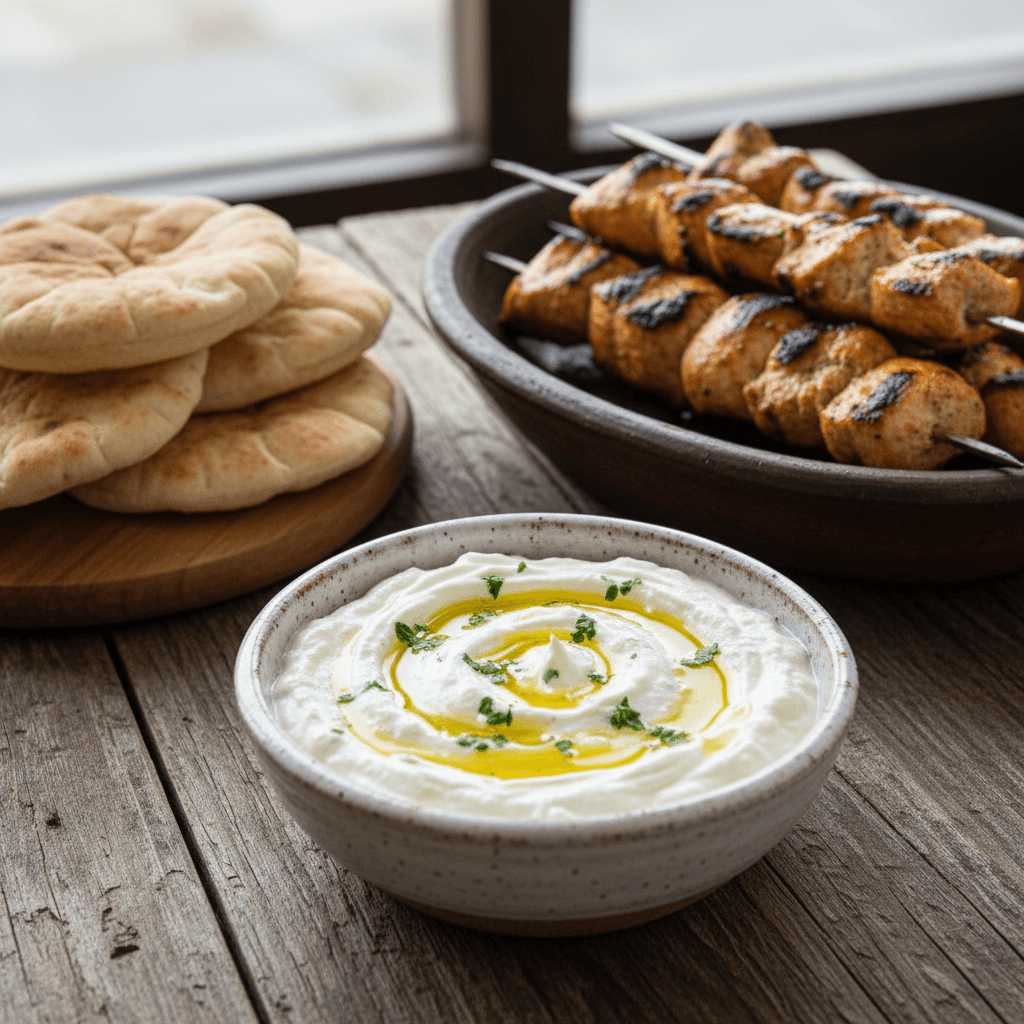
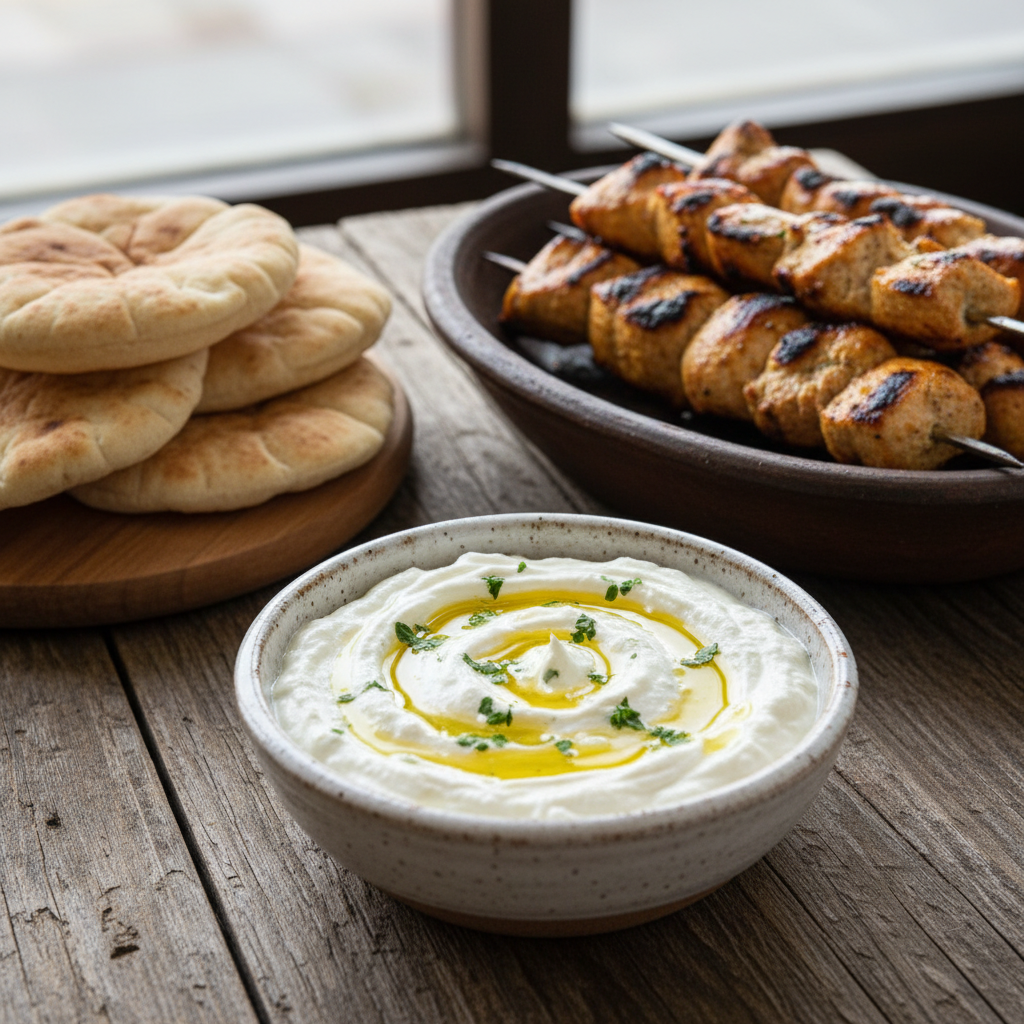
Once your Lebanese garlic toum sauce has reached its final, glorious form—thick, fluffy, and radiantly white—it’s ready for the table. The presentation is simple, allowing the sauce itself to be the star. Spoon the toum into a small serving bowl, or zeitdieh. You can create a little swirl on top with the back of a spoon, and for a touch of elegance and flavor, drizzle a little bit of high-quality extra virgin olive oil over the surface. A sprinkle of finely chopped fresh parsley or a dash of paprika or sumac can add a lovely touch of color, but it’s entirely optional. The pure white sauce is a statement on its own. The real art is in how it's eaten. This isn't a sauce to be used sparingly. It’s meant to be scooped, smeared, and dolloped with enthusiasm. Its most iconic pairing is with Shish Tawouk, where the creamy, pungent garlic sauce is the perfect foil for the smoky, tender grilled chicken cubes. It's also absolutely essential for a proper chicken shawarma wrap, providing both flavor and moisture. But its uses extend far beyond chicken. Serve it alongside grilled kafta, fried kibbeh, or even roasted vegetables. One of the simplest and most profound pleasures is using it as a dip for warm, pillowy pita bread or crispy, golden french fries. The experience of eating Lebanese garlic toum sauce is about the bold contrast it provides, elevating simple dishes into something truly memorable and deeply satisfying.
Make It Your Own
While the classic four-ingredient Lebanese garlic toum sauce is perfection in its own right, its robust structure makes it a wonderful canvas for creative variations. Once you’ve mastered the basic technique, you can start to play with the flavor profile to suit your taste or a specific dish. Remember to make any additions at the very end, after the emulsion is stable. For a fresh, herbaceous note, you can pulse in a tablespoon of finely chopped fresh parsley, cilantro, or mint. This not only adds flavor but also a beautiful flecked color to the white sauce. For a bit of warmth and smokiness, a pinch of smoked paprika or Aleppo pepper can be stirred in, which pairs beautifully with grilled meats. If you find the raw garlic intensity a bit overwhelming, you can create a milder version. One popular technique is to blanch the garlic cloves in boiling water for 30-60 seconds, then immediately plunge them into an ice bath before proceeding with the recipe. This tames the sharpest bite of the garlic without sacrificing its fundamental flavor. Alternatively, you could make the sauce with roasted garlic for a completely different profile—deep, sweet, and nutty. This version is less a traditional toum and more of a fusion aioli, but it's absolutely delicious as a spread for sandwiches or a dip for roasted root vegetables. You can also use your finished Lebanese garlic toum sauce as a base. Whisk a spoonful into plain yogurt for a quick, creamy salad dressing or a marinade for chicken. A dollop stirred into mashed potatoes will transform them into an unforgettable side dish. Don't be afraid to experiment; the goal is to make this incredible sauce a staple in your kitchen in whatever way you enjoy it most.
Keeping and Reusing Leftovers
Properly stored, your homemade Lebanese garlic toum sauce will last for several weeks in the refrigerator, and its flavor will evolve over time. Immediately after making it, transfer the toum to a clean, airtight glass jar or container. Press a piece of plastic wrap directly onto the surface of the sauce before sealing the lid; this helps prevent a skin from forming and minimizes oxidation. Store it in the coldest part of your fridge. During the first day or two, you might notice the garlic flavor becoming even more potent as the ingredients meld. After a few days, it will begin to mellow out into a smoother, more rounded garlic flavor. It’s a joy to have on hand for quick meals. The beauty of leftovers is discovering new ways to use this versatile sauce. It makes an incredible sandwich spread, far more interesting than mayonnaise, especially on a grilled chicken or falafel sandwich. Whisk it with a bit of extra lemon juice and a splash of water to create a pourable dressing for salads or grain bowls. Use it as a finishing sauce for a piece of pan-seared fish or toss it with hot, roasted potatoes or broccoli for an instant flavor explosion. You can even use it as a dip for a platter of crisp, raw vegetables like carrots, cucumbers, and bell peppers. One word of caution: freezing is not recommended. The freezing and thawing process will break the delicate emulsion, causing the oil to separate and ruining the fluffy texture you worked so hard to achieve. Given how long it lasts in the fridge and how many ways there are to use it, you'll likely finish the jar long before you'd ever need to freeze it.
Your Questions Answered
Why did my toum break and turn into a separated, oily mess?
This is the most common issue, and it almost always comes down to one thing: adding the oil too quickly. An emulsion is a delicate bond, and you must introduce the oil in a very slow, thin stream to allow the garlic paste to incorporate it. Other culprits can be using ingredients that are too warm (try using chilled oil and ice water) or simply overloading your food processor. Patience is your most important tool!
My Lebanese garlic toum sauce tastes bitter. What went wrong?
There are two main reasons for bitterness. First, you may have used old garlic that has started to sprout. The little green germ in the center of the clove is very bitter, so it's essential to remove it. Second, and more likely, is that you used the wrong kind of oil. Extra virgin olive oil, when blended at high speeds, releases bitter-tasting polyphenols. Always use a neutral oil like sunflower, canola, or grapeseed for a clean flavor.
Can I make this sauce without a food processor?
Absolutely. The most traditional method for making Lebanese garlic toum sauce uses a large mortar and pestle. It is a significant amount of physical work, pounding the garlic into a paste and then slowly whisking in the oil drop by drop. It can be done, but it requires serious effort and time. A high-powered blender can also work, but you must be very careful with the speed to avoid heating the sauce, which can cause it to break.
The raw garlic flavor is a little too strong for me. How can I make it milder?
If you prefer a gentler garlic kick, you can easily temper the garlic before you begin. Simply drop the peeled cloves into a small pot of boiling water for about 30-60 seconds, then drain them and immediately transfer them to a bowl of ice water to stop the cooking process. Dry them thoroughly, and proceed with the recipe as written. This will produce a noticeably milder, though still delicious, toum.
Besides Shish Tawouk, what are the best things to serve with toum?
Oh, the possibilities are endless! Toum is a cornerstone of the mezze table. It’s fantastic with any grilled meats, especially kafta and chicken wings. It’s essential in a shawarma wrap and delicious alongside falafel. Use it as a dip for french fries (a very popular combination in Lebanon!), fried kibbeh, or a platter of fresh vegetables. And of course, one of the best ways to enjoy it is simply scooped up with a piece of warm, fluffy pita bread.
Lebanese Garlic Toum Sauce
An authentic recipe for the famous Lebanese garlic sauce known as toum. This intensely flavorful, fluffy, and creamy emulsion is made without eggs and is perfect for grilled meats, shawarma, or as a dip.
Prep Time
20 min
Cook Time
15 min
Total Time
35 min
Servings
3 cups
Ingredients
For 3 cups
- 1 cup garlic cloves, peeled (about 3-4 large heads)
- 1.5 teaspoons kosher salt
- 4 cups neutral-flavored oil (such as sunflower, canola, or grapeseed oil)
- 1/2 cup fresh lemon juice, chilled
- 2-3 tablespoons ice water
Instructions
- 1
Prepare the Garlic
Begin by meticulously preparing the garlic. Slice each peeled clove in half lengthwise and carefully remove the small green germ from the center, if present. This step is crucial for preventing any bitterness in your final sauce.
- 2
Create the Garlic Paste
Place the prepared garlic cloves and the kosher salt into the bowl of a large food processor (at least an 8-cup capacity is recommended). Pulse several times to chop the garlic, then process continuously for 1-2 minutes, scraping down the sides of the bowl as needed, until a smooth, slightly wet paste forms.
- 3
Start the Emulsion
With the food processor running, add 1 tablespoon of the chilled lemon juice to the garlic paste. Let it fully incorporate. This primes the paste to begin accepting the oil.
- 4
Begin the First Oil Drizzle
Very, very slowly, begin to drizzle in the first cup of neutral oil. This should be a tiny, thread-like stream. Rushing this step will cause the sauce to break, so take your time. You should notice the mixture starting to thicken and whiten.
- 5
Alternate with Lemon Juice
After the first cup of oil is fully incorporated, stop the drizzle. With the processor still running, add 1 tablespoon of lemon juice and 1 tablespoon of ice water. Let them mix in completely; the sauce may thin for a moment before tightening up again.
- 6
Continue the Slow Drizzle
Resume drizzling in the second cup of oil, just as slowly as the first. The sauce will continue to thicken and become more voluminous. Patience is key.
- 7
Alternate Liquids Again
Once the second cup of oil is incorporated, repeat the process of adding another tablespoon of lemon juice and ice water. Always scrape down the sides of the bowl during these pauses to ensure everything is being mixed evenly.
- 8
Incorporate the Third Cup of Oil
Slowly drizzle in the third cup of oil. By now, your toum should be very thick, white, and fluffy. It will look like a very thick mayonnaise or frosting.
- 9
Add Remaining Liquids
After the third cup of oil is in, add the remaining lemon juice and ice water (if any is left). This will be the final addition of liquid.
- 10
Finish with the Last of the Oil
Slowly drizzle in the fourth and final cup of oil. The toum will be very thick at this point. Continue processing for another minute after all the oil is added to ensure the emulsion is strong and stable.
- 11
Check Consistency and Rest
Turn off the processor. The final toum should be incredibly thick and hold its shape on a spoon. It will have a sharp garlic bite initially. Transfer the toum to an airtight container and refrigerate for at least a few hours, or preferably overnight, to allow the flavors to meld and mellow slightly.
- 12
Store Properly
Store the Lebanese garlic toum sauce in an airtight container in the refrigerator. It will keep for up to a month, with the flavor becoming smoother over time. Serve chilled with your favorite grilled dishes.
Nutrition Facts
Per serving (estimated)
120 calories
Calories
1g
Carbs
0g
Protein
13g
Fat
0g
Fiber
45mg
Sodium
0g
Sugar