The Best Moroccan Harira Soup Recipe (Authentic & Easy)
Discover my authentic Moroccan Harira Soup recipe! A rich, hearty soup with lentils, chickpeas, and warm spices. Perfect for family gatherings and cozy evenings.
cookwithyara.com/recipes/moroccan-harira-soup-recipe
There are some dishes that do more than just feed us; they offer a warm embrace in a bowl. This authentic Moroccan Harira Soup recipe is one of those dishes. Imagine bringing a large, steaming pot to the table. The aroma—a complex, intoxicating blend of warm spices, fragrant herbs, and savory meat—fills the room, instantly quieting conversations and drawing everyone’s attention. As you ladle the thick, ruby-hued soup into bowls, you see the beautiful tapestry of textures: the hearty chickpeas, the tender lentils, the delicate strands of vermicelli, all suspended in a velvety, rich broth. It's a moment of pure culinary magic, a centerpiece that feels both incredibly special and deeply comforting.
This is the kind of dish that gathers people together, encouraging them to slow down and savor each spoonful. But while it presents as a culinary masterpiece that might seem complex, I promise you that the process is one of patient, joyful layering. At its heart, this Moroccan Harira Soup recipe is a humble, nourishing one-pot meal, built on accessible ingredients and straightforward techniques. The real secret, which we’ll explore together, lies in a final, simple step called the tadwira—a magical thickener that transforms the soup from a simple broth into the luscious, full-bodied stew that has been cherished for generations. So, let’s begin this flavorful journey together.
What Makes This a Showstopper
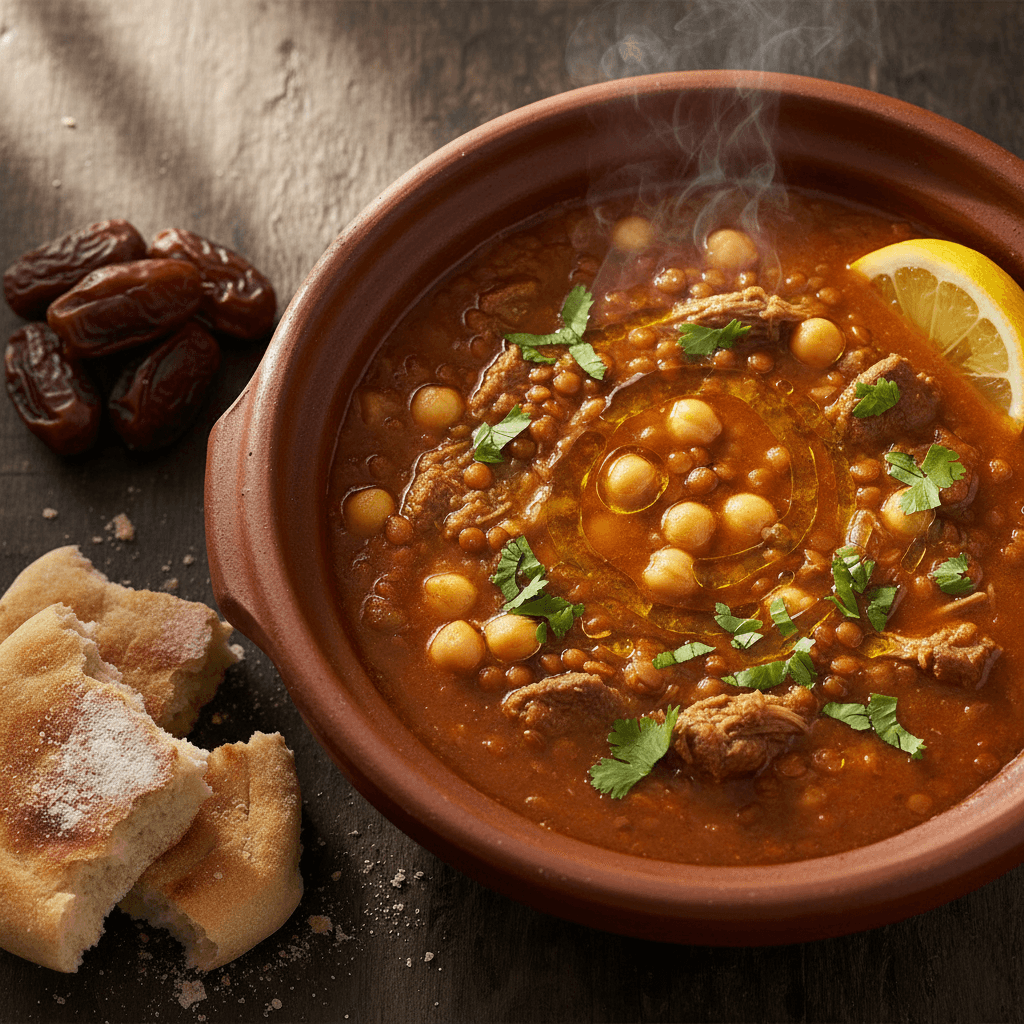
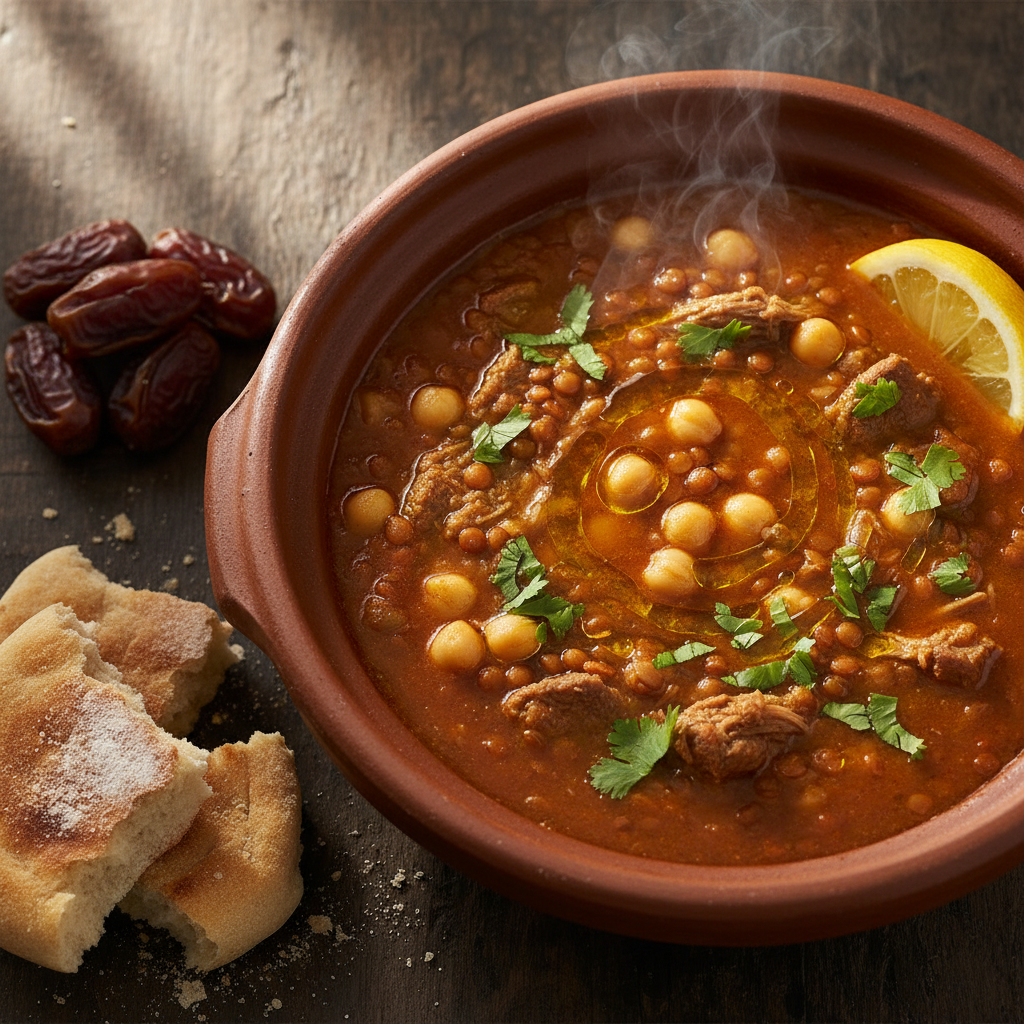
What truly elevates this Moroccan Harira Soup recipe from a simple soup to a memorable main event? It’s a combination of sensory experiences that begin the moment you see it. The visual appeal is undeniable. Its color is a deep, burnished red, a testament to the slow-simmered tomatoes and the golden glow of turmeric. Speckled throughout are the earthy tones of lentils and chickpeas, punctuated by the vibrant green of freshly chopped cilantro and parsley. It’s a rustic, beautiful dish that speaks of wholesome, carefully prepared food.
The flavor experience is a journey in itself. The first spoonful is an awakening of the palate: the bright tang of tomato gives way to the earthy, grounding flavors of the pulses. Then, the warm, aromatic spices—ginger, cinnamon, and turmeric—unfurl, creating a fragrant depth that is comforting but never overwhelming. The tender cubes of halal lamb or beef add a savory richness that makes the soup a truly substantial meal. The final flourish of fresh herbs and a squeeze of lemon juice cuts through the richness, leaving a clean, bright finish that makes you crave the next bite.
What makes it so impressive is that this complexity is achieved through simple, patient cooking, not intricate, professional skills. It tastes like something that has been lovingly tended to for days, yet it’s a manageable feat for a home cook. When you serve this Moroccan Harira Soup recipe, you’re offering more than just food; you’re presenting a dish with history, depth, and a generosity of spirit that you might find in a bustling Marrakesh souk or a fine Moroccan restaurant. It’s a taste of tradition that never fails to wow a crowd.
The Ingredients That Matter Most
While every component in this Moroccan Harira Soup recipe plays its part, a few key ingredients truly define its authentic character. Focusing on their quality will make a significant difference in the final dish. Let’s talk about the stars of the show.
First, the tomatoes. They form the soul of the broth. If you can find beautifully ripe, in-season tomatoes, using them fresh will reward you with unparalleled sweetness and a gentle acidity. However, a high-quality can of crushed or whole-peeled tomatoes is an excellent and reliable alternative that provides consistent flavor and color year-round. This isn't the place to skimp; a good tomato base is crucial.
Next are the pulses: lentils and chickpeas. They are the heart of Harira, providing substance, texture, and earthy flavor. For chickpeas, using dried ones soaked overnight is non-negotiable for the best texture—they remain firm yet creamy. Canned chickpeas can work in a pinch, but they can sometimes be too soft. For lentils, standard brown or green varieties are perfect as they hold their shape during the long simmer.
The halal meat—typically lamb or beef shoulder—adds a deep, savory foundation. Choose a cut with a bit of fat and connective tissue, as it will break down during the simmer, becoming incredibly tender and enriching the broth. The meat doesn't need to be an expensive cut, just a flavorful one.
Of course, we must talk about the spices. The classic trio of turmeric, ginger, and a touch of cinnamon is essential. Turmeric provides its signature golden hue and earthy notes, ginger adds a warm, zesty heat, and cinnamon lends a subtle, fragrant sweetness that is characteristic of Moroccan cuisine. Using fresh, potent spices makes all the difference.
Finally, the fresh herbs: cilantro and parsley. Please, do not be shy here. A generous bunch of each is required. They are not just a garnish but a core flavor element, added in stages to build a vibrant, herbaceous profile that balances the richness of the soup. This generous use of herbs is what makes my Moroccan Harira Soup recipe taste so fresh and authentic.
Building It Step by Step
The magic of a truly great Moroccan Harira Soup recipe lies in the patient layering of flavors. Each stage of the process builds upon the last, creating a finished dish that is far more than the sum of its parts. Let's walk through the key phases of bringing this beautiful soup to life.
It all begins with Stage 1: The Flavor Base. This is where you gently sauté finely chopped onions, celery, and garlic in olive oil until they soften and become translucent. You're not looking for color, but for sweetness. Next, you add the cubed meat, searing it just enough to lock in its juices. This is followed by blooming the spices—turmeric, ginger, cinnamon, and pepper—directly in the pot. Toasting them for a minute unleashes their essential oils, creating the foundational aromatic layer of the soup. This initial step, the taqliya, fills your kitchen with the first promise of the deliciousness to come.
Stage 2: The Long Simmer. Now, you add the liquids—the crushed tomatoes, rich broth—along with the soaked chickpeas and dried lentils. Bring everything to a gentle simmer, then reduce the heat, cover the pot, and let it be. This is the period of quiet transformation, where the meat becomes fork-tender, the pulses soften, and all the individual flavors begin to meld into a harmonious whole. This slow simmer, typically lasting over an hour, is crucial for developing the soup's deep, complex character.
Stage 3: The Herb and Pasta Infusion. About twenty minutes before you’re ready to serve, the soup gets another jolt of life. A large portion of the chopped cilantro and parsley is stirred in. Adding them at this stage ensures their flavor permeates the entire broth without losing all of its fresh vibrancy. Shortly after, the broken vermicelli is added. This delicate pasta cooks quickly, adding a lovely, soft texture that contrasts with the heartier pulses. This is where the soup starts to feel complete.
Stage 4: The Tadwira. This is the final, defining step of an authentic Moroccan Harira Soup recipe. You’ll whisk together flour and cold water to create a smooth, thin slurry. While the soup is at a steady simmer, you slowly pour in the tadwira, whisking constantly. You will witness the magic happen in real time as the broth transforms, thickening into a velvety, luscious consistency that coats the back of a spoon. You cook it for another few minutes to ensure the flour taste is cooked out, and the soup reaches its perfect, signature texture. A final stir of remaining herbs and a squeeze of lemon juice at the end brightens everything up before serving.
Presentation and Plating Tips
Serving Harira is an experience, and a few thoughtful touches can elevate its presentation from a simple bowl of soup to a memorable feast for the eyes. This dish is rustic and hearty, so its plating should reflect that beautiful simplicity. The best vessel is a deep, comforting bowl, known in Morocco as a zlafa. If you don't have one, any handmade-style ceramic or earthenware bowl will perfectly complement the soup's humble yet elegant nature.
Once you've ladled the thick, fragrant soup into the bowls, the garnishes become your final artistic flourish. A mandatory drizzle of high-quality extra virgin olive oil not only adds a beautiful sheen but also contributes a final layer of fruity, peppery flavor. Next, a generous sprinkle of finely chopped fresh cilantro is essential; its bright green color provides a stunning contrast against the deep red of the soup and adds a burst of freshness.
To complete the presentation, always serve each bowl with a thick wedge of fresh lemon on the side. The acidity is not just a suggestion; it's a key part of the flavor profile, meant to be squeezed over the soup just before eating. It cuts through the richness and brightens all the complex flavors. For a truly traditional experience, place a small plate of soft dates on the table. The sweet chewiness of the dates is the perfect counterpoint to the savory, spiced soup. A basket of warm, crusty bread like Moroccan khobz or a simple baguette for dipping is also a wonderful and welcome addition to the table. These simple, authentic touches are what make serving this Moroccan Harira Soup recipe a truly special occasion.
Scaling Up for a Crowd
One of the greatest attributes of this Moroccan Harira Soup recipe is how beautifully it scales to serve a large group. It’s the perfect dish for a family gathering or a festive get-together, as making a large batch requires little more effort than a small one—you just need a bigger pot! Doubling or even tripling the ingredients is straightforward. Simply multiply everything proportionally, ensuring your stockpot is large enough to comfortably hold the volume and allow for simmering without boiling over.
When cooking for a crowd, preparation is your best friend. You can do a significant amount of work the day before. Chop all your aromatics—the onions, celery, and garlic—and store them in an airtight container in the refrigerator. Cube the meat and chop all the fresh herbs. You can even measure out all the dry spices and combine them in a small bowl. Having these components ready to go transforms cooking day into a simple assembly process.
On the day of serving, you can prepare the soup up to the point just before adding the vermicelli and the tadwira. Let it simmer away, and then you can turn off the heat and let it sit for a few hours. About 30 minutes before your guests are ready to eat, bring the soup back to a gentle simmer, add the pasta to cook through, and then perform the final thickening step with the flour slurry. This ensures the pasta is perfectly cooked and the soup is served at its ideal texture and temperature. Consider setting up a small “garnish station” with bowls of chopped cilantro, lemon wedges, and olive oil, allowing guests to customize their own perfect bowl of Harira.
Storing Any Leftovers
Harira is one ofthose magical dishes that often tastes even more delicious the next day. As it rests in the refrigerator, the flavors continue to meld and deepen, resulting in an even richer and more complex soup. Storing it properly is key to preserving its wonderful texture and taste.
Once the soup has cooled completely to room temperature, transfer it to an airtight container. It can be stored in the refrigerator for up to four days. You will notice that the soup thickens considerably once chilled; this is due to the starches from the lentils, flour, and vermicelli. This is completely normal and is easily remedied during reheating.
To reheat, gently warm the soup in a saucepan over medium-low heat. Avoid bringing it to a rolling boil, as this can make the vermicelli overly soft. As it heats up, you'll likely need to add a splash of water or broth to thin it back to its original consistency. Add a little at a time, stirring until you reach the texture you prefer. Once heated through, give it a taste and adjust the seasoning if needed—a fresh squeeze of lemon juice can work wonders to reawaken the flavors.
If you plan to freeze the soup, I recommend doing so before adding the vermicelli and the tadwira. The texture of pasta can sometimes become a bit soft after freezing and thawing. Simply freeze the soup base, and when you're ready to serve, thaw it, bring it to a simmer, and then proceed with adding the pasta and thickener for a result that tastes freshly made.
Variations to Explore
While this classic Moroccan Harira Soup recipe is a masterpiece on its own, its fundamental structure is wonderfully adaptable. Once you're comfortable with the base recipe, you can explore several variations to suit your taste, dietary needs, or the ingredients you have on hand.
-
Vegetarian or Vegan Harira: This is a fantastic and very common variation. Simply omit the meat and use a rich, high-quality vegetable broth. To build back some of the umami and depth, you can add a cup of diced mushrooms or a small, diced sweet potato along with the onions at the beginning. The result is an equally hearty and satisfying soup that is completely plant-based.
-
Gluten-Free Version: To make this recipe gluten-free, two simple swaps are needed. First, substitute the vermicelli pasta with an equal amount of long-grain white rice or a gluten-free pasta of your choice. Second, for the tadwira, replace the all-purpose flour with a cornstarch slurry (about 2 tablespoons of cornstarch mixed with 1/4 cup of cold water) or a reliable gluten-free all-purpose flour blend.
-
A Spicier Kick: If you enjoy more heat, it’s easy to dial up the spice level. Add 1/4 to 1/2 teaspoon of cayenne pepper or a pinch of red pepper flakes along with the other spices at the beginning of the cooking process. You could also add a finely chopped fresh red chili with the onions for a more direct, vibrant heat.
-
Different Pulses: Feel free to experiment with the lentils. Using red lentils instead of brown or green will result in a much creamier, thicker soup as they break down completely during cooking. If you use red lentils, you may find you need less tadwira to achieve the desired consistency. A mix of lentils can also add a wonderful complexity of texture.
Questions You Might Have
Can I make this Moroccan Harira Soup recipe ahead of time?
Absolutely! In fact, many people believe Harira is even better on the second day. The flavors have more time to meld and deepen. You can prepare the entire soup a day or two in advance. When reheating, you may need to add a splash of broth or water to thin it out as it will have thickened in the fridge.
My soup isn't thick enough. What did I do wrong?
You likely didn't do anything wrong! The desired thickness of Harira can be a matter of personal preference. If yours is thinner than you'd like, simply create a little more tadwira. Whisk one additional tablespoon of all-purpose flour with three tablespoons of cold water until smooth, then slowly stream it into the simmering soup while whisking constantly until it reaches the consistency you love.
What if I can't find smen?
Smen, a traditional fermented clarified butter, adds a unique, funky depth, but it can be difficult to find. Don't worry if you can't locate it. A wonderful substitute is ghee, which provides a similar nutty richness. In its absence, a tablespoon of good-quality unsalted butter stirred in at the end will also enrich the soup beautifully.
Can I use canned lentils in this recipe?
While dried lentils offer the best texture and flavor, you can certainly use canned lentils in a pinch to save time. Be sure to rinse them thoroughly to remove any canning liquid. Add them to the soup during the last 15-20 minutes of cooking, along with the vermicelli, so they have enough time to heat through without turning to mush.
Is this soup very spicy?
This authentic Moroccan Harira Soup recipe is more warmly spiced and aromatic than it is 'hot' spicy. The warmth comes from ginger and black pepper, but it's balanced by the other flavors. The recipe as written is very family-friendly. If you prefer more heat, you can easily add a pinch of cayenne pepper or red pepper flakes.
How can I make this a complete and traditional meal?
Harira is so hearty it's often considered a meal in itself, especially when it's served to break the fast during Ramadan. To make it a more complete and traditional spread, serve it with hard-boiled eggs (peeled and served on the side), a plate of soft, pitted dates, and slices of a sweet, sticky pastry called chebakia. A basket of warm Moroccan bread, or khobz, for dipping is also essential.
Moroccan Harira Soup
A traditional and hearty Moroccan soup featuring tomatoes, lentils, chickpeas, tender meat, and warm spices, thickened to a velvety consistency. A perfect one-pot meal.
Prep Time
25 min
Cook Time
1h 30m
Total Time
1h 55m
Servings
8 servings
Ingredients
For 8 servings
- 1 cup dried chickpeas, soaked overnight and drained
- 2 tbsp olive oil
- 1 lb halal lamb or beef shoulder, cut into ½-inch cubes
- 2 medium yellow onions, finely chopped
- 3 celery stalks, finely chopped
- 4 cloves garlic, minced
- 1 ½ tsp ground ginger
- 1 ½ tsp ground turmeric
- ½ tsp ground cinnamon
- 1 tsp freshly ground black pepper
- ½ tsp salt, plus more to taste
- 3 tbsp tomato paste
- 1 (28 ounce) can crushed tomatoes
- ¾ cup dried brown or green lentils, rinsed
- 8 cups low-sodium halal chicken or beef broth
- 1 large bunch fresh cilantro, chopped (about 1 ½ cups)
- 1 large bunch fresh parsley, chopped (about 1 ½ cups)
- 1 tbsp smen (optional, or unsalted butter/ghee)
- ½ cup fine vermicelli pasta, broken into 1-inch pieces
- ½ cup all-purpose flour
- 1 cup cold water
- Juice of 1 lemon, plus wedges for serving
Instructions
- 1
Sauté Aromatics and Meat
Heat olive oil in a large stockpot or Dutch oven over medium-high heat. Add the cubed lamb or beef and brown on all sides. Add the chopped onions and celery, cooking until softened, about 5-7 minutes.
- 2
Bloom Spices
Add the minced garlic, ground ginger, turmeric, cinnamon, black pepper, and salt to the pot. Cook for 1 minute more, stirring constantly, until the spices are very fragrant. Stir in the tomato paste and cook for another minute to deepen its flavor.
- 3
Add Liquids and Pulses
Pour in the crushed tomatoes and the broth. Add the soaked and drained chickpeas and the rinsed lentils. Stir everything together well, scraping up any browned bits from the bottom of the pot.
- 4
Simmer the Soup
Bring the soup to a boil, then reduce the heat to low, cover the pot, and let it simmer for at least 1 hour and 15 minutes, or until the meat is tender and the chickpeas are cooked through. Stir occasionally to prevent sticking.
- 5
Add Herbs and Pasta
Stir in about two-thirds of the chopped cilantro and parsley (reserving the rest for garnish) and the optional smen or butter. Add the broken vermicelli pasta to the pot and stir. Let the soup simmer for another 8-10 minutes, or until the pasta is cooked al dente.
- 6
Prepare the Tadwira
While the pasta cooks, prepare the thickener (tadwira). In a medium bowl, whisk together the all-purpose flour and 1 cup of cold water until completely smooth with no lumps. It should have the consistency of thin cream.
- 7
Thicken the Soup
Ensure the soup is at a steady simmer. Slowly pour the flour slurry into the soup in a thin stream, whisking the soup constantly as you pour to prevent lumps from forming. This is a crucial step for achieving a velvety texture.
- 8
Final Simmer
Continue to simmer the soup for another 5-7 minutes, stirring often, to cook out the raw flour taste and allow the soup to thicken fully. The soup should be able to coat the back of a spoon.
- 9
Finish and Season
Turn off the heat. Stir in the lemon juice and the remaining fresh cilantro and parsley. Taste the soup and adjust the seasoning with more salt and pepper if needed.
- 10
Serve and Garnish
Ladle the hot Harira into bowls. Garnish with an extra sprinkle of cilantro, a drizzle of good olive oil, and serve immediately with lemon wedges on the side for squeezing.
Nutrition Facts
Per serving (estimated)
430 calories
Calories
48g
Carbs
32g
Protein
12g
Fat
14g
Fiber
650mg
Sodium
9g
Sugar