Vibrant Basil Pesto Recipe (That Stays Green!)
Learn how to make the best homemade basil pesto recipe! My secret technique keeps it bright green and perfectly emulsified. So fresh and easy!
cookwithyara.com/recipes/basil-pesto-recipe
There are certain aromas that transport you instantly. For me, the scent of freshly crushed basil is one of the most powerful. It’s the smell of sun-drenched Mediterranean gardens, of simple ingredients transformed into something extraordinary. It reminds me of large family tables laden with fresh salads, grilled meats, and vibrant sauces meant for sharing. This connection to fresh, pure flavor is what drew me to perfect my own basil pesto recipe. For years, I struggled with the same common issues: pesto that turned a disappointing shade of murky green, or separated into a slick of oil. I knew there had to be a better way.
Through countless batches and a deep dive into the science of herbs and emulsions, I discovered the secrets. The result is this recipe—a pesto that is not only intensely flavorful but also maintains a brilliant, jewel-toned green color for days. It’s creamy, perfectly balanced, and tastes like summer in a jar. This isn’t just another pesto recipe; it’s a masterclass in technique. Today, I’m sharing every detail with you, from selecting the right ingredients to the one simple step that changes everything. You’ll walk away with the confidence to make the most stunning, delicious, and vibrant pesto of your life.
The Story Behind This Dish
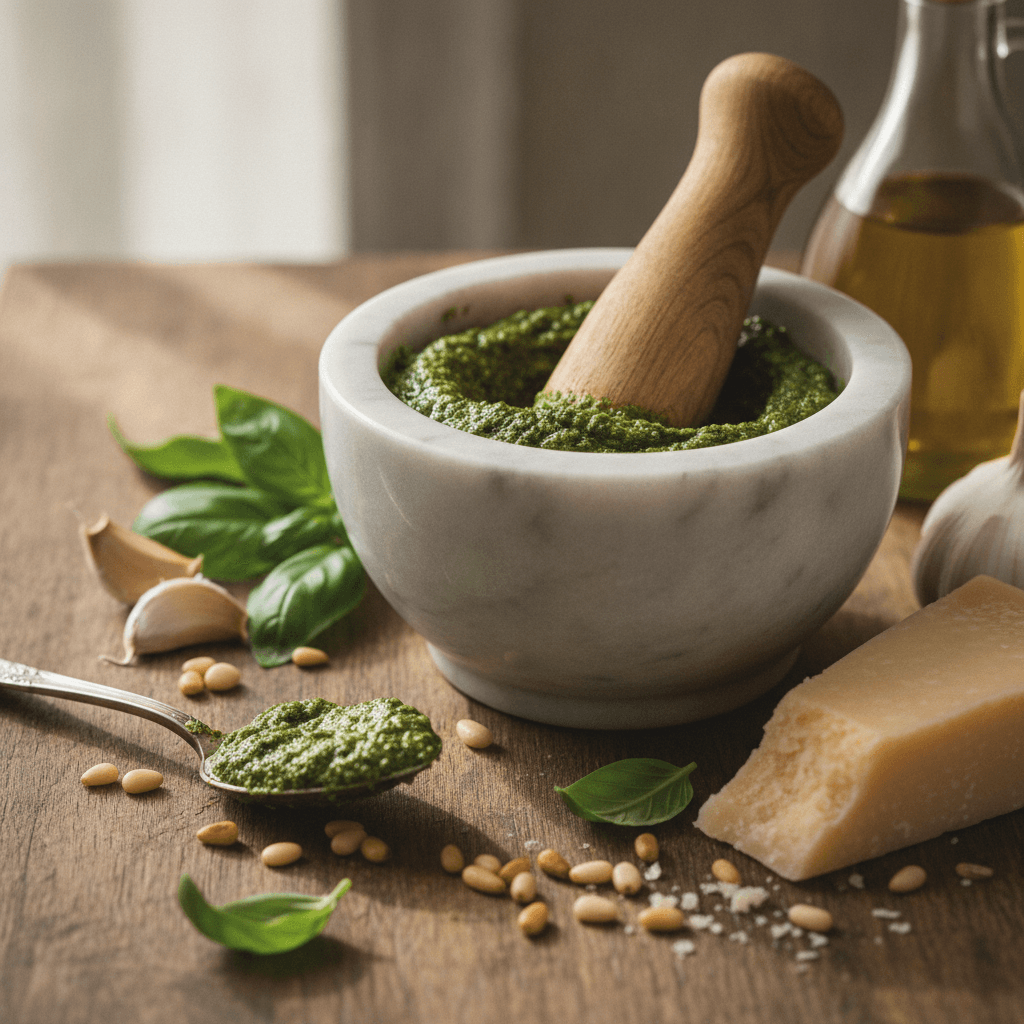
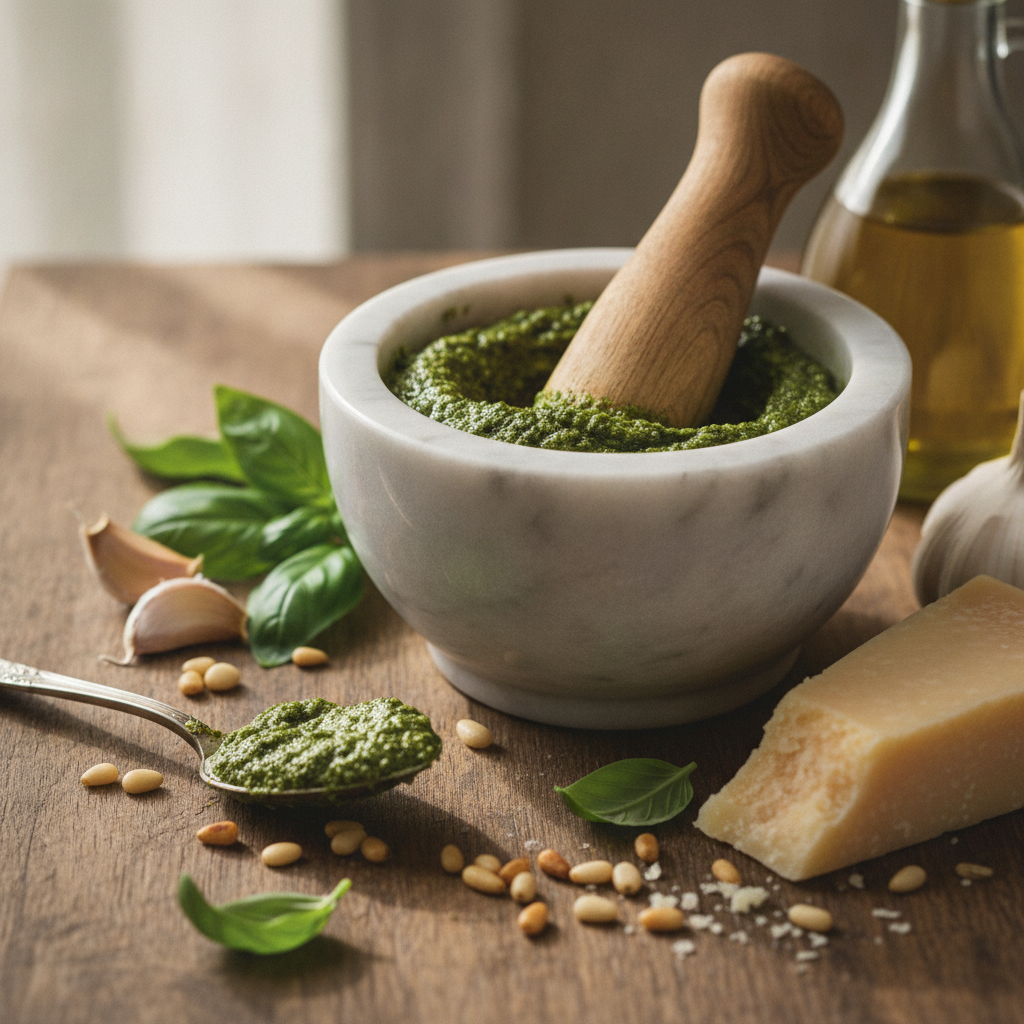
Pesto has a beautiful, humble history rooted in Genoa, the capital of Italy's Liguria region. Its name comes from the Italian verb pestare, which means “to crush” or “to pound.” This speaks to its original preparation method, using a traditional marble mortar and wooden pestle. For generations, Ligurian home cooks would painstakingly pound together local ingredients: young, fragrant basil leaves, garlic, coarse salt, local pine nuts, aged cheese, and the region’s prized olive oil. It was a true labor of love, resulting in a sauce with a rustic texture and unparalleled depth of flavor.
This method of crushing fresh herbs and aromatics to create a paste is a thread that runs through many culinary traditions, including those of the Levant. Think of zhoug, a fiery cilantro-based condiment, or the countless herb-and-oil mixtures used to marinate and dress dishes across the Mediterranean. These preparations all share a common philosophy: celebrating the peak freshness of simple, high-quality ingredients. Pesto is the Italian embodiment of this principle.
Over time, as modern kitchen tools became available, the food processor replaced the mortar and pestle in many homes, making the process faster and more accessible. While a hand-pounded pesto has a unique charm, a carefully made version in a food processor can be just as magnificent. The key is to respect the ingredients. A homemade basil pesto recipe is infinitely superior to anything you can buy in a jar. It lacks the preservatives and stabilizers of commercial versions, and its flavor is incomparably bright, pungent, and alive. Making it yourself connects you to a long tradition of simple, honest cooking.
What Makes This Recipe Special
This isn't just a list of ingredients; it's a carefully crafted method designed to produce the best possible results every single time. Here’s what sets this specific basil pesto recipe apart and why I believe it will become your go-to method.
-
Vibrant, Long-Lasting Green Color: This is the showstopper. My recipe includes one crucial but simple step—blanching the basil leaves for just a few seconds. This technique locks in the chlorophyll, preventing the enzymes that cause oxidation and browning. Your pesto will stay a stunning, vivid green in the fridge for days, instead of turning a dull, muddy color.
-
Perfectly Creamy and Emulsified: Do you hate pesto that separates into a pool of oil? Me too. The key is in the technique. By slowly streaming the olive oil into the food processor while it's running, we create a stable, creamy emulsion. The sauce clings beautifully to pasta and spreads like a dream, with no greasy separation in sight.
-
Deep, Balanced Flavor Profile: Flavor is everything, and this recipe is built for balance. Toasting the pine nuts beforehand awakens their natural sweetness and adds a deep, nutty complexity that raw nuts just can't match. We also use just the right amount of garlic—enough for a pleasant pungency without overwhelming the delicate basil. A final squeeze of fresh lemon juice adds a touch of brightness that lifts all the other flavors.
-
Halal-Conscious Ingredients: Every component is chosen with care to be halal. I specifically call for finding a high-quality Parmesan-style cheese made with microbial or vegetable rennet, ensuring it fits perfectly within a halal diet without compromising on that essential savory, umami flavor.
-
Incredibly Versatile: While perfect for pasta, this pesto is a true kitchen workhorse. I've designed its consistency to be adaptable. You can use it as a flavorful spread for sandwiches and wraps, a marinade for chicken, a topping for grilled fish, or a vibrant drizzle over roasted vegetables and soups. It’s a condiment that will elevate so many of your weekly meals.
-
Freezer-Friendly Perfection: This recipe is designed for preservation. I’ll show you the best way to freeze your pesto in convenient portions, so you can capture the essence of fresh, peak-season basil and enjoy it for months to come. It’s like having a little jar of summer sunshine ready to go whenever you need it.
Breaking Down the Ingredients
A truly remarkable dish is always a sum of its parts. For our basil pesto recipe, using high-quality ingredients is non-negotiable. Each one plays a vital role in creating the final, harmonious flavor and texture. Let's walk through the key players.
First and foremost is the fresh basil. This is the heart and soul of the sauce. Look for bunches with vibrant, green, perky leaves and no signs of wilting or dark spots. Genovese basil is the traditional choice, known for its large, tender leaves and sweet, slightly clove-like aroma, but any sweet basil variety will work beautifully. We only use the leaves, as the stems can be bitter and fibrous, detracting from the smooth texture we’re aiming for.
Next, the pine nuts. These small, unassuming nuts provide the creamy texture and a subtle, buttery richness that is characteristic of classic pesto. It's absolutely crucial to toast them. This simple step takes only a few minutes but transforms their flavor from mild and soft to deeply nutty and aromatic, adding a wonderful complexity to the sauce. If you have a nut allergy or can't find them, toasted sunflower or pumpkin seeds are a great alternative.
The cheese provides the salty, savory, umami backbone. Traditionally, this would be Parmigiano-Reggiano or Pecorino. For our halal kitchen, the key is to find a high-quality hard cheese made with microbial or vegetable rennet instead of animal rennet. Many brands now offer this, so be sure to check the label. The sharp, nutty flavor is essential for balancing the richness of the oil and nuts.
Of course, we need garlic. Fresh garlic adds a pungent, spicy kick that cuts through the other ingredients. I recommend using one to two fresh, plump cloves. The key is not to overdo it, as raw garlic can easily dominate the delicate basil. We want it to be a background note, not the main event.
For the liquid gold, we use a good-quality extra virgin olive oil. This is not the place for your everyday cooking oil. Choose an olive oil with a flavor you genuinely enjoy—something fruity, perhaps a little peppery. It brings everything together into a smooth, emulsified sauce and contributes significantly to the final taste. We add it last and in a slow stream to create that perfect, creamy consistency.
Finally, a couple of small but mighty additions: fine sea salt and a squeeze of fresh lemon juice. The salt does more than just season; it helps to break down the garlic and basil leaves, releasing their essential oils. The lemon juice is my secret weapon. A small amount doesn't make the pesto taste lemony, but its acidity brightens all the other flavors and works alongside the blanching process to help preserve that beautiful green color.
The Cooking Process Explained
Making this vibrant basil pesto recipe is less about cooking and more about a simple, elegant process of assembly. The magic lies in the technique at each stage. Let’s walk through it together, focusing on the sensory cues that will guide you to perfect results.
The very first step, and the key to our color, is preparing the basil. We're going to blanch it. Set a pot of water to a rolling boil and prepare a large bowl of ice water right next to it. Plunge the fresh basil leaves into the boiling water for just 15-20 seconds. You’ll see them turn a brilliant, shocking green. Immediately use a slotted spoon to transfer them into the ice bath. This halts the cooking process instantly and locks in that stunning color. After a minute, drain the basil thoroughly and squeeze out every last drop of excess water with your hands or by pressing it in a clean kitchen towel. This is crucial; water is the enemy of a good emulsion.
While the basil cools, turn your attention to the pine nuts. Place them in a small, dry skillet over medium heat. Stay close and toss them frequently. You're not looking for a dark toast, but rather a light, even golden color. In about 3-4 minutes, you’ll be rewarded with the most incredible nutty aroma. As soon as they are fragrant and lightly colored, remove them from the pan immediately to prevent them from burning from the residual heat.
Now, we build our flavor base in the food processor. Combine the toasted pine nuts, the peeled garlic cloves, the grated cheese, and the sea salt. Pulse these ingredients together until they form a coarse, crumbly paste. This step ensures the garlic is finely minced and well-integrated, and it creates a solid foundation for the rest of the sauce. Scrape down the sides of the bowl to make sure everything is evenly incorporated.
Next, add the squeezed-dry, blanched basil leaves. Pulse the machine in short bursts, maybe 10 to 15 times. We are not looking to puree it into oblivion. Pulsing gives you control, chopping the leaves finely without overheating them or turning them into a bitter mush. The goal is a texture that is relatively smooth but still has some character.
This final step is where the silky, creamy texture is born. With the food processor running on low, begin to slowly, steadily drizzle in the extra virgin olive oil through the feed tube. This slow addition is what allows the oil to emulsify with the other ingredients, creating a stable, cohesive sauce that won’t separate. Continue until all the oil is incorporated and the pesto looks smooth and creamy. Finally, add the squeeze of lemon juice and give it one last pulse to combine. Taste and adjust the salt if needed. Your vibrant, perfect pesto is now ready.
Mistakes to Avoid
Even a simple recipe can have a few pitfalls. Over the years, I've made every mistake in the book, so let me help you sidestep them. Following this friendly advice will ensure your basil pesto recipe turns out beautifully from your very first try.
-
Skipping the Blanching Step. I know it feels like an extra, fussy step, but I cannot overstate how important it is for color. If you skip blanching, the enzymes in the basil will react with the air as soon as they're crushed, causing the pesto to oxidize and turn a dull, brownish-green within hours. The 60 seconds it takes to blanch and shock the basil is the single best investment you can make for a visually stunning pesto.
-
Over-processing the Basil. The blades of a food processor generate friction, which creates heat. Heat is the enemy of fresh basil, causing it to turn dark and bitter. Avoid the temptation to just turn the machine on and let it run. Use short, deliberate pulses to chop the leaves. This gives you maximum control, breaks down the leaves efficiently, and keeps them cool and flavorful.
-
Pouring in the Olive Oil All at Once. If you dump all the oil in at the same time as the other ingredients, you'll end up with a greasy, separated mess rather than a creamy, unified sauce. The process of creating an emulsion requires the oil to be introduced slowly to the base ingredients. This allows the tiny oil droplets to be suspended evenly throughout the paste. The slow, steady stream is the secret to that luscious, restaurant-quality texture.
-
Forgetting to Squeeze the Basil Dry. After blanching, the basil leaves will be holding onto a lot of water. If you don't squeeze them out thoroughly, that excess water will get into your pesto, diluting the flavor and preventing the oil from emulsifying properly. It can make the final sauce watery and unstable. Take a moment to gently but firmly press out as much liquid as you can; your final texture will thank you.
-
Using Bitter or Old Garlic. Because the garlic is used raw, its flavor is very prominent. A single clove that has started to sprout a green germ in the center, or one that's old and dried out, can impart a harsh, bitter flavor that completely overpowers the sweet basil. Always use fresh, firm cloves and be sure to remove any green sprouts you find inside before adding them to the processor.
How to Serve This
A beautiful jar of homemade pesto is like a secret weapon in the kitchen. Its uses go far beyond a simple bowl of pasta. Here are some of my favorite ways to enjoy this incredible basil pesto recipe.
The most classic application, of course, is with pasta. Pesto loves pasta shapes that have plenty of nooks and crannies for the sauce to cling to. Think fusilli, gemelli, or the traditional Ligurian shapes like trofie or trenette. The most important tip for serving pesto with pasta is to never heat the pesto directly. Instead, cook your pasta, and just before draining, reserve about a cup of the starchy cooking water. Drain the pasta, return it to the warm pot, and then add your desired amount of pesto. Add a tablespoon or two of the reserved pasta water and stir vigorously. The starch in the water helps the pesto emulsify further, creating a silky, creamy sauce that coats every single piece of pasta perfectly.
Beyond pasta, this pesto makes a phenomenal sandwich spread. It instantly elevates a simple grilled chicken or roasted vegetable sandwich on ciabatta or sourdough. It’s also wonderful in wraps, providing a burst of fresh flavor and moisture. For a quick and delicious appetizer, spread it on toasted baguette slices and top with a slice of fresh tomato and a sprinkle of sea salt.
This pesto is also a fantastic partner for proteins. Dollop a spoonful over a freshly grilled chicken breast or a piece of flaky white fish like cod or halibut right as it comes off the heat. You can also mix it with a bit of yogurt to create a delicious, creamy sauce for kofta or grilled lamb chops. It adds a layer of herbaceous, savory flavor that complements the richness of the meat.
Think of it as a finishing sauce or drizzle. Toss it with roasted potatoes or other vegetables like zucchini, bell peppers, and asparagus after they come out of the oven. A vibrant green swirl of pesto can also transform a simple bowl of lentil or minestrone soup, adding a final burst of freshness just before serving. You can even thin it out with a little extra olive oil and lemon juice to create a spectacular salad dressing.
Make-Ahead and Storage Guide
One of the best things about this basil pesto recipe is how well it preserves. Making a large batch when basil is at its peak is a wonderful way to enjoy its flavor for weeks, or even months, to come. Proper storage is key to maintaining its color and freshness.
For Fridge Storage: If you plan to use the pesto within a week, you can store it in the refrigerator. Transfer the finished pesto to a clean glass jar or airtight container. To prevent the top layer from oxidizing and turning dark, gently pour a thin layer of extra virgin olive oil over the surface. This creates an airtight seal that protects the pesto from exposure to air. Make sure the layer covers the pesto completely. Seal the jar tightly, and it will keep its vibrant color and fresh taste in the fridge for up to 7 days. Each time you use some, smooth the surface and add a new thin layer of oil before sealing it again.
For Freezer Storage: Pesto freezes exceptionally well, and it's my preferred method for long-term storage. The best way to freeze it is in small, convenient portions. An ice cube tray is perfect for this. Spoon the pesto into the individual compartments of the tray. Cover it with plastic wrap and place it in the freezer until the cubes are solid, usually about 2-3 hours. Once frozen, pop the pesto cubes out of the tray and transfer them to a labeled freezer-safe bag or container. They will keep beautifully for up to 6 months.
For the absolute best flavor and texture upon thawing, some people prefer to freeze the pesto without the cheese. You can follow the recipe as written, simply omitting the cheese, and then stir in freshly grated cheese after you've thawed the portion you intend to use. This isn't strictly necessary, but it does yield a slightly fresher taste.
To Thaw and Reheat: When you're ready to use your frozen pesto, simply take out the number of cubes you need. You can let them thaw in a small bowl at room temperature for about an hour, or gently warm them in a saucepan over very low heat. Remember, never boil or overheat pesto. If you're using it for pasta, you can just drop the frozen cubes directly into the pot with the hot, drained pasta and a splash of pasta water. The residual heat will thaw the pesto and create a perfect sauce.
Reader Questions Answered
I often get questions about substitutions and techniques when it comes to making pesto. Here are answers to some of the most common queries about this basil pesto recipe.
Can I make this recipe nut-free?
Absolutely! If you have a nut allergy or simply don't have pine nuts on hand, you can easily make a substitution. Toasted sunflower seeds or raw pumpkin seeds (pepitas) are excellent choices. They provide a similar richness and help create a creamy texture. Just toast them in a dry skillet, the same way you would the pine nuts, to bring out their flavor.
My pesto turned bitter. What went wrong?
Bitterness in pesto usually comes from one of two sources. The first is over-processing the basil in the food processor, which generates heat and bruises the leaves, releasing bitter compounds. Using short pulses is key to preventing this. The second common culprit is the olive oil. Some extra virgin olive oils can develop a bitter taste when they are rapidly agitated in a food processor or blender. Using a good-quality, mild, and fruity olive oil and adding it slowly at the end can help mitigate this.
Can I make this with a different herb?
Yes, the basic formula of this recipe can be adapted for other herbs and greens. For a delicious variation, try replacing half of the basil with fresh baby spinach (which also helps with the green color!) or flat-leaf parsley. A mint and pistachio pesto is wonderful with lamb, while a cilantro and pumpkin seed pesto is fantastic on tacos or grilled fish. Feel free to experiment with what’s fresh and in season.
How much pesto should I use for a box of pasta?
A good rule of thumb is to use about 1/4 to 1/3 cup of pesto for every 100-125 grams (about 4 ounces) of dry pasta. For a standard 1-pound (450g) box of pasta, which typically serves 4-6 people, you'll want to start with about 1 cup of pesto and add more to taste. Always remember to reserve some starchy pasta water to help thin the sauce and make it creamy.
Is all Parmesan cheese halal?
No, this is a very important point for a halal kitchen. Traditional Parmigiano-Reggiano and Grana Padano are made using animal rennet, an enzyme from a calf's stomach. However, many companies now produce excellent Parmesan-style hard cheeses using microbial or vegetable-based rennet, which are fully halal. Always check the ingredients list on the packaging for “vegetable rennet” or “microbial rennet” to be sure.
Can I make this recipe in a mortar and pestle?
You certainly can! This is the traditional way, and it produces a pesto with a beautiful, rustic texture. It requires more effort but is very rewarding. Start by crushing the garlic and a pinch of salt to a paste. Add the pine nuts and crush them. Then, add the basil leaves in small batches, using a circular grinding motion. Finally, mix in the cheese, and then slowly drizzle in the olive oil while stirring with a spoon to emulsify. It’s a wonderful way to connect with the history of the dish.
The Best Homemade Basil Pesto Recipe
A vibrant, authentic basil pesto recipe that stays bright green. Made with fresh basil, toasted pine nuts, garlic, and quality olive oil. Perfect for pasta, sandwiches, and more.
Prep Time
15 min
Cook Time
5 min
Total Time
20 min
Servings
1.5 cups (about 6 servings)
Ingredients
For 1.5 cups (about 6 servings)
- 3 cups fresh basil leaves, packed (about 3 large bunches)
- 1/2 cup pine nuts
- 2 medium cloves garlic, peeled
- 3/4 cup freshly grated Parmesan-style cheese (ensure it's made with microbial or vegetable rennet for halal)
- 1/2 teaspoon fine sea salt, plus more to taste
- 1/2 cup extra virgin olive oil
- 1 tablespoon fresh lemon juice
Instructions
- 1
Prepare Water Baths
Bring a medium pot of water to a rolling boil. Next to the stove, prepare a large bowl filled with ice and water.
- 2
Blanch the Basil
Plunge the packed basil leaves into the boiling water for 15-20 seconds, just until they turn a vibrant green. Immediately use a slotted spoon to transfer the basil into the ice water bath to stop the cooking.
- 3
Dry the Basil
Once the basil is completely cool (about 30 seconds), remove it from the ice water. Squeeze it firmly with your hands to remove as much excess water as possible. This step is crucial for a good texture.
- 4
Toast the Pine Nuts
Place the pine nuts in a small, dry skillet over medium heat. Toast for 3-5 minutes, tossing frequently, until they are lightly golden and fragrant. Immediately remove from the skillet to a plate to cool.
- 5
Process the Base
In the bowl of a food processor, combine the toasted pine nuts, peeled garlic cloves, grated cheese, and sea salt. Pulse until the mixture forms a coarse, crumbly paste.
- 6
Add the Basil
Add the squeezed-dry basil leaves to the food processor. Pulse in 1-second bursts for about 10-15 times, scraping down the sides of the bowl once or twice, until the basil is finely chopped.
- 7
Emulsify the Oil
Turn the food processor on to its low setting. With the machine running, slowly drizzle the extra virgin olive oil through the feed tube in a thin, steady stream. Continue processing until the pesto is smooth and creamy.
- 8
Finish and Season
Turn off the processor, add the fresh lemon juice, and pulse once or twice more to combine. Taste the pesto and add more salt if needed. Your vibrant pesto is ready to be used or stored.
Nutrition Facts
Per serving (estimated)
220 calories
Calories
3g
Carbs
6g
Protein
21g
Fat
1g
Fiber
310mg
Sodium
1g
Sugar