Ultimate Crispy Gochujang Korean Tofu (Easy Recipe)
Learn to make irresistibly crispy gochujang Korean tofu with a perfect spicy-sweet glaze. An easy, satisfying, and completely halal weeknight meal!
cookwithyara.com/recipes/crispy-gochujang-korean-tofu
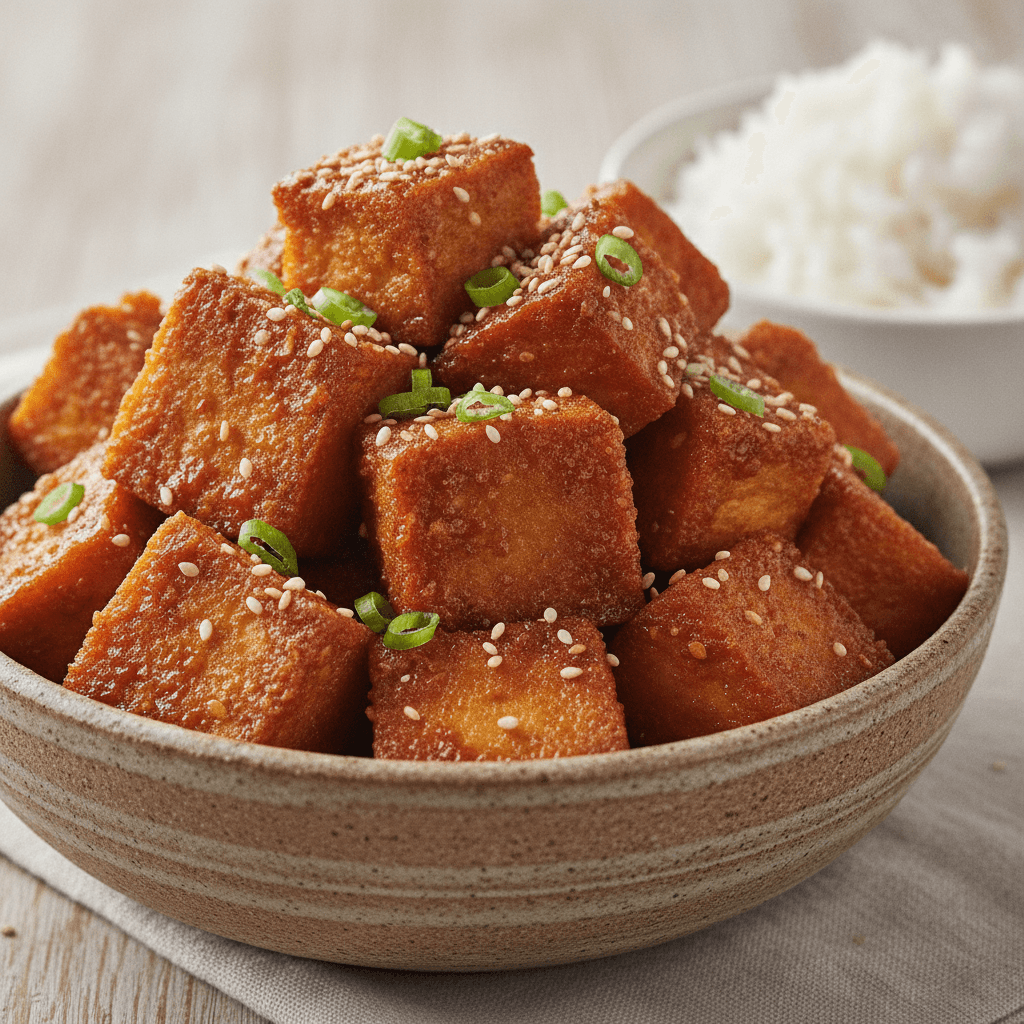
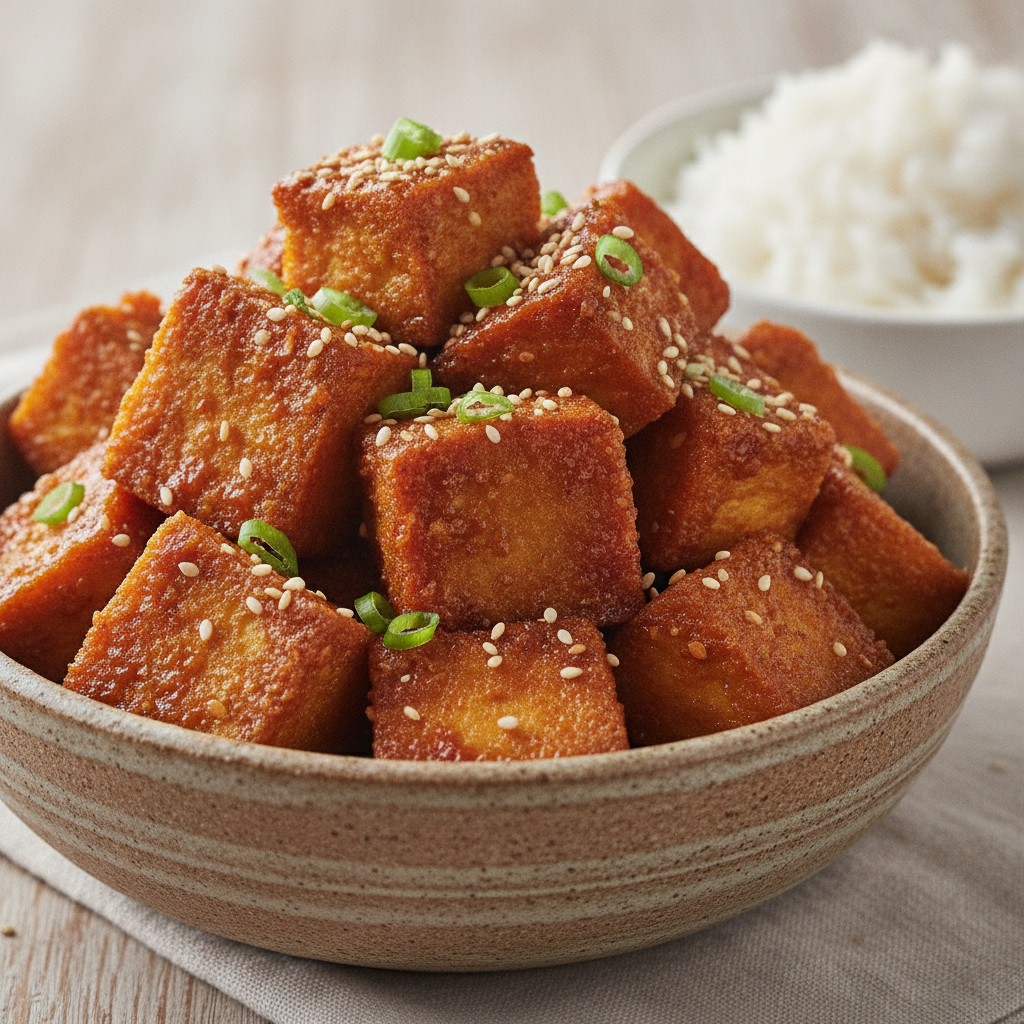
There is a special kind of magic in transforming a simple block of tofu into something truly spectacular. It’s a culinary alchemy that, once mastered, opens up a world of possibilities in your kitchen. We’re not talking about bland, spongy cubes; we are aiming for perfection. Imagine a crust that audibly shatters between your teeth, giving way to an interior that is custardy, soft, and almost melts in your mouth. This textural contrast is the heart and soul of what makes a dish like this Crispy Gochujang Korean Tofu so utterly addictive.
Many home cooks I speak with feel a certain intimidation when it comes to cooking tofu. Stories of soggy results, lack of flavor, or a texture that just isn’t quite right are all too common. I want to reassure you that achieving that restaurant-quality crispiness is not only possible, but it’s surprisingly straightforward. The secret isn’t in some complicated technique or hard-to-find ingredient. It lies in understanding the why behind each step. Once you grasp the simple principles of moisture removal and heat management, the how becomes second nature. This recipe for Crispy Gochujang Korean Tofu is more than just a set of instructions; it’s a lesson in technique that will empower you to cook tofu with confidence for years to come.
The Science Behind the Method
To become a truly intuitive cook, it helps to understand a little bit of what’s happening on a scientific level. When we make this Crispy Gochujang Korean Tofu, we're employing a few key principles to achieve that perfect result. The most critical factor is the removal of water. Tofu is packed in water, and water is the enemy of crispiness. By pressing the tofu, we are physically squeezing out excess moisture. This not only allows the exterior to dry out and form a crust but also creates a denser, firmer texture that holds its shape beautifully during cooking and eagerly soaks up the flavorful sauce later on.
The next piece of the puzzle is the cornstarch coating. This fine powder does two things. First, it absorbs any remaining surface moisture, creating a perfectly dry canvas. Second, when it hits the hot oil, the starch undergoes a process of gelatinization and dehydration, rapidly forming a brittle, porous structure that we perceive as a magnificent crunch. This coating is also what allows the Maillard reaction and caramelization to occur more effectively, giving the tofu its beautiful golden-brown color and nutty, toasted flavor. Finally, the sauce itself has its own science. As we simmer the gochujang glaze, the sugars within it (from the gochujang and any added sweetener) begin to caramelize, thickening the sauce and creating that sticky, glossy coating that clings to every nook and cranny of the crispy tofu. Understanding these concepts transforms you from simply following a recipe to truly comprehending the craft of cooking.
Tools and Ingredients You'll Need
While this Crispy Gochujang Korean Tofu recipe is wonderfully simple, having the right tools and ingredients makes the process smoother and the results more consistent. In my kitchen, whether I'm preparing a Levantine mezze or a Korean-inspired main, I believe in quality basics. You’ll want a large, heavy-bottomed skillet—a well-seasoned cast-iron pan is my favorite for its incredible heat retention, but a good quality non-stick skillet will also work beautifully to prevent the tofu from sticking.
To prepare the tofu, a dedicated tofu press is a fantastic tool, but certainly not a necessity. You can easily create a makeshift press by wrapping the tofu block in paper towels or a clean kitchen towel, placing it on a plate, and weighing it down with something heavy like a few cookbooks or a cast-iron skillet. For the ingredients, the star is, of course, the tofu. You must use extra-firm or firm tofu for this recipe; anything softer will crumble and won't give you that satisfying bite. The sauce is a symphony of flavors: gochujang (Korean chili paste) brings the heat and a deep umami funk, low-sodium soy sauce adds saltiness, rice vinegar provides a bright acidity to cut through the richness, and pure maple syrup lends a balanced sweetness. Toasted sesame oil, added at the end, gives a wonderful nutty aroma that reminds me of finishing dishes with tahini. Fresh garlic and ginger are non-negotiable for a vibrant, aromatic base. When selecting your gochujang, be sure to check the ingredients to ensure it is halal and free from any corn syrup with unfamiliar additives.
The Method, Step by Step
Let’s walk through the creation of this beautiful Crispy Gochujang Korean Tofu together. Think of it less as a rigid set of rules and more as a dance between ingredients and heat. The first and most crucial stage is pressing the tofu. This step is your foundation for success. Give it at least 30 minutes under weight; an hour is even better. You will be amazed at how much water is released. Once pressed, pat it completely dry and cut it into uniform, bite-sized cubes, about one inch each. Uniformity is key for even cooking.
Next, prepare the dredge. In a bowl, simply place your cornstarch. Gently toss the tofu cubes in the starch until each piece is lightly and evenly coated. Don't aim for a thick, cakey layer; a delicate dusting is all you need. Shake off any excess. Now, for the cooking. Heat a generous layer of neutral oil in your skillet over medium-high heat. The oil is ready when a pinch of cornstarch sizzles immediately upon contact. Carefully place the tofu cubes in a single layer, ensuring you don’t overcrowd the pan. This is vital for a crispy crust. Work in batches if necessary. Let the tofu cook undisturbed for 3-4 minutes per side, until a deep golden-brown crust forms. It requires patience, but the reward is immense. As the tofu cooks, you can whisk together your gochujang sauce ingredients in a separate small saucepan. Once all the tofu is fried to perfection, remove it to a wire rack to drain. Quickly simmer the sauce until it has thickened slightly into a luscious glaze. The final, glorious step is to gently toss the crispy tofu in the warm glaze until every piece is coated. Serve immediately to enjoy the ultimate textural contrast.
Troubleshooting Guide
Even in the most well-practiced kitchens, things can sometimes go sideways. The key is not to panic but to understand what happened and how to adjust. Here are a few common issues you might encounter when making Crispy Gochujang Korean Tofu and how to solve them.
If your tofu comes out soggy, not crispy... This is almost always a moisture issue. It means the tofu wasn't pressed long enough, or the pan was overcrowded. When too many pieces are in the pan at once, they steam instead of fry. Next time, press for longer and be sure to fry in batches, leaving ample space between the cubes.
If the cornstarch coating falls off... This can happen if the tofu is still too damp when you dredge it or if you move the pieces around too much in the pan before a crust has had a chance to form. Ensure the tofu is patted very dry, and let it sear undisturbed for a few minutes on the first side.
If your sauce is too thick or too thin... Sauce consistency is easily adjustable. If it’s too thick, simply whisk in a tablespoon of water at a time until it reaches your desired consistency. If it’s too thin, let it simmer for a few more minutes on low heat to allow it to reduce and thicken naturally.
If the tofu sticks to the pan... This usually means one of two things: your pan wasn't hot enough when you added the tofu, or you're not using enough oil. Ensure the oil is shimmering before the tofu goes in, and don't be shy with it—you need a sufficient layer to create that crispy barrier between the tofu and the pan's surface.
Taking It to the Next Level
Once you've mastered the basic technique for this phenomenal Crispy Gochujang Korean Tofu, there are several ways to elevate it further. For an unparalleled, glass-like crispiness, you can try the double-fry method. After the initial fry, let the tofu cool for about 10 minutes, then return it to the hot oil for another 1-2 minutes. This second fry drives out even more moisture, creating an incredibly sturdy and crunchy crust.
From my Levantine perspective, I love playing with acidity and texture. While the recipe is perfect as is, you could introduce a new dimension by adding a teaspoon of pomegranate molasses to the sauce. Its sweet-tart flavor profile beautifully complements the spicy depth of the gochujang. For texture, consider adding some crushed peanuts or cashews along with the sesame seeds for an extra layer of crunch. You can also experiment with your aromatics. A stalk of lemongrass, bruised and added to the sauce as it simmers, will impart a beautiful, fragrant citrus note. These small tweaks allow you to put your personal signature on the dish.
Storing Your Results
Ideally, Crispy Gochujang Korean Tofu is a dish best savored the moment it’s made. That magical contrast between the shattering crust and the warm, glossy sauce is at its peak when fresh. However, if you do find yourself with leftovers, proper storage can help preserve some of its wonderful qualities. The most important rule is to store the crispy tofu and the gochujang sauce separately. If you combine them, the tofu will inevitably soften as it sits in the sauce.
Allow the cooked tofu cubes to cool completely, then place them in an airtight container lined with a paper towel to absorb any condensation. Store the cooled sauce in a separate airtight container. Both will keep well in the refrigerator for up to three days. To reheat, do not use the microwave, as it will make the tofu rubbery. Instead, spread the tofu on a baking sheet and reheat in a 200°C (400°F) oven or an air fryer for 5-8 minutes, until it's hot and crisped up again. Gently warm the sauce in a small saucepan on the stove, then toss with the reheated tofu just before serving.
Common Questions
Can I bake the tofu instead of frying?
Yes, you absolutely can, though the texture will be different. Baked tofu is chewier and firmer rather than shatteringly crispy. To bake it, toss the pressed, cornstarch-coated cubes with a tablespoon of oil and bake at 200°C (400°F) for 25-30 minutes, flipping halfway, until golden and firm. Then, toss with the prepared sauce.
Is there a substitute for gochujang?
For the authentic flavor of Crispy Gochujang Korean Tofu, there isn't a perfect substitute. Gochujang has a unique fermented, savory, and spicy flavor. If you're in a pinch, you could create a different style of spicy sauce using sriracha or another halal chili paste, but you'll need to add a touch of miso paste or extra soy sauce to replicate some of the umami depth.
How can I make this recipe gluten-free?
This is a very simple switch! To make the dish gluten-free, use tamari, which is a Japanese soy sauce brewed without wheat, instead of regular soy sauce. You should also double-check the label on your gochujang, as some brands may contain wheat, but many traditional varieties are gluten-free.
What's the best way to press tofu without a tofu press?
It's very easy to do at home. Simply drain the block of tofu and wrap it in a clean, lint-free kitchen towel or several layers of sturdy paper towels. Place it on a plate, then put something heavy and flat on top, like a cutting board topped with a few large cans or heavy books. Let it press for at least 30 minutes.
Can I prepare parts of this dish ahead of time?
The best way to prep ahead is to press the tofu and make the sauce. The tofu can be pressed, cut into cubes, and stored in an airtight container in the fridge for up to two days. The sauce can be whisked together and stored in a separate container in the fridge for up to a week. When you're ready to eat, all you need to do is coat and fry the tofu and warm the sauce.
Crispy Gochujang Korean Tofu
Perfectly crispy tofu cubes tossed in a sweet, spicy, and savory gochujang glaze. A satisfying and easy-to-make halal main course.
Prep Time
45 min
Cook Time
20 min
Total Time
65 min
Servings
4 servings
Ingredients
For 4 servings
- 1 block (16 oz / 450g) extra-firm tofu
- 1/3 cup (40g) cornstarch
- 1/2 teaspoon salt
- 1/4 teaspoon black pepper
- 1/3 cup (80ml) neutral oil, for frying (like canola or avocado oil)
- 3 tablespoons gochujang (Korean chili paste, ensure halal)
- 3 tablespoons low-sodium soy sauce (or tamari for gluten-free)
- 2 tablespoons pure maple syrup
- 1 tablespoon rice vinegar
- 1 teaspoon toasted sesame oil
- 3 cloves garlic, minced
- 1 teaspoon fresh ginger, grated
- 2 tablespoons water
- 1 tablespoon toasted sesame seeds, for garnish
- 2 scallions, thinly sliced, for garnish
Instructions
- 1
Press the Tofu
Remove the tofu from its packaging and drain all the water. Wrap the block in a clean kitchen towel or several layers of paper towels. Place it on a plate and put something heavy on top, like a cast-iron skillet or a few books. Let it press for at least 30 minutes to remove excess water.
- 2
Prepare the Sauce Ingredients
While the tofu is pressing, gather and prepare all your sauce ingredients. Mince the garlic and grate the fresh ginger. Measure out the gochujang, soy sauce, maple syrup, rice vinegar, sesame oil, and water.
- 3
Mix the Gochujang Sauce
In a small bowl, whisk together the gochujang, soy sauce, maple syrup, rice vinegar, minced garlic, grated ginger, and water until smooth. Set the sauce aside for later.
- 4
Cut and Coat the Tofu
Unwrap the pressed tofu and pat it dry with a paper towel. Cut the block into 1-inch cubes. In a medium bowl, stir together the cornstarch, salt, and black pepper. Add the tofu cubes and toss gently until each piece is lightly and evenly coated.
- 5
Heat the Frying Oil
Pour the neutral oil into a large, heavy-bottomed skillet (cast iron or non-stick works well) to a depth of about 1/4 inch. Heat over medium-high heat. The oil is ready when a pinch of cornstarch sizzles instantly when dropped in.
- 6
Fry the Tofu (First Batch)
Carefully place half of the tofu cubes in the hot oil in a single layer, ensuring there is space between them. Do not overcrowd the pan. Fry for 3-4 minutes per side, turning occasionally, until all sides are golden brown and crispy.
- 7
Fry the Tofu (Second Batch)
Using a slotted spoon, transfer the first batch of crispy tofu to a wire rack to drain any excess oil. Add the remaining tofu cubes to the skillet and repeat the frying process until they are also golden and crisp.
- 8
Remove Excess Oil
Once all the tofu is cooked, carefully pour off any remaining oil from the skillet, or wipe it out with a paper towel. You want a relatively clean pan for the sauce.
- 9
Simmer the Sauce
Return the skillet to medium-low heat. Pour the prepared gochujang sauce into the skillet. Bring it to a gentle simmer, stirring constantly.
- 10
Thicken the Glaze
Let the sauce cook for 1-2 minutes, until it thickens slightly and becomes glossy. The sugars will caramelize and the flavors will meld. Be careful not to let it burn.
- 11
Combine Tofu and Sauce
Turn off the heat. Add all the crispy tofu back into the skillet. Drizzle with the toasted sesame oil. Gently toss everything together until every piece of tofu is evenly coated in the luscious glaze.
- 12
Garnish and Serve
Transfer the glazed tofu to a serving platter immediately. Garnish generously with toasted sesame seeds and thinly sliced scallions. Serve hot with steamed rice and your favorite vegetables for a complete meal.
Nutrition Facts
Per serving (estimated)
410 calories
Calories
35g
Carbs
18g
Protein
22g
Fat
4g
Fiber
780mg
Sodium
12g
Sugar