Authentic Greek Chicken with Lemon and Feta Recipe
Tender, juicy Greek Chicken with Lemon and Feta! This easy one-pan meal is packed with Mediterranean flavor, perfect for a beautiful family dinner.
cookwithyara.com/recipes/greek-chicken-with-lemon-and-feta
There's a specific kind of magic that settles over a Greek village in the late afternoon. The sun, having spent its fiercest energy, softens to a warm, golden glow, casting long shadows across whitewashed walls and terracotta roofs. The air, thick with the scent of the sea and wild herbs, carries the distant, cheerful sounds of conversation and clinking glasses from a local taverna. It's in this setting, a place of profound simplicity and connection, that the heart of Greek cuisine truly beats. It’s a culinary tradition built not on complexity, but on the purity of incredible ingredients: sun-ripened lemons, fragrant oregano, briny feta, and golden, life-giving olive oil. This is food that tastes of the earth and the sea, meant to be shared with people you love.
Bringing that feeling into your own kitchen is easier than you might think. This recipe for Greek Chicken with Lemon and Feta is more than just a meal; it's an experience. It’s a humble, yet profoundly flavorful dish that captures the essence of a Mediterranean home-cooked dinner. We use simple, accessible ingredients to build layers of bright, savory, and tangy flavors that are both comforting and exciting. You don't need a plane ticket to feel the warmth of the Aegean sun. With this recipe, you'll create a genuine taste of Greece, a dish so aromatic and delicious it will gather everyone around the table, ready to slow down, connect, and savor every single bite. This is the soul of Greek cooking, made with love, right in your own home.
A Taste of Greek Culture
In Greece, food is inextricably linked to philoxenia, the sacred art of hospitality and making a stranger feel at home. A dish like this beautiful Greek Chicken with Lemon and Feta isn't just sustenance; it’s a gesture of warmth, an open invitation to the family table. It's not the kind of fast-paced street food you grab on the go. Instead, it represents the heart of everyday Greek home cooking—rustic, generous, and deeply satisfying. It’s the centerpiece of a weekend family meal, a dish that bakes slowly in the oven, filling the entire house with the irresistible aroma of lemon, garlic, and roasting chicken, calling everyone to the kitchen in anticipation.
The core principles of Greek cuisine are beautifully showcased in this simple preparation. It’s a celebration of seasonality and locality, favoring ingredients that are fresh and full of life. The flavor profile is a masterclass in balance. You have the sharp, acidic brightness of the lemon cutting through the richness of the chicken and olive oil. The salty, tangy punch of the feta provides a creamy counterpoint to the deep, fruity brininess of the Kalamata olives. And weaving through it all is the earthy, almost peppery fragrance of dried oregano, the signature herb of the Greek mountains. This isn't about masking flavors with heavy sauces; it's about elevating each component, allowing the chicken to taste more like itself, the lemon to be more vibrant, and the herbs to sing. This philosophy reflects the Greek way of life: an appreciation for simple pleasures, the importance of family, and the beauty found in honest, well-prepared food.
The Ingredients That Define This Greek Chicken with Lemon and Feta
Great cooking begins with great ingredients, and in Mediterranean cuisine, that statement is law. The beauty of this Greek Chicken with Lemon and Feta lies in how a few, high-quality components come together to create something truly special. Let's talk about the stars of this dish.
First, the chicken. I wholeheartedly recommend using bone-in, skin-on chicken thighs. The bone adds immense flavor and moisture to the meat as it cooks, ensuring it stays tender and juicy. The skin is your ticket to a crispy, golden-brown topping that is simply irresistible. While you can use other cuts, thighs offer the perfect balance of fat and flavor for a baked dish like this, preventing them from drying out during their time in the oven.
Next, our Mediterranean trio: olive oil, lemon, and oregano. For olive oil, choose a good quality extra-virgin variety. It's not just a cooking fat here; it's a primary flavoring agent, lending its fruity, peppery notes to the chicken and the pan sauce. We use both the zest and the juice of fresh lemons. The zest contains the lemon's essential oils and provides a fragrant, floral citrus note, while the juice offers that signature bright, tangy acidity. For oregano, if you can find dried Greek oregano, you're in for a treat. It's more pungent and earthier than other varieties and is truly the aromatic soul of the dish.
Of course, we must discuss the feta. Please seek out a block of feta cheese sold in brine. This type is creamier, tangier, and has a much more complex flavor than the pre-crumbled, drier varieties. Its salty kick is essential to balancing the other flavors. Paired with it are the Kalamata olives. Named for the city in the southern Peloponnese, these deep purple, almond-shaped olives are packed in a brine or sometimes olive oil, which gives them a rich, fruity, and slightly smoky flavor that is utterly distinct and a perfect partner for the lemon and feta. Finally, a generous amount of fresh garlic provides the aromatic foundation, and a finishing sprinkle of fresh parsley or dill lends a final burst of freshness and color, cutting through the richness and tying everything together beautifully.
Cooking the Authentic Way
The process of making an authentic-tasting Greek Chicken with Lemon and Feta is a lesson in patience and technique, where each step builds upon the last to create layers of flavor. It all begins with the marinade, the heart of the dish's flavor infusion. By combining olive oil, lemon juice and zest, minced garlic, and dried oregano, you create a potent mixture that works on multiple levels. The acidity from the lemon juice not only adds brightness but also begins to tenderize the chicken. The olive oil helps distribute the fat-soluble flavors of the garlic and oregano deep into the meat. Allowing the chicken to marinate for at least 30 minutes (and up to a few hours) is crucial; it’s the difference between chicken with flavor on it and chicken that is flavorful through and through.
Once marinated, the arrangement in the baking dish is key. You want to give each piece of chicken enough space, avoiding overcrowding the pan. This allows hot air to circulate freely, which is essential for achieving that coveted crispy, golden skin. Tucking lemon slices and Kalamata olives around the chicken means that as they bake, they release their juices and aromas, mingling with the chicken fat and marinade to create an incredibly savory, self-made pan sauce. This is the magic of a one-pan meal.
The baking process is done in two stages, a technique vital for the perfect texture. The initial bake, at a moderately high heat, focuses on cooking the chicken through until it's juicy and tender. This is when the kitchen truly starts to smell like a Greek taverna. The second stage is where we introduce our hero ingredient: the feta. We wait to add the feta until the last 10-15 minutes of cooking. Why? Adding it too early would cause it to dry out and become rubbery. By adding it near the end, it has just enough time to soften, warm through, and become beautifully creamy, lightly melting into the pan sauce without losing its structure. For a final flourish, a minute or two under the broiler will transform the dish, crisping the chicken skin to a perfect golden-brown and giving the edges of the feta cheese beautiful toasted spots. This final step adds texture and visual appeal, making your Greek Chicken with Lemon and Feta look as amazing as it tastes.
Bringing It All Together: How to Serve Your Masterpiece
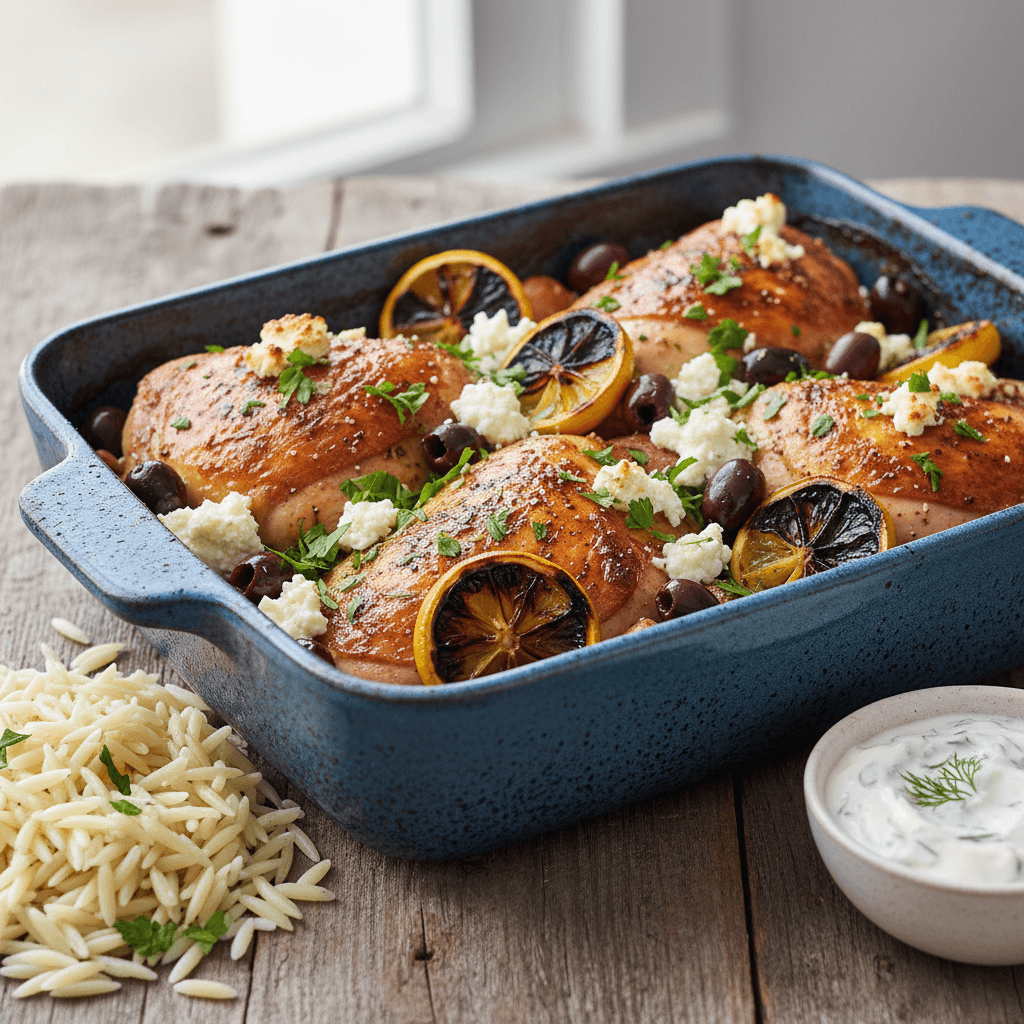
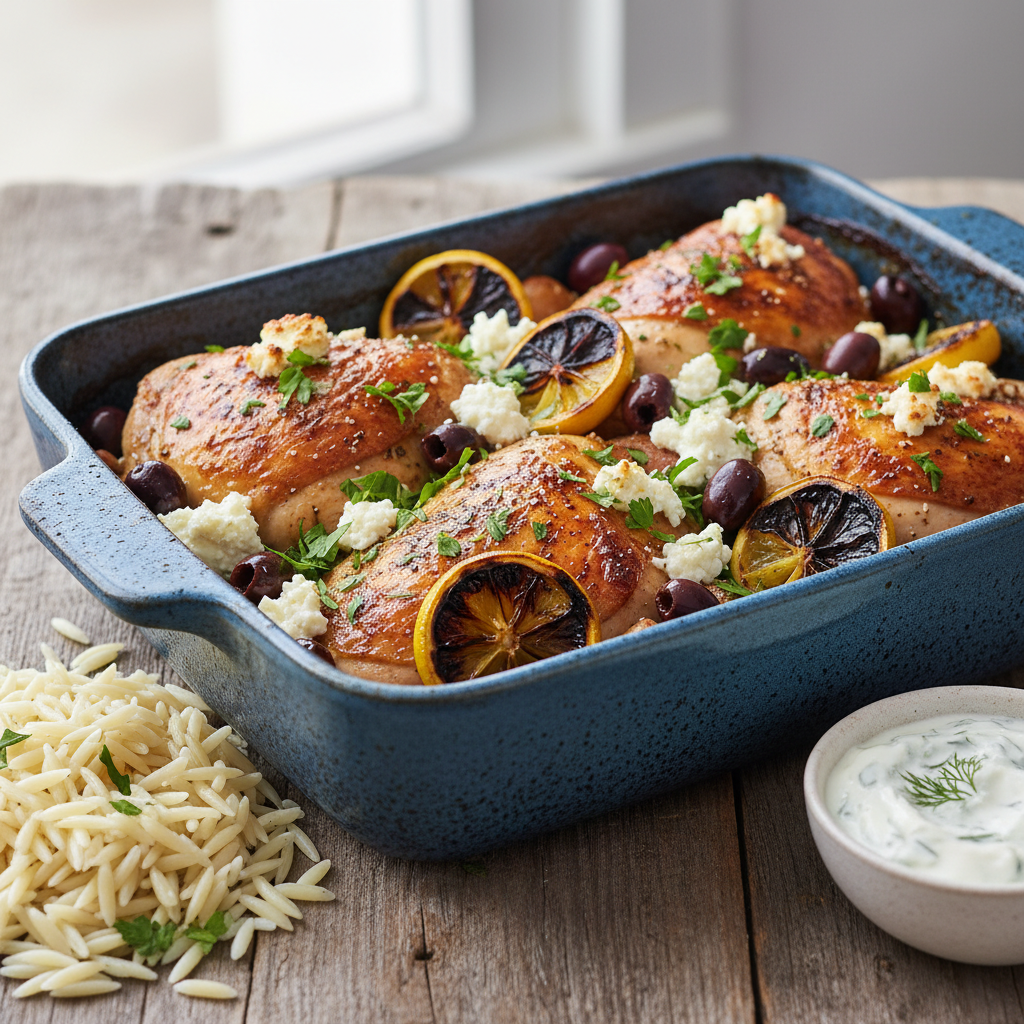
Serving this Greek Chicken with Lemon and Feta is all about embracing its rustic, communal spirit. The best way to present it is directly in the baking dish it was cooked in, placed right in the center of the table. This family-style approach is not only practical but also inviting, encouraging everyone to serve themselves and share in the experience. The visual is stunning: the golden-brown chicken, creamy white feta, deep purple olives, and bright yellow lemon slices, all glistening with the savory pan juices and scattered with vibrant green herbs. It’s a feast for the eyes before it even reaches the plate.
The pan sauce is liquid gold, and you won't want to waste a single drop. This is where your choice of accompaniments becomes important. A simple side of lemon-scented orzo or fluffy couscous is perfect for soaking up every bit of that delicious sauce. Another classic Greek pairing is roasted potatoes; you can even roast them in the same pan, allowing them to cook in the flavorful chicken drippings. For something lighter, a crusty loaf of bread is essential for dipping and mopping up the plate. To complete the meal, a simple Horiatiki salad—a true Greek salad with tomatoes, cucumbers, bell peppers, red onion, and olives, dressed simply with olive oil and a sprinkle of oregano—provides a fresh, crisp contrast to the rich, savory chicken. A dollop of cool, creamy tzatziki sauce on the side is also a wonderful addition, its refreshing cucumber and garlic notes cutting through the richness beautifully. This isn't just a meal; it's a complete, balanced, and deeply satisfying spread that celebrates the best of Mediterranean flavors.
Make It Your Own: Adapting the Recipe
One of the most wonderful things about a classic recipe like this Greek Chicken with Lemon and Feta is that it provides a fantastic blueprint for creativity. Once you understand the core flavor profile, you can adapt it to suit your tastes or what you have available in your kitchen. Don't be afraid to make it your own!
For a different protein, boneless, skinless chicken breasts can be used. Simply reduce the cooking time to about 20-25 minutes to prevent them from drying out. This dish is also magnificent with fish; a firm white fish like halibut or cod would be lovely. Just nestle the fillets into the dish for the last 12-15 minutes of baking. For a vegetarian option that still captures the spirit of the dish, you can use a can of drained and rinsed chickpeas and some hearty chunks of zucchini or eggplant. Toss them with the marinade and roast, adding the feta at the end as you would with the chicken.
Feel free to add more vegetables to the pan to make it a more complete one-pan meal. Sliced red onions, whole cherry tomatoes, or chopped bell peppers can be added at the beginning with the chicken. They will soften and caramelize in the oven, adding their sweetness to the pan sauce. Artichoke hearts, either canned or frozen (and thawed), are another fantastic addition that pairs beautifully with lemon and feta. If you want to change up the herbs, a few sprigs of fresh rosemary or thyme tucked into the pan during baking will add another layer of woodsy aroma. And for those who enjoy a bit of heat, a pinch of red pepper flakes in the marinade will provide a gentle warmth that complements the other flavors without overpowering them. The goal is to keep the soul of the dish intact while tailoring it to your personal preference.
Keeping and Reusing Leftovers
While this Greek Chicken with Lemon and Feta is so delicious it rarely lasts long, the leftovers are a true delight and incredibly versatile. To store, allow the chicken to cool completely before placing it in an airtight container. Be sure to spoon all of the precious pan juices, olives, and feta over the chicken. This will help keep the meat moist and infuse it with even more flavor as it sits. Stored properly in the refrigerator, it will keep beautifully for up to 3-4 days.
When it comes to reheating, you can gently warm the chicken in a covered skillet over medium-low heat or in the oven at a moderate temperature until heated through. Microwaving works in a pinch, but it can sometimes affect the texture of the chicken skin.
The real fun comes with repurposing the leftovers. Shred the chicken off the bone and toss it with the leftover feta, olives, and pan juices. This mixture is incredible stuffed into a pita bread with some fresh lettuce and a dollop of tzatziki for a fantastic lunch. You can also serve the shredded chicken mixture over a bed of fresh greens with some chopped cucumber and tomato for a hearty and flavorful salad. Another great idea is to mix the shredded chicken and sauce with cooked orzo or another pasta for a quick and satisfying pasta dish. The possibilities are truly delicious, ensuring that none of this wonderful meal goes to waste.
Your Questions Answered About Greek Chicken with Lemon and Feta
Can I use chicken breasts instead of thighs?
Absolutely! Boneless, skinless chicken breasts work well, but they require a shorter cooking time. I recommend baking them for about 20-25 minutes, or until the internal temperature reaches 165°F (74°C). To ensure they stay moist, you might consider pounding them to an even thickness before marinating.
What's the best kind of feta to use?
For the most authentic flavor and best texture, always choose a block of Greek feta cheese that is sold packed in brine. This type is creamier, tangier, and far superior to pre-crumbled varieties, which are often dry and less flavorful. The brine keeps the cheese fresh and delicious.
My chicken skin isn't getting crispy. What am I doing wrong?
There are two key tricks to crispy skin. First, make sure you pat the chicken skin thoroughly dry with paper towels before you apply the marinade. Second, use the broiler for the final 2-3 minutes of cooking. Keep a close eye on it, as it can go from golden to burnt very quickly, but this blast of high heat is the secret to perfectly crisp skin.
What can I serve with this dish besides potatoes?
This dish is wonderfully versatile. Fluffy couscous, lemon-scented orzo pasta, or a simple quinoa salad are all excellent choices for soaking up the amazing pan juices. For a lower-carb option, it's fantastic alongside a fresh Greek salad or some simple steamed green beans with a squeeze of lemon.
Is it important to use Kalamata olives specifically?
Kalamata olives have a unique rich, fruity, and almost wine-like flavor that is truly distinctive and traditional for this dish. However, if you can't find them, you can substitute other good-quality, brine-cured black olives like Gaeta or Niçoise. The flavor will be slightly different, but still delicious.
What is a good non-alcoholic drink to pair with this?
A refreshing beverage is the perfect complement to the bright flavors of this Greek Chicken with Lemon and Feta. I love serving it with sparkling water infused with a few slices of cucumber and a sprig of fresh mint. A simple, fresh-squeezed lemonade or a chilled herbal iced tea would also be wonderful pairings that echo the fresh notes of the dish.
Greek Chicken with Lemon and Feta
A classic Greek-inspired dish featuring tender chicken thighs baked with zesty lemon, briny feta, fragrant oregano, and Kalamata olives for an unforgettable one-pan meal.
Prep Time
20 min
Cook Time
45 min
Total Time
1h 5m
Servings
4-6 servings
Ingredients
For 4-6 servings
- 8 bone-in, skin-on chicken thighs (about 3 lbs)
- 1/4 cup extra-virgin olive oil, plus more for drizzling
- 1 large lemon, zested and juiced, plus 1 more lemon, thinly sliced
- 4 cloves garlic, minced
- 2 teaspoons dried oregano
- 1 teaspoon salt
- 1/2 teaspoon black pepper
- 1 cup pitted Kalamata olives
- 6 oz block of feta cheese, cut into 1-inch cubes
- 2 tablespoons fresh parsley, chopped, for garnish
- 2 tablespoons fresh dill, chopped, for garnish (optional)
Instructions
- 1
Prepare the Marinade
In a small bowl, whisk together the 1/4 cup of olive oil, the zest and juice of one lemon, the minced garlic, dried oregano, salt, and black pepper. This combination creates a flavorful base that will tenderize and season the chicken.
- 2
Marinate the Chicken
Pat the chicken thighs completely dry with paper towels; this is crucial for crispy skin. Place the chicken in a large bowl or a resealable bag, pour the marinade over it, and toss well to coat each piece thoroughly. Let it marinate at room temperature for at least 30 minutes, or in the refrigerator for up to 4 hours.
- 3
Preheat Oven and Prep Dish
Preheat your oven to 400°F (200°C). Arrange the marinated chicken thighs, skin-side up, in a single layer in a 9x13 inch baking dish or a large oven-safe skillet. Be sure not to overcrowd the pan.
- 4
Add Aromatics
Pour any remaining marinade from the bowl over the chicken. Scatter the pitted Kalamata olives and the thin lemon slices around the chicken pieces in the baking dish. This will infuse the pan juices with extra flavor as it bakes.
- 5
First Bake
Place the baking dish in the preheated oven and bake for 30 minutes. The chicken should be partially cooked, and the skin should be starting to turn golden.
- 6
Add the Feta
Carefully remove the dish from the oven. Scatter the cubes of feta cheese evenly around the chicken pieces. The heat from the dish will begin to soften the cheese immediately.
- 7
Finish Baking
Return the dish to the oven and continue to bake for another 10-15 minutes. The chicken is done when it is cooked through, the juices run clear, and an instant-read thermometer inserted into the thickest part reads 165°F (74°C). The feta should be soft and creamy.
- 8
Optional Broil for Crispy Skin
For extra crispy skin and beautifully browned feta, turn your oven's broiler on high. Place the dish under the broiler for 1-3 minutes, watching it very carefully to prevent burning. Remove as soon as the chicken skin is deep golden brown and crisp.
- 9
Rest and Garnish
Remove the dish from the oven and let the chicken rest for 5-10 minutes before serving. This allows the juices to redistribute, ensuring the meat is moist and tender. Garnish generously with fresh chopped parsley and dill (if using).
- 10
Serve Warm
Serve the Greek chicken with lemon and feta directly from the baking dish. Be sure to spoon some of the delicious pan juices over each serving. It pairs wonderfully with orzo, crusty bread, or a fresh green salad.
Nutrition Facts
Per serving (estimated)
480 calories
Calories
6g
Carbs
38g
Protein
34g
Fat
2g
Fiber
850mg
Sodium
2g
Sugar