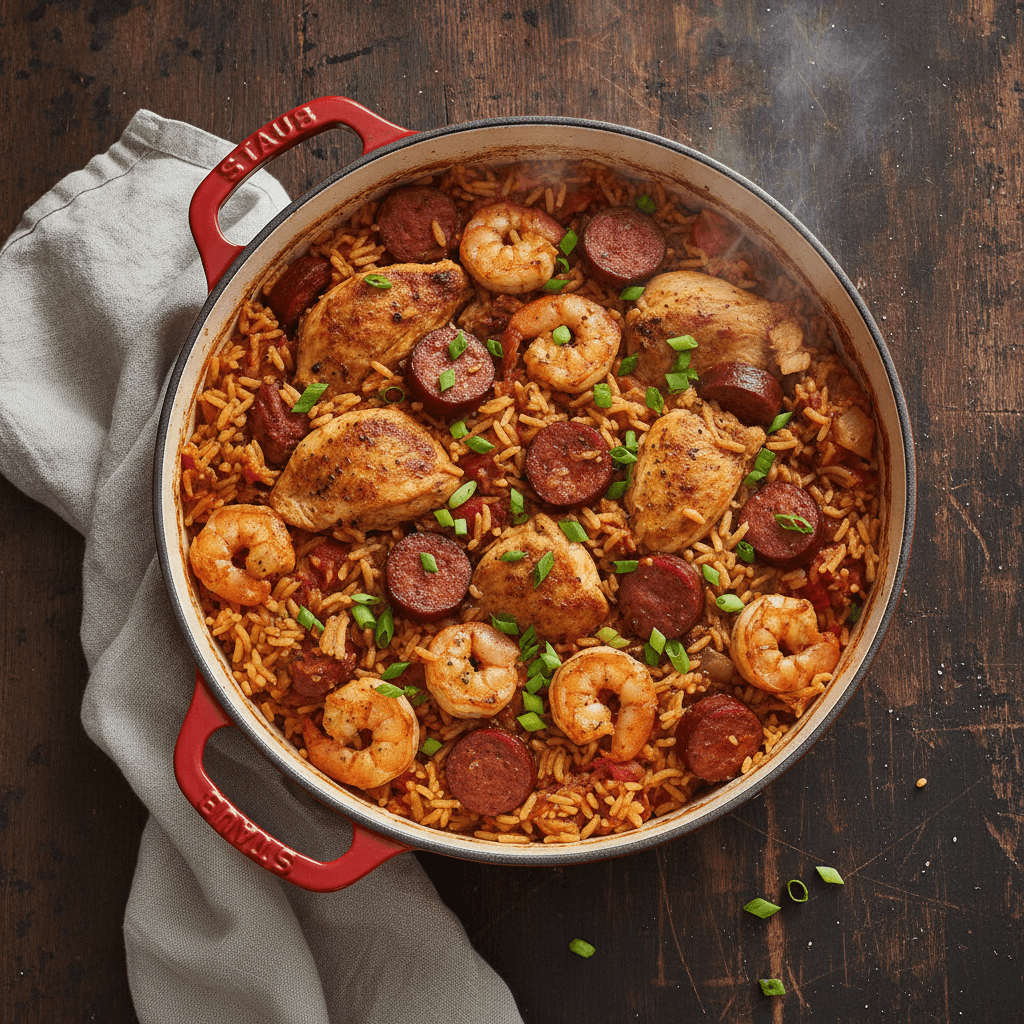
Easy & Flavorful Halal Jambalaya Recipe
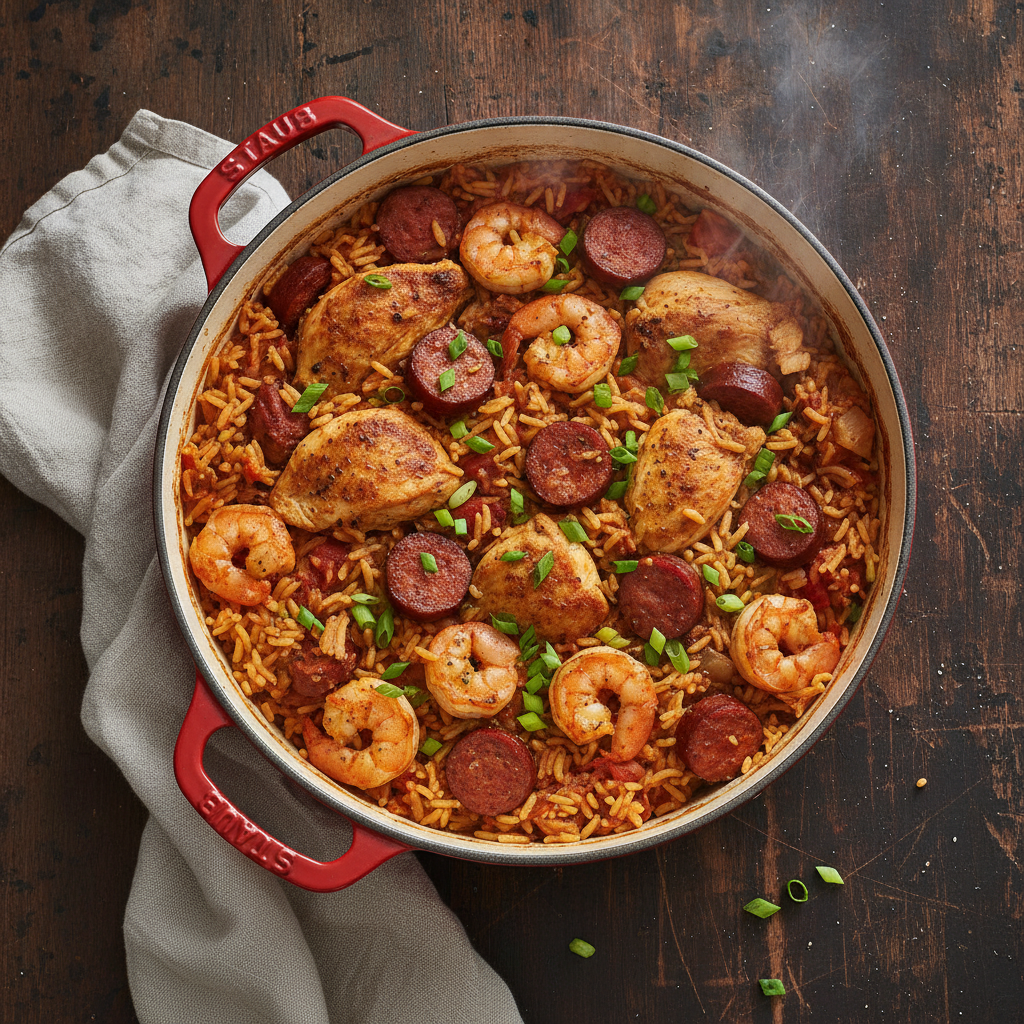
My foolproof, completely halal jambalaya recipe is packed with chicken, shrimp, and sausage. A perfect one-pot meal for any family gathering!
cookwithyara.com/recipes/jambalaya-recipe
There is a special kind of magic that happens in a single pot. It’s a principle I’ve cherished from my own Levantine kitchen, watching simple ingredients transform into dishes like maqluba or aromatic rice pilafs. This magic is all about layering—building flavor upon flavor until every single grain of rice is a vessel for the entire story of the dish. That same magic is the heart and soul of this incredible, and completely halal, jambalaya recipe. It’s a celebrated dish from Louisiana, a vibrant tapestry of cultural influences, and it translates beautifully into a meal that feels both special and deeply comforting.
Imagine a spoonful: tender grains of rice, perfectly separate yet creamy, each one saturated with the smoky, spicy, savory broth it was cooked in. You get the satisfying chew of seared chicken, the subtle sweetness of plump shrimp, and the deep, smoky flavor from a good quality halal sausage. It’s a symphony of textures and tastes. Many home cooks feel a little intimidated by jambalaya, fearing a pot of mushy, overcooked rice or, conversely, a dish that’s scorched on the bottom. I understand that completely. But I promise you, once you understand the why behind each step—why we brown the meat first, why we don’t lift the lid—the how becomes incredibly simple and intuitive. This jambalaya recipe isn't about complicated techniques; it's about patience and trusting the process.
The Science Behind the Method
To truly master a dish like this jambalaya recipe, it helps to peek behind the curtain and understand the beautiful science at play. Cooking is chemistry, after all, but it’s the most delicious kind! The incredible depth of flavor in jambalaya doesn’t come from a single secret ingredient; it’s built through a series of simple, deliberate chemical reactions that you control every step of the way. First and foremost is the Maillard reaction. This is the magic that happens when you sear the halal sausage and chicken in the hot Dutch oven. The high heat causes amino acids and sugars in the meat to react, creating hundreds of new aromatic compounds. This process is responsible for the deep brown crust and the rich, savory flavor. The browned bits that stick to the bottom of the pot, known as the fond, are pure gold—a concentrated base for the entire dish.
Next, we have flavor blooming. When you add your spices—the smoked paprika, cayenne, and herbs—to the hot fat rendered from the sausage, you’re not just mixing them in. You are toasting them. This gentle heat helps to release their fat-soluble flavor compounds, making their aroma more potent and their taste more profound. It's a technique we use constantly in Levantine cooking when preparing spice bases for stews and rice. Finally, the star of the show: the rice. The process of cooking rice is called starch gelatinization. As the long-grain rice absorbs the hot, flavorful broth, its starch granules swell and soften, transforming it from a hard grain into a tender, edible one. The key to perfect jambalaya is managing this process precisely. By using the right rice-to-liquid ratio and maintaining a gentle, steamy environment (no peeking!), you allow the grains to absorb the liquid fully without bursting and releasing too much starch, which is what leads to a gummy texture. It's a controlled infusion, ensuring every bite is as flavorful as the last.
Tools and Ingredients You'll Need
One of the reasons I adore this jambalaya recipe is its reliance on pantry staples and straightforward kitchen equipment. You don’t need anything overly specialized to achieve spectacular results. The most important tool in your arsenal will be a large, heavy-bottomed pot, preferably a Dutch oven. The thick base, whether it’s cast iron or enameled cast iron, is crucial for distributing heat evenly. This prevents hot spots that can scorch the rice on the bottom before the rest of it is cooked through. If you don't have a Dutch oven, a sturdy stockpot or a deep, lidded skillet will work just as well—the key is a heavy base and a tight-fitting lid to trap that all-important steam. You’ll also want a good wooden spoon or a firm spatula, perfect for scraping up all those delicious browned bits from the bottom of the pot.
When it comes to ingredients, quality makes all the difference. For the proteins, I use boneless, skinless chicken thighs for their rich flavor and tender texture, which holds up beautifully during the long simmer. Plump, raw shrimp, added at the end, provide a lovely sweetness. The star, however, is the sausage. Finding a good halal smoked sausage is key. Look for a beef or chicken variety with a robust, smoky flavor, as this will mimic the traditional taste profile. The aromatic base of any great jambalaya is the “holy trinity” of Southern cooking: a simple trio of diced onion, green bell pepper, and celery. For the liquid, a flavorful, low-sodium chicken broth is my go-to, as it allows you to control the final seasoning. And for the rice, classic long-grain white rice is non-negotiable. Its structure allows it to absorb the broth while remaining distinct and fluffy. Finally, a vibrant spice blend of smoked paprika, cayenne, oregano, and thyme ties everything together, creating that signature warm and zesty flavor that makes this dish so unforgettable.
The Method, Step by Step
Let’s walk through the creation of this beautiful jambalaya recipe together. Think of it not as a list of instructions, but as a sequence of flavor-building. The first stage is all about creating the foundation. Heat your Dutch oven over medium-high heat with a little olive oil and add your sliced halal sausage. Let it cook, stirring occasionally, until it's deeply browned and has rendered its delicious fat. This step is crucial; you're not just cooking the sausage, you're seasoning the entire pot. Once browned, remove it with a slotted spoon and set it aside. Now, add your cubed chicken thighs to that same pot, letting them sear in the flavorful fat until golden brown on all sides. They don't need to be cooked through yet. Remove the chicken and set it aside with the sausage. You should now have a pot with a beautiful layer of browned bits, the fond, on the bottom.
Don’t clean that pot! Reduce the heat to medium and add your diced onion, bell pepper, and celery—the holy trinity. Sauté them, stirring with a wooden spoon, for about 8-10 minutes. As they cook, they'll release moisture, which will help you scrape up that flavorful fond from the bottom of the pot. Once the vegetables are soft and translucent, it’s time to bloom the aromatics. Add your minced garlic, smoked paprika, cayenne, oregano, and thyme. Stir constantly for about 60 seconds until everything is incredibly fragrant. This quick toast awakens the spices. Next, pour in your diced tomatoes and chicken broth, stirring well to combine everything. Bring this mixture to a lively simmer. This is the flavorful broth that will become the lifeblood of your jambalaya. Return the cooked sausage and chicken to the pot, then stir in the uncooked rice. Make sure every grain is submerged in the liquid. Once it returns to a gentle simmer, reduce the heat to the lowest possible setting, cover the pot tightly, and set a timer for 20 minutes. The most important rule now is: do not lift the lid! Let the steam do its work. After 20 minutes, lift the lid, quickly scatter the shrimp over the top, and gently stir them in. Place the lid back on and cook for another 5-7 minutes, just until the shrimp are pink and opaque. Finally, remove the pot from the heat and let it stand, still covered, for 10 more minutes. This resting period is essential for the rice to absorb the last bit of steam, ensuring a perfect, fluffy texture for our spectacular jambalaya recipe.
Troubleshooting Guide
Even with the most detailed recipe, sometimes things can go slightly off course in the kitchen. Don't worry! Most issues with this jambalaya recipe are easily preventable and often fixable. Let’s cover some of the most common hurdles. If you find your jambalaya is gummy or mushy, the likely culprit is too much liquid, or you lifted the lid too frequently during the cooking process, disrupting the steam. For next time, measure your liquid precisely and trust the process—keep that lid on! To salvage a slightly mushy batch, you can try cooking it uncovered for a few extra minutes on low heat to help some excess moisture evaporate.
On the other end of the spectrum, what if your rice is still hard or undercooked when the timer goes off? This usually means there wasn't enough liquid, or the heat was too high, causing the broth to evaporate before the rice could absorb it. To fix this, add another ¼ to ½ cup of hot broth, give it a quick stir, cover, and let it steam on very low heat for another 10 minutes. Another common issue is a scorched bottom. This is almost always due to excessively high heat or using a pot with a thin base that doesn't conduct heat evenly. Always cook your rice on the absolute lowest heat setting your stove has. If you notice a burnt smell, don't stir! Instead, carefully spoon the good jambalaya from the top into a clean pot, leaving the burnt layer behind. If your final dish tastes a bit bland, it could be under-seasoning or not developing enough fond at the beginning. Be bold when browning your proteins! And always taste and adjust for salt and spice at the end. Finally, if it’s too spicy, a dollop of cool, plain yogurt or a squeeze of fresh lime juice served alongside can beautifully temper the heat.
Taking It to the Next Level
Once you’ve mastered the classic version of this halal jambalaya recipe, there are so many ways to add your own personal touch or elevate it for a special occasion. For those who love a deep, smoky undertone, you can enhance that flavor profile beyond just the smoked sausage. Try adding a pinch of smoked sea salt at the end of cooking, or use a high-quality, hot smoked paprika for an even richer, smokier dimension. The single biggest upgrade, however, comes from the broth. While store-bought is perfectly fine, making your own chicken stock from scratch will add a level of body and flavor that is simply unparalleled. It’s a labor of love that pays off in every single bite.
From my Levantine perspective, I also love to play with herbs and subtle background notes. While not traditional, finishing the jambalaya with a sprinkle of toasted, ground cumin seed can add a warm earthiness that beautifully complements the paprika and cayenne. Another exciting twist is to add a tiny splash of pomegranate molasses along with the broth. Its tangy, sweet-sour profile can cut through the richness of the dish and add a layer of complexity that is both unexpected and delightful. For texture, consider adding sliced okra along with the holy trinity; it will soften and add its unique flavor while also acting as a natural thickener, giving the final dish a slightly different, but equally delicious, consistency. Experimentation is part of the joy of cooking!
Storing Your Results
One of the wonderful things about this jambalaya recipe is that the flavors continue to meld and deepen over time, making the leftovers arguably even more delicious the next day. Proper storage is key to preserving its wonderful texture and taste. First, always allow the jambalaya to cool down to room temperature before packing it away. Storing it while still hot can create excess condensation, which can make the rice a bit watery upon reheating. Once cooled, transfer the jambalaya to an airtight container. This will keep it fresh and prevent it from drying out in the refrigerator. It will store beautifully for up to four days.
When you’re ready to enjoy the leftovers, you have a couple of great options for reheating. The quickest method is the microwave. Place a serving in a microwave-safe bowl, sprinkle it with a tablespoon of water or broth to reintroduce a little moisture, and cover it loosely. Heat it in one-minute increments, stirring in between, until it’s heated through. For a larger portion, you can also reheat it gently on the stovetop. Add the jambalaya to a pot with a splash of broth, cover, and warm it over low heat, stirring occasionally until it’s hot. The texture of the shrimp might change slightly after being refrigerated and reheated, but the overall dish will still be incredibly satisfying and flavorful.
Common Questions
Can I use brown rice for this jambalaya recipe?
You certainly can, but you'll need to make a few adjustments. Brown rice has a tougher outer bran layer and requires significantly more liquid and a longer cooking time than white rice. You'll likely need to increase the chicken broth by about a cup and extend the simmering time to 40-45 minutes before adding the shrimp.
How can I make this dish for a large crowd?
This jambalaya recipe is fantastic for gatherings and scales up very well. To double it, simply double all the ingredients and use a very large stockpot or an oversized Dutch oven. The cooking time for the rice may need to be extended by 5-10 minutes, so just be mindful and check a few grains for doneness before the final resting step.
Is this jambalaya very spicy?
As written, this recipe has a gentle, warming heat rather than being fiery hot. The spice level is very easy to control. For a milder version, reduce the cayenne pepper to just a pinch or omit it entirely. If you and your family love heat, feel free to increase the cayenne or add a finely diced hot pepper along with the holy trinity.
Can I prepare any of the ingredients ahead of time?
Absolutely! To make weeknight cooking faster, you can do much of the prep work in advance. The onion, bell pepper, and celery can be chopped and stored in an airtight container in the refrigerator for up to two days. You can also measure out all your dried spices into a small bowl ahead of time. This makes the cooking process feel much more streamlined.
I can't find halal smoked sausage. What is a good substitute?
If you can't find a good quality halal smoked sausage, you have several great options. You can substitute it with well-browned cubes of beef stew meat, which will add a wonderful richness. Another excellent choice is a spicy halal merguez sausage, which will bring a different but delicious flavor profile. For a poultry option, look for a halal chicken and apple sausage, or simply increase the amount of chicken thighs and add an extra teaspoon of smoked paprika to compensate for the missing smoky flavor.
Hearty Halal Jambalaya with Chicken, Sausage, and Shrimp
A rich and flavorful one-pot jambalaya recipe made with halal chicken, smoked beef sausage, and shrimp, cooked with rice in a spicy and savory tomato-based broth.
Prep Time
20 min
Cook Time
50 min
Total Time
1h 10m
Servings
6 servings
Ingredients
For 6 servings
- 2 tablespoons olive oil
- 12 ounces halal smoked beef or chicken sausage, sliced into 1/2-inch rounds
- 1 lb boneless, skinless chicken thighs, cut into 1-inch cubes
- 1 large yellow onion, diced
- 1 large green bell pepper, diced
- 2 celery stalks, diced
- 4 cloves garlic, minced
- 1 ½ cups long-grain white rice, uncooked
- 1 (14.5 ounce) can diced tomatoes, undrained
- 4 cups low-sodium chicken broth
- 2 teaspoons smoked paprika
- 1 teaspoon dried oregano
- 1 teaspoon dried thyme
- 1/2 teaspoon cayenne pepper (or to taste)
- 1/2 teaspoon black pepper
- 1 teaspoon salt
- 2 bay leaves
- 1 lb large shrimp, peeled and deveined
- 1/2 cup sliced green onions, for garnish
- 1/4 cup chopped fresh parsley, for garnish
Instructions
- 1
Brown the Sausage
In a large Dutch oven or heavy-bottomed pot, heat the olive oil over medium-high heat. Add the sliced halal sausage and cook, stirring occasionally, until deeply browned on both sides, about 5-7 minutes. Remove the sausage with a slotted spoon and set aside.
- 2
Sear the Chicken
Add the cubed chicken thighs to the same pot, in the rendered sausage fat. Season with a pinch of salt and pepper. Cook until golden brown on all sides, about 6-8 minutes. The chicken does not need to be cooked through. Remove it from the pot and set aside with the sausage.
- 3
Sauté the Holy Trinity
Reduce the heat to medium. Add the diced onion, green bell pepper, and celery to the pot. Sauté for 8-10 minutes, stirring occasionally and scraping the bottom of the pot to release the browned bits (fond), until the vegetables are soft and translucent.
- 4
Bloom the Aromatics
Add the minced garlic to the pot and cook for 1 minute until fragrant. Stir in the smoked paprika, oregano, thyme, cayenne pepper, black pepper, and salt. Cook for another 60 seconds, stirring constantly, to toast the spices and deepen their flavor.
- 5
Deglaze and Add Liquids
Pour in the undrained diced tomatoes and the chicken broth. Add the two bay leaves. Stir well, making sure to scrape any remaining browned bits from the bottom of the pot. Bring the mixture to a lively simmer.
- 6
Add Rice and Proteins
Stir the uncooked rice into the simmering liquid. Return the cooked sausage and chicken to the pot. Stir everything together until well combined and the rice is fully submerged.
- 7
Simmer the Jambalaya
Once the mixture returns to a gentle simmer, reduce the heat to the lowest possible setting. Cover the pot with a tight-fitting lid and let it cook undisturbed for 20 minutes. Do not lift the lid during this time to ensure the steam properly cooks the rice.
- 8
Cook the Shrimp
After 20 minutes, remove the lid and quickly scatter the peeled and deveined shrimp over the top of the rice. Gently stir them into the mixture. Immediately place the lid back on the pot.
- 9
Final Cook and Steam
Continue to cook on low heat for another 5-7 minutes, or until the shrimp are pink, opaque, and cooked through. Be careful not to overcook the shrimp.
- 10
Rest the Jambalaya
Remove the pot from the heat and let it stand, covered, for 10 minutes. This resting period is crucial as it allows the rice to absorb the remaining steam and finish cooking, resulting in a fluffy texture.
- 11
Fluff and Serve
After resting, remove the lid and the bay leaves. Fluff the jambalaya gently with a fork. Serve hot, garnished generously with sliced green onions and fresh parsley.
Nutrition Facts
Per serving (estimated)
580 calories
Calories
55g
Carbs
42g
Protein
21g
Fat
5g
Fiber
1150mg
Sodium
8g
Sugar