The Best Summer Tomato Salad (Better Than Caprese!)
My vibrant Summer Tomato Salad recipe beats caprese every time! Made with fresh herbs, sumac, and a tangy lemon vinaigrette. Simple, fresh, and so delicious.
cookwithyara.com/recipes/this-is-the-best-summer-tomato-salad-even-better
There’s a certain magic that happens in the kitchen during the peak of summer, a kind of quiet reverence for the ingredients themselves. I’m transported back to the scent of sun-warmed tomatoes, their fragrance hanging heavy and sweet in the air. It’s the aroma of simplicity, of produce so perfect it needs little adornment. For me, this is the essence of Mediterranean and Levantine cooking: taking what the earth has so generously offered and allowing it to shine. While many people reach for mozzarella and basil, I find myself drawn to a different combination, one that sings with the bright, zesty flavors of my heritage. This is a salad born from that love of freshness, a celebration of the season's best.
I wanted to create the ultimate Summer Tomato Salad, one that was more than just a side dish—a recipe that could stand on its own, bursting with complexity and texture. The goal was to build layers of flavor that would dance on the palate: tangy, herbaceous, slightly sweet, and deeply savory. What I landed on is this recipe, a testament to how a few well-chosen ingredients can create something truly spectacular. It’s vibrant, it’s refreshing, and it has a depth that will surprise you. In this post, I'll walk you through not just the steps, but the techniques and the 'why' behind them, so you can create the very best version of this salad in your own kitchen.
The Story Behind This Dish
This vibrant Summer Tomato Salad is deeply rooted in the culinary traditions of the Levant, where the concept of a simple, chopped salad, or salata, is a cornerstone of nearly every meal. Unlike in Western dining where a salad is often a precursor to the main event, in the Middle East, it’s an integral player on the table, served right alongside the main dishes. Its purpose is to refresh the palate, to offer a bright, acidic counterpoint to richer foods like grilled meats, savory pastries, or hearty rice dishes.
Think of the Palestinian Salata Falahiyeh (Farmer’s Salad) or the Persian Shirazi salad. These aren't fussy, composed creations; they are humble, rustic combinations of whatever is freshest from the garden—typically tomatoes, cucumbers, onions, and a profusion of fresh herbs. The dressing is almost always a simple, ageless mix of lemon juice and good olive oil. This recipe is a direct descendant of that philosophy. It's about letting the quality of the produce lead the way. The homemade version is infinitely better than anything you could buy because its soul lies in the freshness of its components—the snap of a just-picked cucumber, the juice of a ripe tomato, the potent fragrance of freshly chopped mint. It’s a taste of home, of the garden, of a meal made with care.
What Makes This Recipe Special
On the surface, this might look like just another tomato salad, but a few key details elevate it into something truly memorable. It has become my go-to for family gatherings and simple weeknight dinners alike, and I believe it will become yours, too.
-
A Symphony of Flavor. While a classic caprese is a lovely duet of tomato and basil, this Summer Tomato Salad is a full orchestra. The dressing, featuring tart sumac, fruity pomegranate molasses, and bright lemon juice, creates a complex, tangy-sweet profile that enhances the tomatoes without overpowering them. The duo of fresh parsley and mint adds layers of herbaceous freshness that you just don't get from a single herb.
-
Incredible Textural Contrast. A great dish is as much about texture as it is about flavor. Here, you get the soft, yielding tomatoes, the crisp, cooling snap of Persian cucumbers, and the slight bite of finely diced red onion. Every spoonful is an interesting and satisfying experience.
-
Technique Over Trouble. The magic of this recipe lies in simple culinary techniques that make a huge difference. Salting the tomatoes to draw out excess water concentrates their flavor and prevents a soggy salad. Soaking the red onion tames its harsh bite, leaving you with a pleasant, savory crunch. These small steps are what separate a good salad from a great one.
-
Remarkably Versatile. This isn't just a side dish. Spoon it over grilled chicken or fish, pile it onto toasted sourdough for a fantastic bruschetta-style lunch, or serve it as part of a larger mezze spread with hummus and warm pita. It can even be a light main course with the addition of some chickpeas or crumbled feta.
-
Celebrates Simplicity. At its heart, this is a recipe about honoring beautiful ingredients. It’s naturally halal, wholesome, and comes together without ever turning on the stove. It’s the perfect embodiment of fresh, vibrant, and joyful eating, which is what my cooking is all about.
Breaking Down the Ingredients
A truly magnificent salad is built on the quality of its components. Each ingredient in this Summer Tomato Salad is chosen not just for its individual flavor, but for how it contributes to the harmonious whole. Let's walk through the key players.
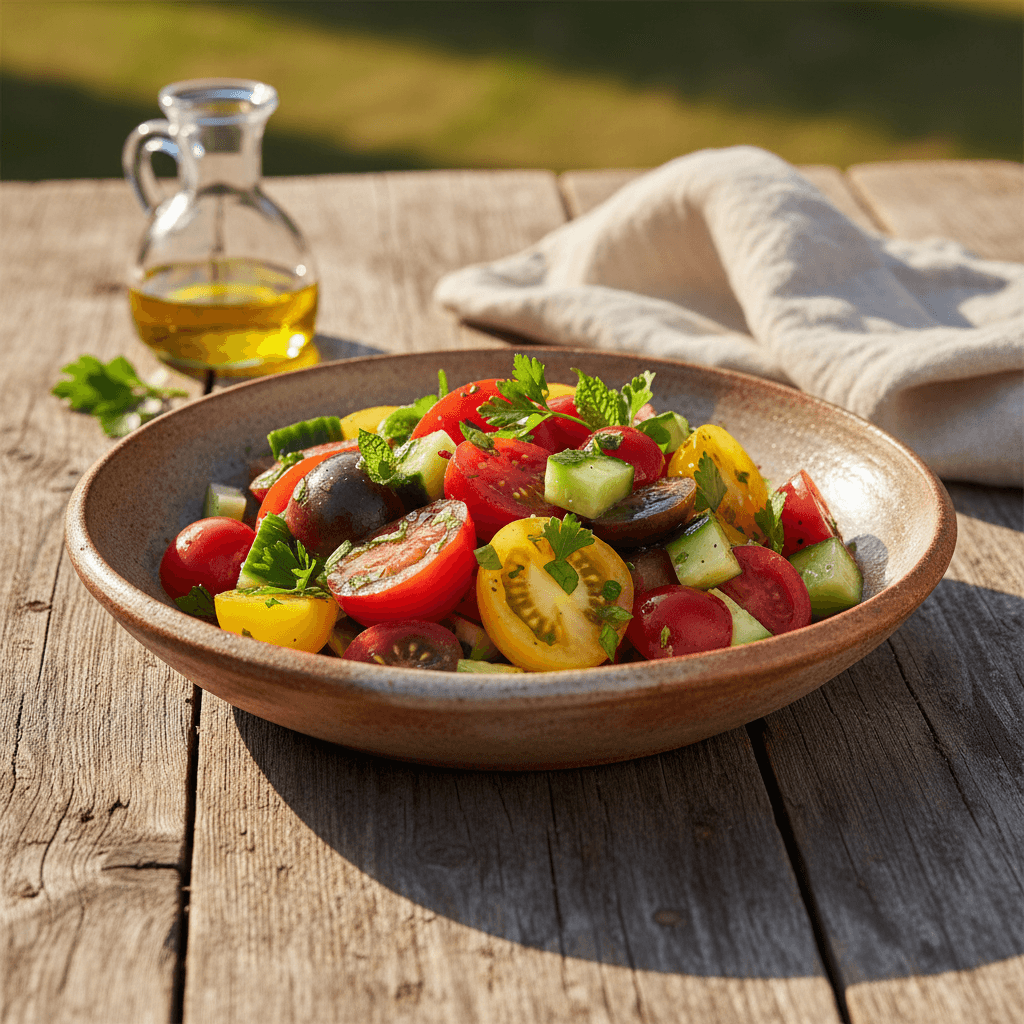
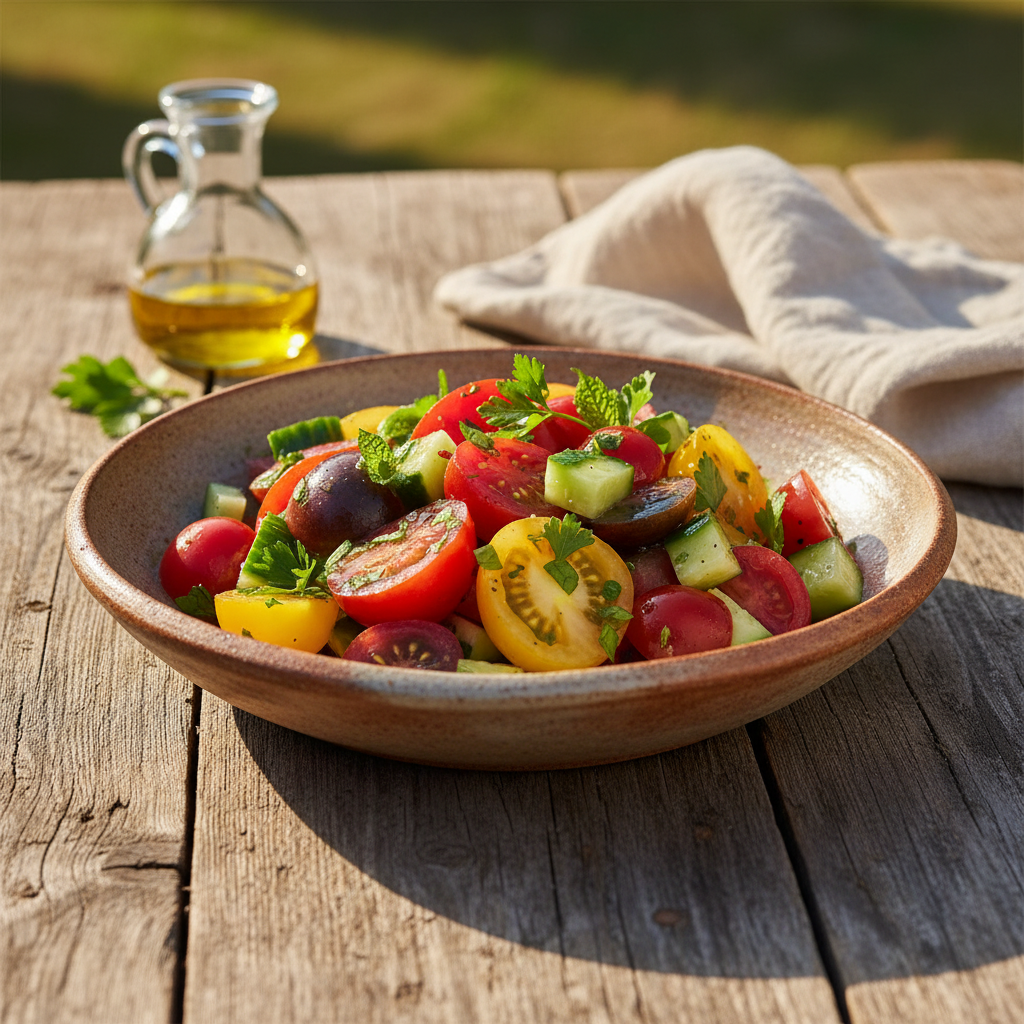
First and foremost, the tomatoes. For this salad, you must use the best tomatoes you can find. This is a dish for high summer, when tomatoes are heavy, fragrant, and bursting with sweetness. I adore using a mix of heirloom varieties—the deep, almost smoky flavor of a Cherokee Purple, the balanced sweetness of a Brandywine, and the bright color of a Yellow Persimmon create a visually stunning and delicious base. If you can't find heirlooms, ripe on-the-vine tomatoes or even sweet cherry tomatoes (halved) will work beautifully. The key is ripeness; a pale, mealy tomato has no place here.
Next, the Persian cucumbers. I specify Persian (or Kirby) cucumbers for a reason. Their skin is thin and unwaxed, meaning you don't need to peel them, and their flesh is dense with very few seeds. This provides a superior, crisp, and refreshing crunch that doesn't water down the salad.
The sharp, pungent bite of red onion is essential for balance, but it needs to be tamed. We do this by soaking the finely diced onion in cold water, a simple trick that mellows its assertive sulfur compounds, leaving behind a crisp texture and a gentler flavor.
Now for the green heart of the salad: fresh flat-leaf parsley and mint. These are not mere garnishes; they are primary flavors. The parsley lends a clean, peppery, and earthy note, while the mint provides a surprising, cooling sweetness that lifts the entire dish. Always use fresh herbs, as dried versions simply cannot compare.
The dressing is where the magic happens. A high-quality extra virgin olive oil is non-negotiable; its fruity, peppery notes form the backbone of the vinaigrette. Freshly squeezed lemon juice provides the primary acidic brightness. But the two secret ingredients from the Levantine pantry are sumac and pomegranate molasses. Sumac, a ground dried berry, has a wonderfully tart, lemony flavor that adds a layer of complexity. Pomegranate molasses, a thick, syrupy reduction of pomegranate juice, brings a unique sweet-and-sour depth that is simply irreplaceable. Together, they create a dressing that is vibrant, complex, and utterly addictive.
The Cooking Process Explained
While this is a no-cook recipe, its success hinges on the method of assembly. Think of it less as cooking and more as conducting a beautiful orchestra of fresh ingredients. Following these stages will ensure your Summer Tomato Salad is perfectly balanced in both flavor and texture every single time.
First is the preparation stage, which is arguably the most crucial. Begin by finely dicing your red onion and placing it in a small bowl of ice-cold water. Let it soak while you prepare the other components. This simple step transforms the onion from a harsh, overpowering element into a pleasantly crisp and mild one. Next, chop your tomatoes and cucumbers. I prefer a medium dice, about half an inch, for a rustic feel where each bite offers a substantial piece of each vegetable. The goal is consistency in size so that no single ingredient dominates a spoonful.
The second stage is flavor concentration. Place your chopped tomatoes in a colander set over a bowl and sprinkle them generously with salt. Let them sit for about 15 to 20 minutes. You will be amazed at how much liquid pools in the bowl beneath. This process, known as maceration, does two wonderful things: it draws out excess water, preventing a soggy salad, and it seasons the tomatoes from within, intensifying their natural sweetness. This is the single most important technique for achieving the best summer tomato salad.
While the tomatoes are draining, you'll move to the third stage: building the vinaigrette. In the bottom of your large salad bowl, combine the freshly squeezed lemon juice, extra virgin olive oil, pomegranate molasses, and sumac. Add a pinch of black pepper and a small pinch of salt (remembering the tomatoes are already salted). Whisk vigorously until the dressing emulsifies, becoming slightly thickened and creamy. This ensures that every single piece of vegetable will be evenly coated in flavor. Drain your soaked onions and add them to the dressing along with the finely chopped parsley and mint.
Finally, the marriage of flavors. Gently pat the salted tomatoes dry and add them, along with the chopped cucumbers, to the bowl with the dressing and herbs. Toss everything together gently, taking care not to mash the tomatoes. Now for the final, crucial step: patience. Let the salad sit at room temperature for at least 10 to 15 minutes before serving. This allows the vegetables to marinate in the dressing, for the flavors to meld and deepen, and for the salad to become something truly greater than the sum of its parts.
Mistakes to Avoid
Even the simplest recipes have potential pitfalls. Creating the perfect Summer Tomato Salad is all about avoiding a few common mistakes that can turn a vibrant dish into a lackluster one. Here is some friendly advice from my kitchen to yours.
-
Using Underripe or Refrigerated Tomatoes. This is the cardinal sin of tomato salads. A cold, hard, out-of-season tomato has very little flavor and a mealy texture. The cold temperature of a refrigerator permanently dulls the aromatic compounds that make a tomato taste like a tomato. Always use ripe, room-temperature tomatoes for the best flavor and texture.
-
Skipping the Salting Step. I cannot stress this enough. If you skip salting your tomatoes, they will release their water directly into the salad bowl, diluting your beautiful vinaigrette and creating a watery, soggy mess at the bottom. Taking that extra 15 minutes to let them drain is the secret to a crisp, intensely flavorful salad.
-
Dressing the Salad Too Far in Advance. While a short 10-15 minute marination is essential, letting the salad sit for hours, especially in the fridge, will have the opposite effect. The acid and salt will continue to break down the vegetables, making the cucumbers lose their snap and the tomatoes turn mushy. Assemble it just before you plan to let it marinate for that short window before serving.
-
Forgetting to Soak the Onion. Raw red onion can be incredibly potent and can easily overpower all the other delicate flavors in the salad. A quick soak in cold water mellows its sharp bite significantly, ensuring it adds a pleasant, savory crunch without dominating the dish.
-
Using Bottled Lemon Juice. The flavor of freshly squeezed lemon juice is bright, complex, and lively. Bottled lemon juice, on the other hand, is often dull and can have a slightly metallic or preserved taste. The small effort of squeezing a fresh lemon will pay huge dividends in the final taste of your dressing.
How to Serve This
One of the things I love most about this Summer Tomato Salad is its incredible versatility. It shines in so many different culinary settings, from a simple weeknight meal to a festive weekend gathering. Here are some of my favorite ways to serve it to make your meal truly special.
For a perfect weeknight dinner, pair this salad with simple grilled proteins. The bright acidity and fresh herbs are a beautiful complement to the smoky char of grilled chicken shish tawook, beef kofta kebabs, or a simple piece of baked cod. The juices from the meat mingle with the vinaigrette, creating a delicious sauce right on your plate.
It also makes a fantastic light lunch all on its own. Toast a thick slice of rustic sourdough bread, rub it with a clove of garlic, and drizzle with olive oil. Then, pile the tomato salad high on top for a bruschetta-style open-faced sandwich that is both satisfying and refreshing. You could also stir in a can of drained chickpeas or some crumbled feta to make it a more substantial vegetarian main course.
For larger gatherings, this salad is a star player on a mezze platter. Arrange it in a beautiful bowl alongside creamy hummus, smoky baba ghanoush, marinated olives, and plenty of warm, fluffy pita bread. Its vibrant colors and bold flavors provide a wonderful contrast to the other dishes and invite guests to create their own delicious bites. When plating, I like to serve it in a wide, shallow bowl to show off all the beautiful colors of the heirloom tomatoes and fresh herbs. A final drizzle of extra virgin olive oil and a sprinkle of sumac right before it hits the table adds a final touch of gloss and flavor.
Make-Ahead and Storage Guide
While this Summer Tomato Salad is unquestionably best enjoyed the day it is made, a little bit of planning can make assembly a breeze, especially when you're preparing for a gathering. The key is to store the components separately to maintain their ideal texture.
Make-Ahead Prep: You can absolutely get a head start. The vegetables can be chopped up to 24 hours in advance. Store the diced cucumbers and soaked/drained red onions together in an airtight container in the refrigerator. Store the salted and drained tomatoes in a separate airtight container. The herbs should be chopped just before mixing for maximum freshness, but the vinaigrette can be whisked together and stored in a sealed jar in the fridge for up to three days—just give it a good shake to re-emulsify it before use.
Storage: If you have leftovers, they can be stored in an airtight container in the refrigerator for up to two days. Be aware that the salad will soften and become more watery over time as the vegetables continue to release their juices. The flavor will still be delicious, but you will lose the crisp texture. It's fantastic the next day spooned over rice or used as a relish for grilled fish.
Freezing: This salad is not a candidate for freezing. The delicate structure of the fresh tomatoes and cucumbers would be destroyed in the freezing and thawing process, resulting in a very mushy and unappealing texture.
Bringing it Back to Life: If you are eating leftovers from the fridge, I recommend letting the salad sit out on the counter for about 15-20 minutes to take the chill off. The flavors will be much more pronounced at a cool room temperature than they are straight from the cold refrigerator.
Reader Questions Answered
Can I use other types of tomatoes for this salad?
Absolutely! While I love the color and flavor variety of heirlooms, any ripe, flavorful tomato will work. Roma tomatoes are a great option as they are meatier and have fewer seeds. A colorful mix of cherry or grape tomatoes, halved or quartered, would also be delicious and visually appealing. The most important factor is to use tomatoes that are in season and taste great on their own.
I can't find sumac or pomegranate molasses. Are there substitutes?
While these two ingredients are what truly make the dressing special, you can make a simplified version. For sumac, you can add a little extra lemon juice and some lemon zest to mimic its tartness. For pomegranate molasses, a small drizzle of a good-quality balsamic glaze can provide a similar sweet-tart note, though the flavor profile will be different. I highly recommend seeking them out at a Middle Eastern market or online for the authentic taste.
How can I make this salad a more filling main course?
This salad is a wonderful base for a heartier meal. To make it more substantial, try adding a can of drained and rinsed chickpeas or white beans for plant-based protein and fiber. Cubes of grilled halloumi cheese or crumbled feta add a lovely salty, creamy element. You could also serve it over a bed of quinoa or alongside some grilled chicken or fish for a complete and balanced meal.
I'm making this for a large crowd. Can I double or triple the recipe?
Yes, this recipe scales up beautifully! Simply multiply the ingredients by the desired amount. When making a large batch, the salting step for the tomatoes is even more important to prevent a watery result. Use a very large bowl to ensure you can toss everything together without crushing the ingredients. It’s a perfect, easy-to-prep dish for any large family gathering.
My last tomato salad was really watery. What did I do wrong?
This is the most common issue people face, and the solution is simple: you likely skipped the step of salting and draining the tomatoes. Tomatoes are over 90% water. When you add salt in the dressing, it immediately starts pulling that water out, creating a pool at the bottom of your bowl. By salting the chopped tomatoes in a colander before adding them to the salad, you draw out that excess liquid ahead of time, concentrating the tomato flavor and keeping your vinaigrette rich and undiluted. It's a game-changing step!
The Best Summer Tomato Salad (Levantine-Style)
A vibrant, refreshing summer tomato salad with cucumbers, fresh herbs, and a tangy sumac-pomegranate vinaigrette. An easy and flavorful side dish that's better than caprese.
Prep Time
20 min
Cook Time
0 min
Total Time
20 min
Servings
6 servings
Ingredients
For 6 servings
- 2 lbs ripe heirloom tomatoes, cored and cut into 1/2-inch dice
- 1 tsp sea salt, plus more to taste
- 1 large English or 3 Persian cucumbers, cut into 1/2-inch dice
- 1/2 small red onion, finely diced
- 1 cup loosely packed fresh flat-leaf parsley, finely chopped
- 1/2 cup loosely packed fresh mint leaves, finely chopped
- 1/4 cup extra virgin olive oil
- 3 tbsp fresh lemon juice
- 1 tbsp pomegranate molasses
- 2 tsp ground sumac
- 1/2 tsp freshly ground black pepper
Instructions
- 1
Prepare the Onion
Place the finely diced red onion in a small bowl and cover with cold water. Let it soak for at least 15 minutes while you prepare the other ingredients. This step mellows the onion's sharp bite.
- 2
Salt and Drain the Tomatoes
Place the diced tomatoes in a colander set over a large bowl. Sprinkle generously with 1 teaspoon of sea salt and toss gently to combine. Let the tomatoes sit for 15-20 minutes to allow the salt to draw out excess water.
- 3
Chop Vegetables and Herbs
While the tomatoes are draining, chop your cucumbers, parsley, and mint. Aim for a consistent dice on the cucumbers to match the tomatoes. Finely chop the herbs to release their aromatic oils.
- 4
Whisk the Vinaigrette
In the bottom of a large serving bowl, combine the extra virgin olive oil, fresh lemon juice, pomegranate molasses, sumac, and black pepper. Whisk vigorously until the mixture is emulsified and slightly thickened.
- 5
Drain and Add Onion and Herbs
Drain the soaked red onion completely and pat it dry. Add the drained onion, chopped parsley, and chopped mint to the vinaigrette in the serving bowl. Stir to combine.
- 6
Combine Salad Ingredients
Discard the water that has drained from the tomatoes. Gently pat the tomatoes with a paper towel to remove any excess moisture. Add the drained tomatoes and the diced cucumbers to the serving bowl with the dressing.
- 7
Toss Gently
Using a large spoon or spatula, gently fold all the ingredients together until the vegetables are evenly coated with the dressing. Be careful not to over-mix or mash the tomatoes.
- 8
Marinate and Serve
Let the salad sit at room temperature for 10-15 minutes before serving. This allows the flavors to meld and deepen. Taste and adjust seasoning with more salt if needed, then serve immediately.
Nutrition Facts
Per serving (estimated)
145 calories
Calories
12g
Carbs
2g
Protein
10g
Fat
4g
Fiber
450mg
Sodium
7g
Sugar