Authentic Tzatziki Recipe (Easy Taziki Sauce)
The best homemade tzatziki sauce! This authentic, easy recipe delivers a thick, creamy sauce bursting with fresh dill, garlic, and cucumber.
cookwithyara.com/recipes/taziki-sauce-recipe-tzatziki
There’s a magic that happens when simple, honest ingredients come together. Picture a sun-drenched table at a Greek taverna, overlooking the sparkling Aegean Sea. The air is warm, filled with the murmur of conversation and the clinking of glasses. On the table sits a small bowl of the most vibrant, cool, and creamy dip imaginable. This is the essence of tzatziki, a sauce that is so much more than a condiment; it’s a taste of the Mediterranean itself. It’s the cooling counterpoint to sizzling grilled meats, the refreshing dip for warm, fluffy pita, and the creamy dollop that brightens up any vegetable. It’s a cornerstone of Greek cuisine, built on a philosophy of simplicity and respect for fresh ingredients. For years, I believed that the incredible flavor of true tzatziki was something you could only find on vacation, a culinary memory to be cherished. But I’ve learned that capturing that authentic spirit is not only possible but wonderfully simple to achieve in your own kitchen. This authentic taziki sauce recipe tzatziki is your guide to recreating that perfect moment. We will use accessible ingredients to build a sauce that is thick, tangy, and profoundly flavorful, proving that the most memorable dishes are often the least complicated. Prepare to bring a spoonful of Greek sunshine to your table.
A Taste of Greek Simplicity
In the grand tapestry of Greek cuisine, tzatziki holds a place of humble honor. It’s not a complicated, show-stopping dish that demands hours of labor. Instead, it is a testament to the Greek culinary principle of philoxenia—a concept that loosely translates to hospitality and generosity, often expressed through food. Tzatziki is everyday comfort and celebratory fare all at once. You’ll find it served as part of a sprawling meze platter, a collection of small dishes meant for sharing, fostering connection and leisurely dining. It is the indispensable partner to souvlaki and gyros, its cool, creamy nature balancing the rich, savory flavors of the grilled meats. The beauty of this taziki sauce recipe tzatziki lies in its core philosophy: taking a few perfect ingredients and letting them shine. Greek cooking is rarely about masking flavors with heavy sauces or complex spice blends. It’s about the sun-ripened tomato, the fruity olive oil, the fragrant oregano, and in this case, the thick, tangy yogurt and the crisp, fresh cucumber. This approach reflects a lifestyle deeply connected to the land and sea, where the best meals are born from the day’s harvest. Making authentic tzatziki is an embrace of this ideal, a simple act of transformation that turns humble staples into something utterly sublime. It’s a sauce that doesn’t shout for attention but rather elevates everything it touches.
The Ingredients That Define Authentic Tzatziki
The secret to a truly exceptional tzatziki sauce lies not in a long list of exotic items, but in the quality and preparation of a few key ingredients. Each one plays a critical role in creating the perfect balance of texture and flavor. Understanding them is the first step to mastering this classic dish.
First and foremost is the Greek Yogurt. This is the heart and soul of our taziki sauce recipe tzatziki. For the richest, creamiest result, you must use full-fat (10% milkfat is ideal) plain Greek yogurt. Unlike regular yogurt, Greek yogurt is strained to remove most of the whey, resulting in a much thicker, denser consistency and a tangier flavor. This thickness is crucial; it ensures your final sauce is scoopable and luscious, not thin and runny. Do not be tempted by low-fat or non-fat versions, as they lack the richness and will produce a less satisfying result.
Next, the Cucumber. This provides the sauce's characteristic freshness and subtle crunch. English or Persian cucumbers are the best choices. They have thin, delicate skins that don’t require peeling and contain fewer seeds and less water than standard garden cucumbers. The single most important technique in making tzatziki involves removing as much water as possible from the cucumber after grating it. We’ll cover this in detail, but skipping this step is the number one cause of a watery, disappointing sauce.
Fresh Garlic is non-negotiable. It provides the pungent, aromatic kick that defines tzatziki. The intensity can be adjusted to your liking, but always use fresh cloves. The pre-minced jarred variety often has a muted, sometimes slightly bitter flavor that just can't compare. For a milder garlic flavor, you can let the minced garlic sit in the lemon juice for a few minutes before adding it to the yogurt, which helps temper its raw bite.
Fresh Dill is the classic herb, lending a bright, slightly feathery, almost anise-like aroma that is quintessentially Greek. While some regional variations use mint, dill is the most traditional choice. Dried dill can be used in a pinch, but the flavor of fresh dill is vastly superior and truly elevates the sauce.
Lemon Juice adds the necessary acidity and brightness, cutting through the richness of the yogurt and olive oil. Always use freshly squeezed lemon juice. The bottled kind lacks the vibrant, zesty flavor and can sometimes taste metallic.
Finally, a good quality Extra Virgin Olive Oil brings everything together. It adds a subtle fruity note, a wonderful silky texture, and a richness that rounds out the flavors. You don't need a huge amount, but using a flavorful, cold-pressed olive oil will make a noticeable difference in the final taste of your perfect tzatziki sauce.
Mastering the Technique: How to Make Perfect Tzatziki
Creating a truly great tzatziki is less about a complex recipe and more about a simple, well-executed technique. Each step is designed to build layers of flavor and, most importantly, to achieve that signature thick and creamy texture. Following this process will ensure your homemade taziki sauce recipe tzatziki is leagues better than anything you can buy in a store.
Stage 1: The Critical Cucumber Preparation. This is the foundation of a thick sauce. Start by grating your cucumber on the large holes of a box grater. Place the grated cucumber in a fine-mesh sieve or a colander set over a bowl. Sprinkle it with salt and toss gently. The salt will begin to draw out the excess water. Let it sit for about 15-20 minutes, and you'll be amazed at how much liquid collects in the bowl. After it has rested, gather the grated cucumber in a clean kitchen towel, cheesecloth, or even your hands, and squeeze. Squeeze with surprising force until you can’t get any more liquid out. This step is the single most important secret to preventing a watery tzatziki.
Stage 2: Tempering the Garlic. While the cucumber is draining, mince your garlic cloves as finely as you can. A microplane grater can also work well for creating a smooth paste. Place the minced garlic in a small bowl with the freshly squeezed lemon juice. This small step does two things: it mellows the harsh, raw bite of the garlic, and it starts infusing the lemon juice with a lovely aromatic quality.
Stage 3: Preparing the Yogurt Base. Scoop your full-fat Greek yogurt into your main mixing bowl. Give it a few gentle stirs with a spoon or spatula to loosen it up and ensure it’s smooth and creamy before you start adding other ingredients.
Stage 4: Combining the Flavors. Now, add the squeezed-dry cucumber to the yogurt. Pour in the garlic and lemon juice mixture. Add the finely chopped fresh dill and a pinch of black pepper. Using a spatula, gently fold all the ingredients together until they are just combined. Avoid overmixing, as this can break down the yogurt and make it thinner.
Stage 5: The Essential Chill. This step is purely about patience, but it is vital for the best flavor. Once everything is mixed, cover the bowl and place the tzatziki in the refrigerator for at least one hour, though two to four hours is even better. This resting period allows all the individual flavors—the garlic, the lemon, the dill, the cucumber—to meld together and infuse the yogurt, creating a more cohesive and deeply flavorful sauce. The tzatziki that comes out of the fridge is a world away from the one that went in. This is a key part of any authentic tzatziki recipe.
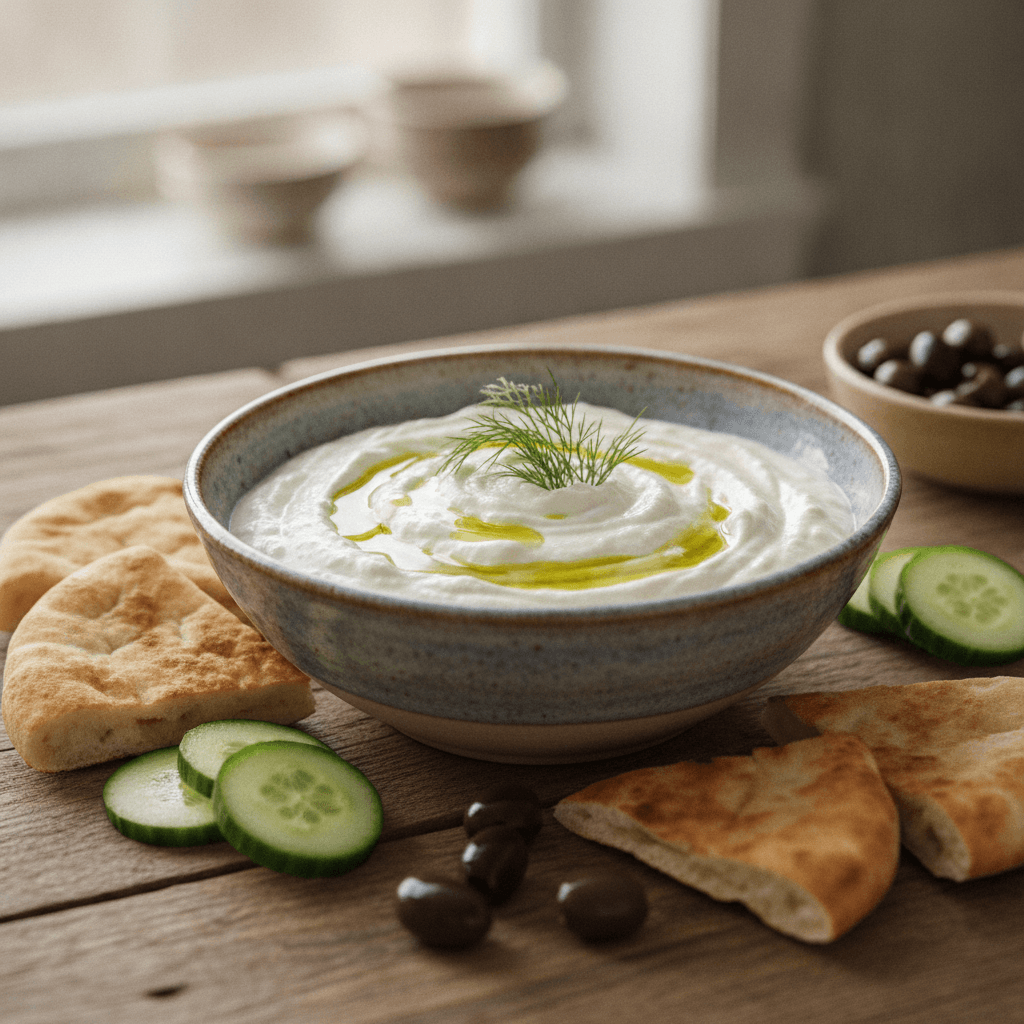
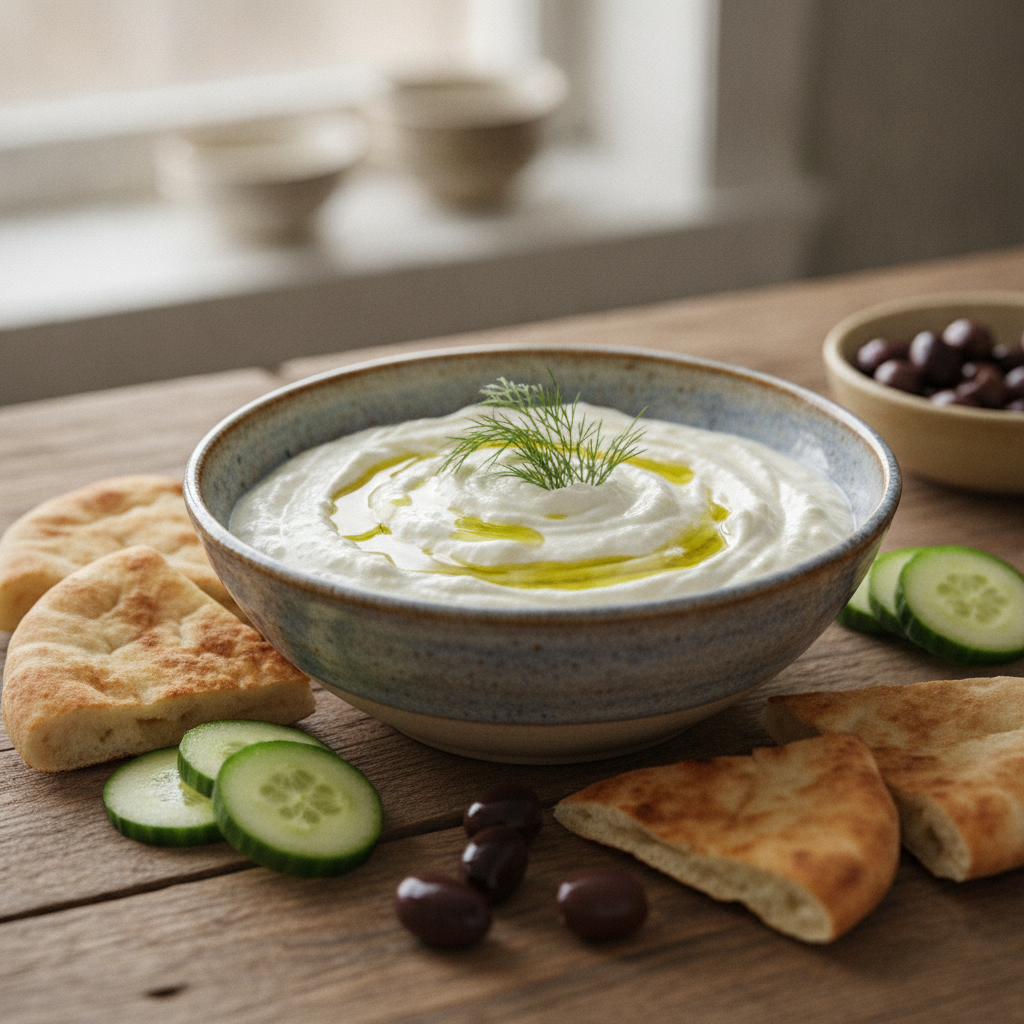
Stage 6: The Finishing Touch. Just before serving, give the chilled tzatziki a gentle stir. Taste it and adjust the salt if needed. Transfer it to your serving bowl. Create a small swirl on the surface with the back of a spoon and drizzle generously with your best extra virgin olive oil. This final touch adds richness and a beautiful, glossy finish.
Serving Tzatziki the Mediterranean Way
Once your beautiful, creamy tzatziki is chilled and ready, its true purpose is to be shared and enjoyed. In Mediterranean and Levantine cultures, food is a communal experience, and a bowl of fresh tzatziki is an invitation to gather around the table. The presentation is simple yet elegant, reflecting the nature of the sauce itself. Spoon the finished taziki sauce into a rustic ceramic or earthenware bowl. Use the back of your spoon to create a deep swirl across the surface—this little well is the perfect vessel for a generous drizzle of golden extra virgin olive oil. A final garnish of a single olive, a few fresh dill fronds, or a light dusting of sumac adds a pop of color and a final layer of flavor.
Tzatziki is incredibly versatile. Its most classic role is as a cooling accompaniment to grilled foods. Imagine it dolloped generously over smoky chicken souvlaki, savory kofta kebabs, or thinly sliced shawarma tucked into a warm flatbread. It provides a refreshing, tangy contrast that cuts through the richness of the meat, cleansing the palate with each bite. It is also an essential component of any meze platter, served alongside hummus, baba ghanoush, olives, and feta. Set it in the center of a board surrounded by warm, pillowy pita bread cut into triangles for dipping. For a lighter, fresher approach, serve it as a dip for a colorful array of crisp vegetables—cucumber spears, carrot sticks, sweet bell pepper slices, and cherry tomatoes. The possibilities don't end there; a spoonful can elevate roasted potatoes, grilled fish, or even a simple lamb burger. It is truly a sauce for all occasions.
Make This Tzatziki Recipe Your Own
While this taziki sauce recipe tzatziki is a faithful representation of the Greek classic, one of the joys of cooking is adding your own personal touch. The foundational elements—thick yogurt and well-drained cucumber—should remain, but there is plenty of room to play with the aromatics and additions to suit your taste or what you have on hand.
One of the easiest variations is with the herbs. While dill is traditional, fresh mint is a common and equally delicious alternative, lending a different kind of cool, bright freshness. For a more complex herbal note, try a combination of dill, mint, and a little bit of finely chopped flat-leaf parsley. This trio creates a wonderfully green, vibrant sauce that is fantastic with grilled vegetables.
If you enjoy a bit of warmth, consider adding a pinch of spice. A touch of Aleppo pepper can introduce a mild, fruity heat and a beautiful red-flecked appearance. For a smokier profile, a tiny pinch of smoked paprika works wonders. If you're feeling more adventurous and want a significant kick, a very finely minced hot pepper, like a serrano, can be stirred in, but use it sparingly so as not to overwhelm the delicate flavors.
For a delightful textural contrast, especially popular in some areas of the Levant, consider adding a handful of finely chopped toasted walnuts or pistachios. This adds a nutty richness and a satisfying crunch that transforms the dip into something more substantial. For a dairy-free or vegan version of this tzatziki recipe, you can substitute the Greek yogurt with a high-quality, unsweetened, thick, plant-based yogurt, such as one made from coconut, soy, or almonds. Look for one labeled 'Greek style' to ensure the best possible consistency.
Keeping and Reusing Leftovers
One of the best things about making a generous batch of this taziki sauce recipe tzatziki is having leftovers to enjoy for days. Proper storage is key to maintaining its freshness and texture. Transfer any leftover tzatziki to an airtight container and store it in the coldest part of your refrigerator. It will keep well for up to four days.
Over time, a little bit of liquid from the cucumber may separate and pool on the surface. This is perfectly normal. Simply give the sauce a gentle stir before serving to reincorporate it. The flavor of the garlic will also continue to mellow and deepen as it sits, so you might find you enjoy the taste even more on the second or third day.
I do not recommend freezing tzatziki. The yogurt's structure will break down during the freezing and thawing process, resulting in a grainy, watery texture that is quite unpleasant. This is one sauce that is definitely best enjoyed fresh.
Leftover tzatziki is wonderfully versatile. Think beyond just a dip. Thin it out with a little extra lemon juice or a splash of water to create a creamy, delicious salad dressing for a crisp green salad or a hearty grain bowl. Use it as a healthy and flavorful spread on sandwiches or wraps in place of mayonnaise. It’s particularly good with grilled chicken or falafel sandwiches. A dollop on top of a baked potato, a bowl of lentil soup, or alongside roasted vegetables can instantly brighten up a simple meal, adding a burst of fresh, tangy flavor.
Your Tzatziki Questions Answered
Why is my tzatziki watery?
This is the most common issue, and the answer is almost always the cucumber. If you don't thoroughly salt, drain, and squeeze every last drop of moisture out of the grated cucumber before adding it to the yogurt, that water will leach out and create a thin, runny sauce. Taking the extra time on this step is the secret to thick, creamy tzatziki.
Can I use dried dill instead of fresh?
While fresh dill offers a vastly superior bright and aromatic flavor, you can use dried dill in a pinch. The general rule is to use one-third the amount of dried herbs as you would fresh. For this recipe, start with one teaspoon of dried dill, and add more to taste. Allow the tzatziki to chill for at least an hour to give the dried dill time to rehydrate and release its flavor.
What's the best type of yogurt for this taziki sauce recipe?
For the most authentic and delicious result, you must use a full-fat (at least 5%, but 10% is best) strained Greek yogurt. Its thick, dense texture is the foundation of the sauce. Avoid regular yogurt, as it's too thin, and steer clear of low-fat or non-fat Greek yogurts, as they lack the creamy richness that makes tzatziki so satisfying.
Can I make tzatziki ahead of time?
Absolutely! In fact, this tzatziki recipe is even better when made ahead of time. Preparing it at least 2-4 hours before you plan to serve it, or even the day before, allows the flavors of the garlic, dill, and lemon to fully meld into the yogurt, resulting in a much more flavorful and cohesive sauce. Simply store it in an airtight container in the refrigerator.
What can I serve with tzatziki besides pita bread?
While pita is a classic pairing, the options are nearly endless! Serve it as a dip for a platter of fresh, crisp vegetables like cucumber spears, bell pepper strips, carrots, and radishes. It's a fantastic sauce for any grilled protein like chicken skewers, kofta, or fish. It’s also wonderful dolloped onto falafel, roasted potatoes, or used as a spread in a shawarma wrap.
Is this tzatziki recipe authentic?
The method and core ingredients—strained yogurt, salted and squeezed cucumber, fresh garlic, and dill—are the pillars of traditional, authentic Greek tzatziki. While small regional variations exist (some might add a splash of vinegar or a touch of mint), this recipe follows the classic preparation that you would find in a Greek home or taverna, designed to produce a perfectly thick, creamy, and flavorful sauce.
Authentic Tzatziki Sauce (Taziki Recipe)
A creamy, refreshing Greek yogurt sauce with grated cucumber, garlic, dill, and lemon. This authentic tzatziki recipe is easy to make and perfect for dipping or as a sauce.
Prep Time
20 min
Cook Time
0 min
Total Time
20 min
Servings
8 servings
Ingredients
For 8 servings
- 2 cups full-fat (10%) plain Greek yogurt
- 1 large English cucumber
- 2-3 cloves garlic, minced very finely
- 2 tablespoons extra virgin olive oil, plus more for drizzling
- 2 tablespoons fresh lemon juice
- 3 tablespoons chopped fresh dill
- 1/2 teaspoon fine sea salt, plus more for the cucumber
- 1/4 teaspoon black pepper
Instructions
- 1
Prepare the Cucumber
Wash and dry the English cucumber. Using the large holes of a box grater, grate the entire cucumber (no need to peel it). Place the grated cucumber into a fine-mesh sieve set over a bowl.
- 2
Salt and Drain Cucumber
Sprinkle about 1/2 teaspoon of salt over the grated cucumber and toss to combine. Let it sit for 15-20 minutes. The salt will draw out a significant amount of water.
- 3
Squeeze the Cucumber Dry
Gather the salted cucumber into a clean kitchen towel, cheesecloth, or your hands. Squeeze firmly and thoroughly to remove as much liquid as possible. This step is crucial for a thick, creamy tzatziki.
- 4
Combine Yogurt and Garlic
In a medium bowl, combine the full-fat Greek yogurt, finely minced garlic, and fresh lemon juice. Stir gently to mix.
- 5
Add Cucumber and Herbs
Add the squeezed, dry cucumber to the yogurt mixture. Add the chopped fresh dill and black pepper. Fold all the ingredients together gently with a spatula until just combined.
- 6
Drizzle in Olive Oil
Gently stir in the 2 tablespoons of extra virgin olive oil. This adds richness and a smooth consistency to the sauce. Be careful not to overmix.
- 7
Taste and Season
Taste the tzatziki and add the 1/2 teaspoon of fine sea salt, or more, to your preference. Remember the cucumber was already salted, so add salt gradually.
- 8
Chill for Flavors to Meld
Cover the bowl and refrigerate for at least 1 hour, but ideally 2-4 hours. This resting period is essential for the flavors to meld and deepen.
- 9
Garnish and Serve
When ready to serve, give the tzatziki a final stir. Transfer to a serving bowl, create a swirl on top with a spoon, and drizzle generously with more extra virgin olive oil and a fresh sprig of dill.
Nutrition Facts
Per serving (estimated)
95 calories
Calories
4g
Carbs
5g
Protein
7g
Fat
1g
Fiber
180mg
Sodium
3g
Sugar